Self-enumeration to be available from January 10 to 24, followed by door-to-door population count from January 25 to February 28; more than 72,000 enumerators and supervisors to be deployed
TFP Bureau, Raipur, November 27,2026: Chhattisgarh has intensified preparations for the second phase of Census-2027, which will cover the population’s demographic and socio-economic details across all 33 districts. The exercise will involve more than 72,000 enumerators and supervisors and is scheduled to be completed by February 28, 2027.
Chief Secretary Vikas Sheel on Friday directed District Collectors, Divisional Commissioners and District Census Officers to ensure that the exercise is completed within the prescribed schedule, with accurate data collection and effective field-level monitoring.
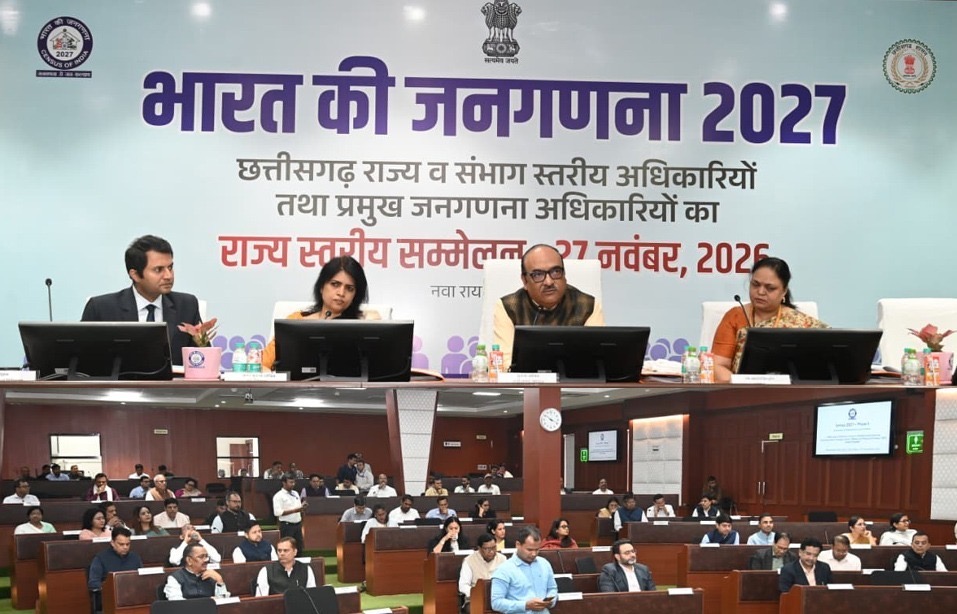
The directions were issued at a state-level workshop held at Mantralaya Mahanadi Bhawan. Deputy Registrar General of India (Census) Vrushali Varade, Additional Chief Secretary Niharika Barik and Director of Census Operations Kartikeya Goyal attended the meeting, along with senior officials from across the state.
Self-enumeration from January 10
Goyal outlined the schedule for the second phase, which will focus on individual population enumeration following the completion of the first phase of house-listing.
The census will be conducted digitally. Citizens will have the option of completing self-enumeration from January 10 to 24, 2027. Door-to-door enumeration by appointed personnel will follow from January 25 to February 28, while a revision period is scheduled from March 1 to 5.
Self-enumeration will be voluntary and is not mandatory. Those choosing this option will receive a unique identification number after submitting their details online, which they will have to share with the enumerator during the subsequent visit.
More than 62,000 enumerators to be deployed
The exercise will cover all 33 districts, 14 municipal corporations, 19,978 villages and 195 towns in the state. The administrative structure includes 47 principal census officers and 472 charge units.
Around 60,682 enumeration blocks are proposed across Chhattisgarh. The state will deploy 62,102 enumerators and 10,667 supervisors, including reserve personnel accounting for 10 per cent of the workforce. One supervisor will oversee approximately six enumerators.
Each enumeration block is expected to cover a population of around 800. Blocks with larger populations will be divided into smaller units as required. Areas such as new settlements, slums, multi-storey buildings and residential and commercial establishments will also be included.
Officials have been instructed to resolve discrepancies in house-listing block boundaries, eliminate overlapping areas and identify settlements left out of the earlier exercise by November 30.
Five-tier training system for census personnel
Sheel stressed that the accuracy of the census would depend on proper training, supervision and regular monitoring of field personnel. He asked District Collectors to study the census guidelines personally, assign clear responsibilities to teams and ensure that enumerators are trained to interact effectively with households.
A five-tier training system has been established. Training for national trainers, master trainers, district officers and charge officers has been completed. Three-day sessions for field trainers will be held at district headquarters between December 2 and 12. Enumerators and supervisors will subsequently receive charge-level training from December 21, 2026, to January 15, 2027.
Digital app to support offline data collection
A dedicated census mobile application, available in 16 languages, has been developed for data collection. It will also function offline, allowing enumerators to enter information in areas without internet connectivity.
The Census Management and Monitoring System (CMMS) portal will be used to create enumeration blocks, allocate duties, organise training and monitor progress. Password protection, one-time passwords and data encryption will be employed to safeguard personal information.
Public awareness campaign planned
Varade said the first phase covered house-listing, while the second would collect information about every individual, including demographic and socio-economic details. She emphasised that the accuracy of census data was essential for planning development programmes and framing policies.
Enumerators will collect information through prescribed questions covering subjects such as fertility, disability, religion and caste. District officials have been asked to use social media and other communication channels to raise awareness and promptly counter rumours or misinformation.
Additional Chief Secretary Niharika Barik stressed the need to build public confidence in the process. She suggested awareness campaigns at village and local levels, including in Bastar’s weekly markets, to explain the exercise in simple language.
Sheel also directed officials to make it clear to citizens that the information collected would be used solely for census data compilation and would not be linked to the issuance of certificates or eligibility for government benefits. He instructed departments to strictly follow the restrictions on transferring officials and staff assigned to census duties.
A state-wide awareness campaign will run from mid-December 2026 until February 28, 2027, with support from various departments. The campaign will communicate key dates, procedures and information about data privacy to encourage public participation.