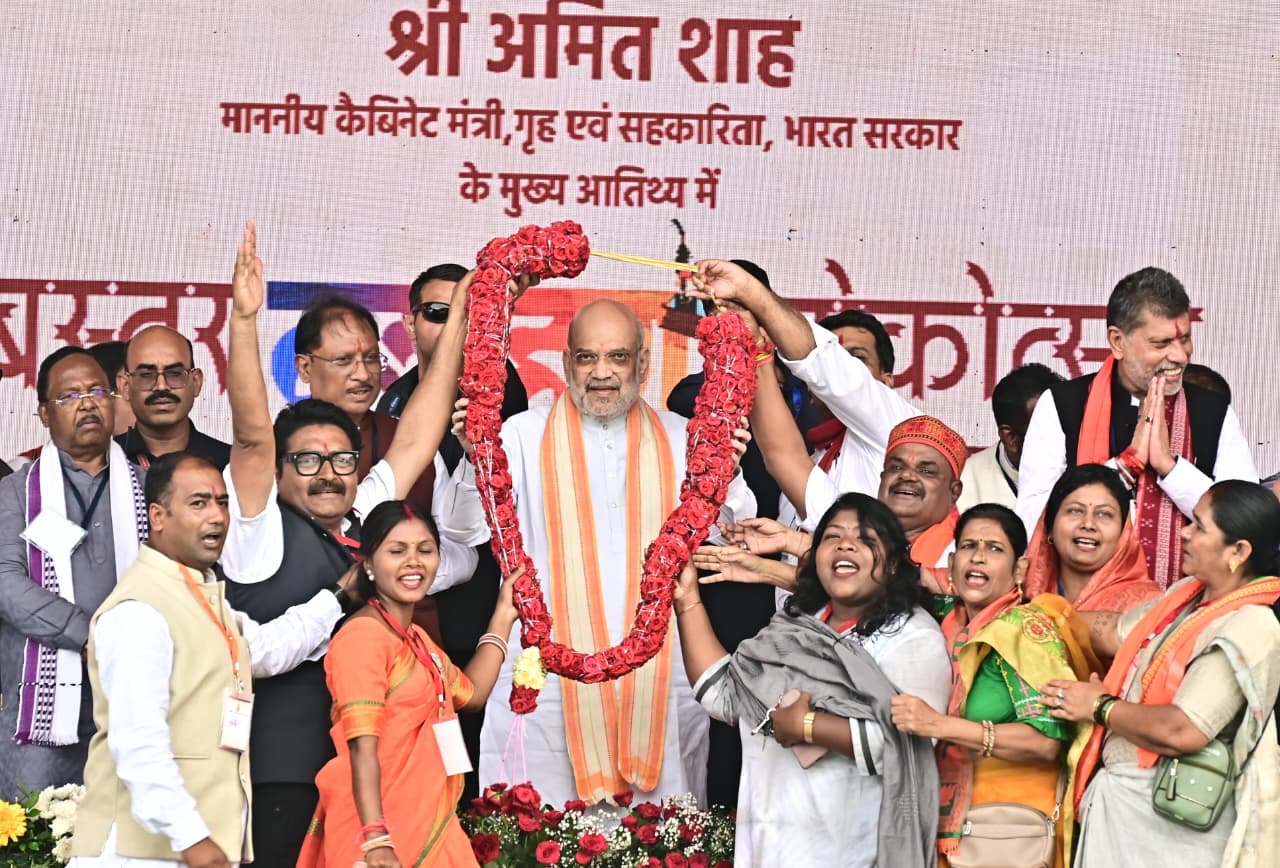
TFP Bureau, Jagdalpur, October 4, 2025: Union Home Minister and Minister of Cooperation, Shri Amit Shah, participated in the grand celebrations of the world-famous Bastar Dussehra festival in Jagdalpur on Saturday. The 75-day-long event—one of the longest cultural festivals globally—showcases the rich traditions, art, and heritage of the tribal heartland of Bastar. The Home Minister, accompanied by Chhattisgarh Chief Minister Shri Vishnu Deo Sai and Deputy Chief Minister Dr. Vijay Sharma, offered prayers at the revered Maa Danteshwari Temple before addressing thousands gathered at the festival ground.
In a powerful address, Shri Shah declared that the Central and State governments are determined to completely eradicate Naxalism from Bastar by March 31, 2026, ensuring that no extremist forces can obstruct the region’s right to peace and development. “On behalf of Prime Minister Shri Narendra Modi, I assure the people of Bastar that after March 2026, Naxalites will no longer be able to hinder your rights or your development,” he said to loud applause.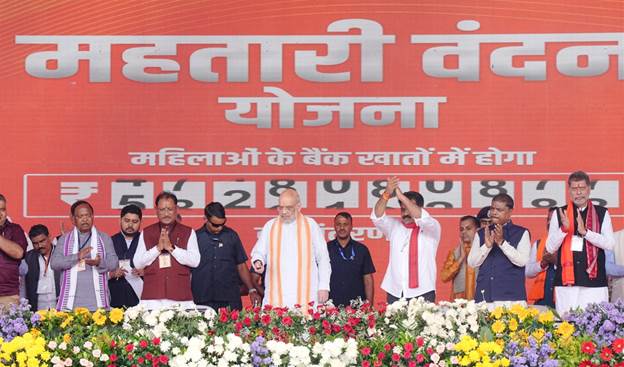
‘Naxalism Is the Root Cause of Bastar’s Deprivation’
Rejecting narratives that portrayed Naxalism as a movement for social justice, Shri Shah emphasized that extremism had instead denied Bastar the development it deserved. “Some people sitting in Delhi have long propagated that Naxalism is a struggle for development. In reality, it is the very reason why Bastar was deprived of progress,” he stated.
He pointed out that while India has achieved remarkable development under Prime Minister Modi—ensuring electricity, tap water, roads, healthcare, housing, and food security for every village—Bastar’s growth had been obstructed by violence and fear. “Every household in India today benefits from ₹5 lakh health coverage under Ayushman Bharat and receives free food grains. Yet Bastar lagged behind because Naxalism robbed its people of peace and opportunity,” he added.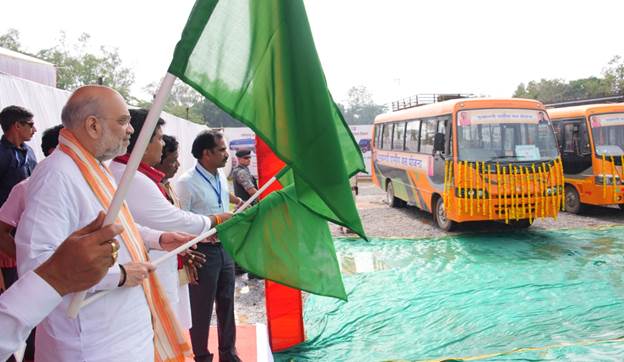
‘Surrender Policy a Path to Prosperity’
The Home Minister lauded the Chhattisgarh government’s effective surrender policy, noting that over 500 Naxalites have surrendered in the past month alone. He announced that each village completely free from Naxalism would receive ₹1 crore for development. “I appeal to the people of Bastar to convince misguided youth to lay down their arms and return to the mainstream. They belong to our villages, and it is our duty to bring them back to peace and progress,” Shri Shah said.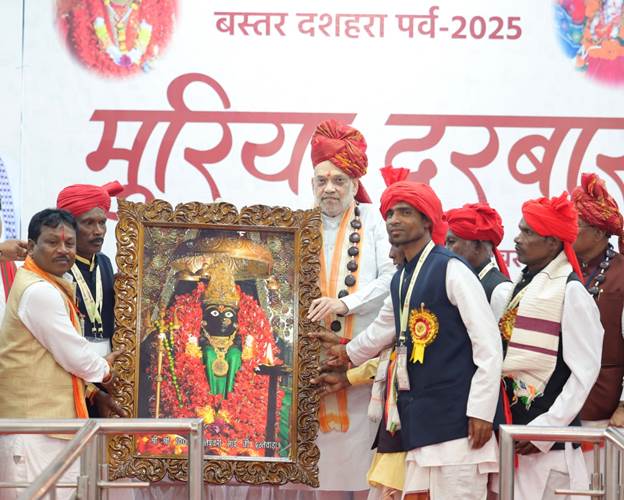
At the same time, he warned that any attempt to disturb Bastar’s peace would be met with a “fitting response” from the armed forces, CRPF, and Chhattisgarh Police, reaffirming the government’s commitment to national security and local stability.
‘Historic Heritage of Bastar Inspires the World’
Calling Bastar Dussehra “the pride of India and a marvel of tribal heritage”, Shri Shah highlighted that the 75-day celebration, dating back to the 14th century, is not just a festival but a living embodiment of India’s cultural unity. He praised the Rath Yatra of Maa Danteshwari for inspiring cultural awakening and referred to the Muria Darbar, the traditional tribal assembly, as a “global heritage of participatory governance, justice, and cultural preservation.”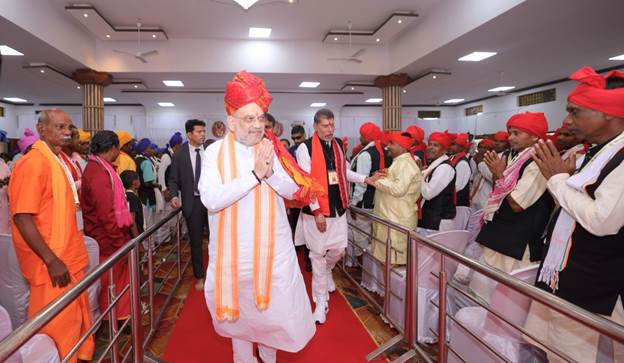
He remarked, “Since 1874, the Muria Darbar has represented the essence of people’s dialogue, community justice, and unity. It continues to bind Bastar’s tribes together and symbolizes our democratic and cultural strength.”
Swadeshi for a Self-Reliant India
Addressing the Swadeshi Mela organized alongside the festival, Shri Shah invoked Prime Minister Modi’s vision of Aatmanirbhar Bharat (Self-Reliant India). “If India’s 140 crore people pledge to use Swadeshi goods, no one can stop our nation from becoming the world’s leading economic power,” he said. He appealed to traders and citizens alike to promote Indian-made products and ensure that shops and malls eliminate foreign goods.
The Home Minister informed that over 300 Swadeshi companies are participating in this year’s Bastar Dussehra. He praised initiatives like the Swadeshi Walkathon for energizing India’s indigenous production and consumption. He further highlighted the Modi government’s recent relief measures, including GST exemptions on 395 essential items and lower tax rates on daily-use goods, particularly benefiting women and families across India.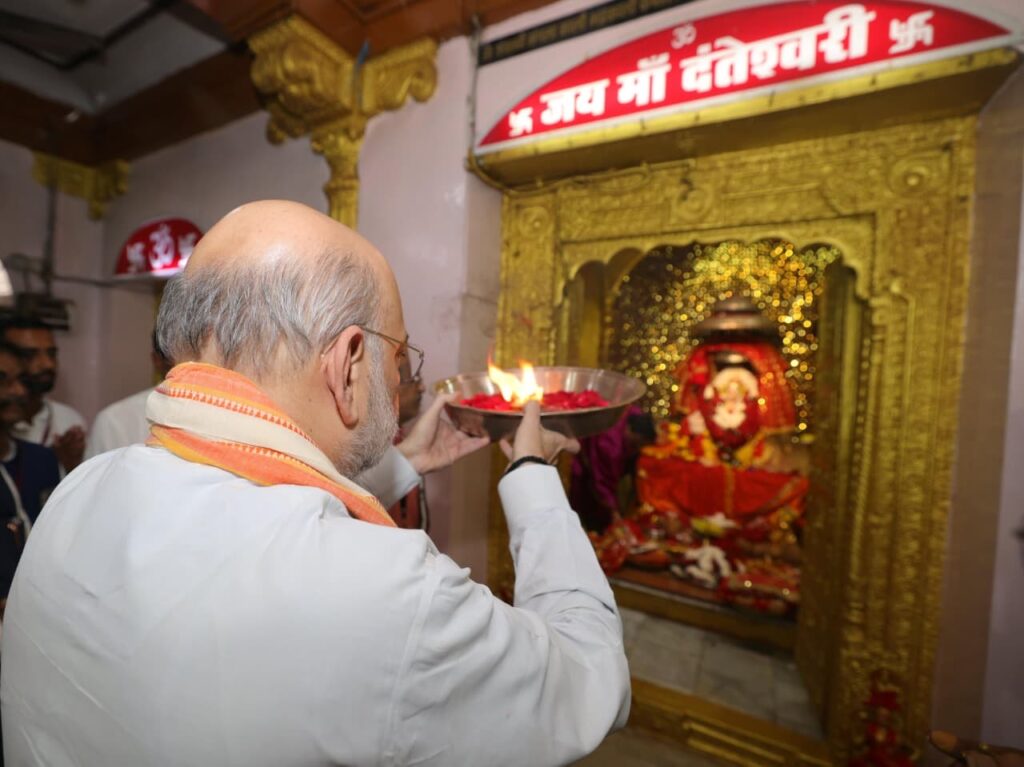
Tribals at the Heart of India’s Growth Story
Amit Shah lauded Prime Minister Modi’s efforts to honor the tribal community, recalling the historic decision to appoint Smt. Draupadi Murmu—a daughter of the tribal community—as the President of India. “When President Draupadi Murmu meets global leaders, every Indian, especially our tribal brothers and sisters, feels a surge of pride,” he said.
He also mentioned that PM Modi declared the 150th birth anniversary of Lord Birsa Munda as Tribal Pride Year and his birthday as Tribal Pride Day, further solidifying the recognition of tribal heroes in India’s national narrative.
The Home Minister announced several new initiatives for Bastar, including the 20th installment of the Mahtari Vandan Yojana, distributing ₹607 crore to 70 lakh mothers in Chhattisgarh, and the launch of the Chief Minister Rural Bus Scheme, connecting 250 villages across Bastar and Surguja divisions.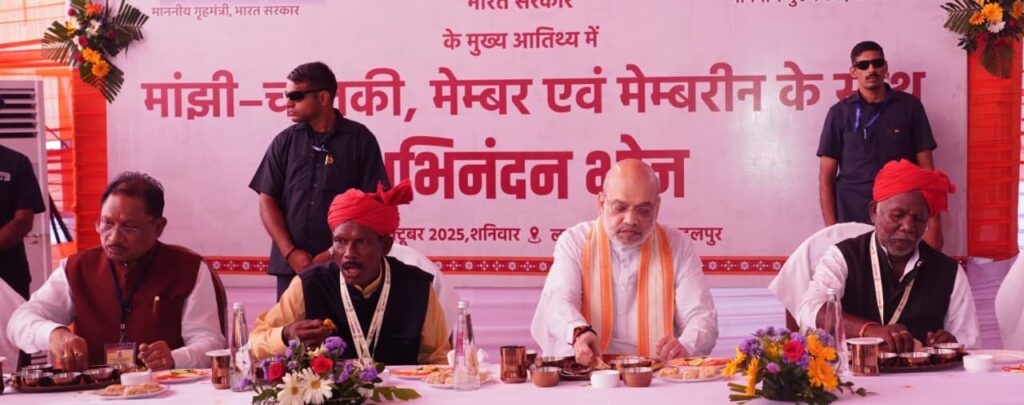
‘Bastar’s Culture is India’s Treasure’
Shri Shah noted that Bastar’s cuisine, attire, art, and traditional musical instruments have captivated global attention. “From the Bastar Olympics to the Pandum festival, the region’s cultural identity has become a source of national pride,” he said.
He concluded by reaffirming the Modi government’s dual commitment—to preserve India’s rich tribal heritage and to ensure that regions like Bastar experience peace, prosperity, and pride. “The Central and State governments are united in their mission to build a Naxal-free, developed Bastar that will stand as a beacon of India’s progress,” he declared, amid loud cheers and chants of “Bastar Amar Rahe.”