
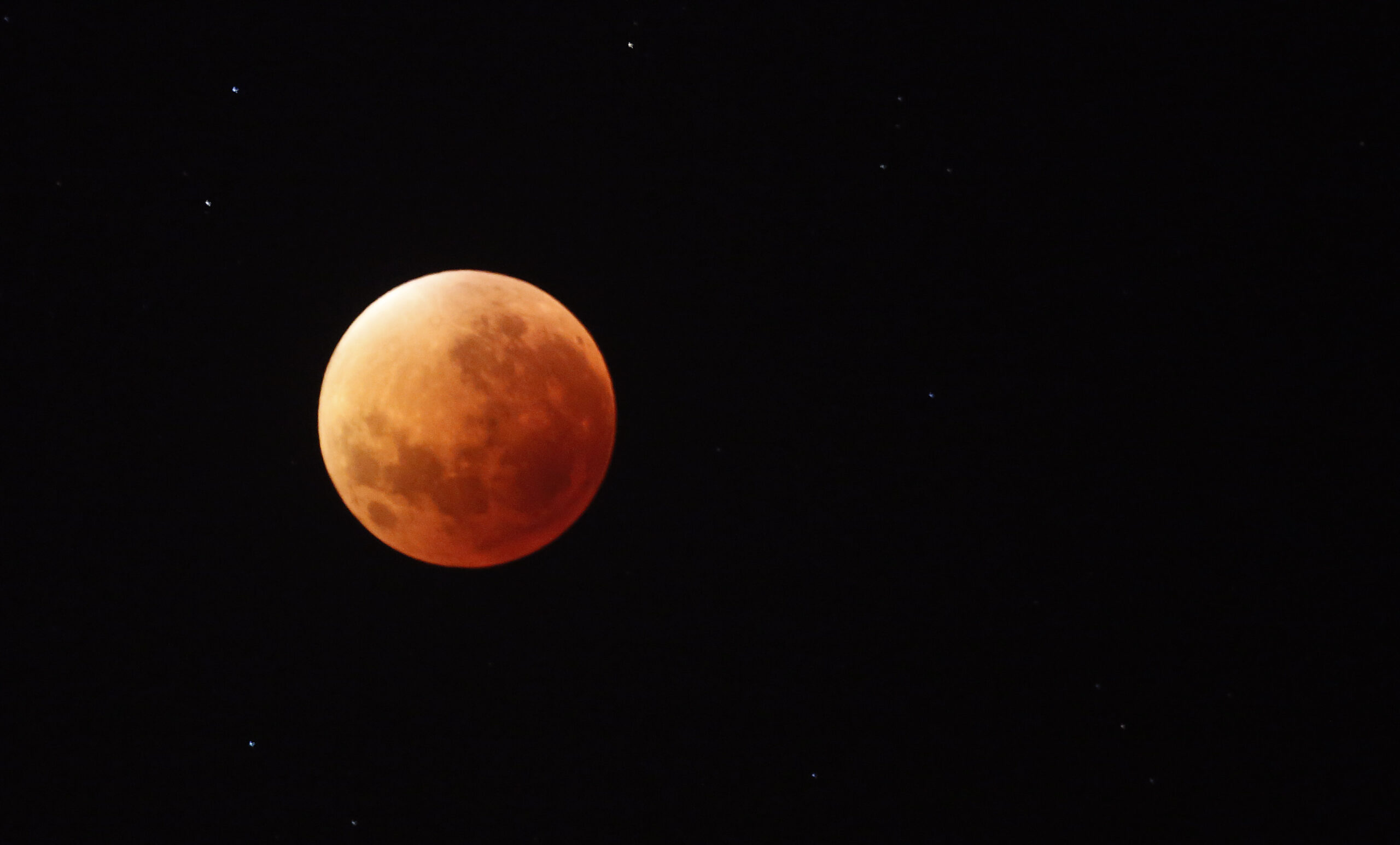
First lunar eclipse of 2026 to be visible across India; partial eclipse to last over three hours, enhancing religious and astrological significance
TFP Bureau, Varanasi, March 1, 2026: The first lunar eclipse of 2026 will occur on March 3 and will hold special religious and astrological importance as it coincides with the observance of Holika Dahan across the country. The eclipse will be visible in most parts of India, making the Sutak period applicable nationwide, religious scholars and astrologers said.
According to astronomical data, the event will be a partial lunar eclipse. As per Indian Standard Time, the eclipse will begin at 3.20 pm and conclude at 6.46 pm, lasting for approximately three hours and 27 minutes. During this period, the Moon will be positioned in the Leo zodiac sign and the Purva Phalguni nakshatra, which is considered significant in Vedic astrology.
The Sutak period, which marks a time of ritual caution and restraint, will begin nine hours prior to the start of the eclipse. Accordingly, the Sutak will commence at 6.20 am on March 3. During this phase, religious traditions advise against performing auspicious activities, including puja, havan, yagya and the initiation of new ventures.
Customary practices during the Sutak period also include refraining from cooking or consuming food, keeping temple doors closed, and avoiding physical contact with idols or sacred objects. Devotees are advised to resume normal religious and daily activities only after the eclipse has ended and purification rituals, such as bathing, have been completed.
Astrologers explain that the lunar eclipse holds particular importance because the Moon is regarded as a key celestial body influencing the human mind, emotions and mental balance. In astrological belief, the Moon plays a central role in horoscope calculations and is associated with psychological and emotional well-being. From a scientific perspective, the Moon’s proximity to Earth and its gravitational pull influence natural phenomena such as ocean tides, leading many to believe that lunar events can have subtle effects on life on Earth.
Visibility of the eclipse is expected across most regions of India, with the exception of a few areas in the far western parts of the country. In parts of Northeast India and the Andaman and Nicobar Islands, the eclipse may be partially visible at the time of moonrise. Beyond India, the lunar eclipse will also be visible in large parts of East Asia, Australia, the Pacific Ocean region and the Americas.
Health experts and traditional advisers recommend special precautions during the eclipse period. Pregnant women are advised to remain indoors and avoid unnecessary exposure, while families are encouraged to take additional care of children and elderly members. Staying indoors during the eclipse hours is commonly advised as a precautionary measure.
Religious scholars note that the coincidence of the lunar eclipse with Holika Dahan further enhances its spiritual significance. Devotees are urged to observe the Sutak rules with discipline and awareness, maintaining both religious observance and personal well-being during the eclipse period.
With its overlap of astronomical, religious and astrological importance, the March 3 lunar eclipse is expected to draw widespread attention across the country, as people prepare to observe the event with caution, devotion and traditional practices.