Rights, Justice and Action for All Women and Girls Driving a Women-Led Development Agenda
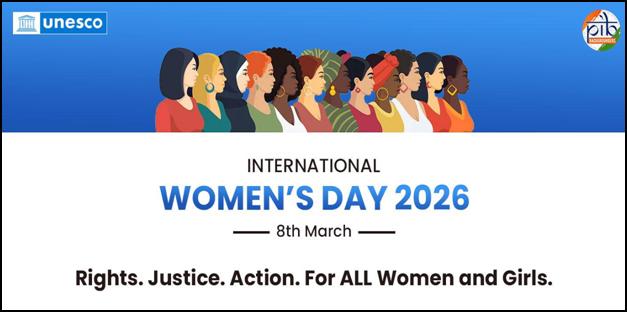
TFP Bureau, New Delhi, March 7, 2026: As India and the world prepare to mark International Women’s Day on March 8, 2026, the focus turns to recognising women as central drivers of social, economic and political progress. This year’s theme, “Rights. Justice. Action. For ALL Women and Girls,” highlights the need to advance gender equality, strengthen legal protections, and accelerate inclusive development through women-led initiatives.
From grassroots movements to national policies, India has steadily evolved from development focused on women to development led by women, recognising their role not only as beneficiaries but as agents of transformation across sectors. Across the country, millions of women are actively shaping the development trajectory of villages, cities, enterprises, and governance systems.
Key Highlights of International Women’s Day 2026
Global “Give to Gain” Campaign
The United Nations and partner organisations are promoting the “Give to Gain” initiative, encouraging individuals, communities and institutions to invest time, mentorship, and resources to enable women to succeed. This campaign reinforces the idea that empowering women benefits not only individuals but entire communities, creating inclusive and resilient societies.
Celebrations in New Delhi
In the national capital, a series of events will mark the occasion. The Shakti Walk – #SheLeadsBharat – along Kartavya Path from India Gate to Vijay Chowk will symbolically showcase the growing presence of women in every field of public life. The celebrations at the Manekshaw Centre Auditorium will feature women achievers from governance, science, arts, enterprise, and grassroots leadership, highlighting their contributions to India’s journey toward a Viksit Bharat by 2047.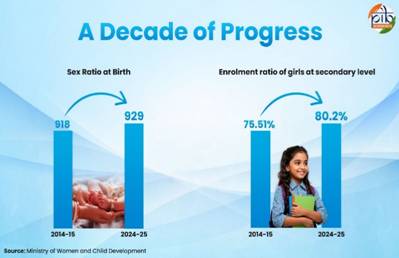
Constitutional Guarantees and Legal Protections
India’s Constitution guarantees equality, prohibits discrimination, and empowers women to participate fully in democratic processes. Key provisions include:
- Article 15 and 16 ensuring non-discrimination in law and public employment.
- Article 39 and 42 promoting equal livelihood opportunities and maternity benefits.
- Reservations under Articles 243 and 243-A in Panchayati Raj Institutions and urban local bodies for women, including SC/ST representation.
- The 106th Constitutional Amendment Act (Nari Shakti Vandan Adhiniyam, 2023), providing one-third representation for women in Parliament and State Assemblies.
Legal frameworks like the POSH Act, One Stop Centres, Women Helplines, and SHe-Box strengthen safety and accountability, enabling women to participate confidently in public and professional spaces.
Education and Skill Development
Women’s education and skill enhancement remain central to empowerment. Initiatives such as Samagra Shiksha, Kasturba Gandhi Balika Vidyalayas, supernumerary seats in IITs and NITs, and schemes like Sukanya Samriddhi Yojana have expanded educational access. Female enrolment in higher education rose from 1.57 crore (2014–15) to 2.18 crore (2022–23), while the Female Gross Enrolment Ratio increased from 22.9 to 30.2. Over 53% of UGC NET-JRF scholars in STEM subjects in 2024–25 were women, reflecting growing participation in research and innovation.
Health, Nutrition and Household Empowerment
Government programmes such as Pradhan Mantri Matru Vandana Yojana, Poshan Abhiyan, and Pradhan Mantri Surakshit Matritva Abhiyan have strengthened maternal health and nutrition. The Ujjwala Yojana has provided over 10.56 crore LPG connections, improving household health and reducing women’s domestic burden. Jal Jeevan Mission and Swachh Bharat Mission have transformed water and sanitation access, improving dignity and public health for women nationwide.
Financial Inclusion and Women’s Entrepreneurship
Women’s participation in economic life is increasing through schemes like DAY-NRLM, Lakhpati Didi, Pradhan Mantri MUDRA Yojana, Stand-Up India, and GeM-based procurement. As of 2025, 10.05 crore rural households are mobilised into 90.90 lakh SHGs, with ₹12.18 lakh crore in institutional credit accessed. Women-led micro-enterprises and technology-driven initiatives, such as the NaMo Drone Didi Yojana, are opening new avenues in rural economies and emerging sectors.
Case studies exemplifying women-led development include:
Badashisha Dkhar, Meghalaya – From joining a local SHG in 2019 to setting up a juice-processing micro-enterprise, she now employs three people and earns ₹1.8 lakh annually.
Reena, Maharashtra – Her women-run health cooperative with 1,500 members operates medical shops and health services, generating ₹60.25 million in annual revenue, creating livelihoods and leadership opportunities.
Priya, Karnataka – Founder of a renewable energy-powered drone company, delivering healthcare solutions to remote communities, generating ₹12 million annually and employing 10 people.
Political Participation and Leadership
Women’s voice in governance is stronger than ever. Nearly half of elected representatives in Panchayati Raj Institutions are women, reshaping local development priorities. Participation in Parliament, state assemblies, and urban local bodies has steadily increased, strengthened further by constitutional amendments and policy support.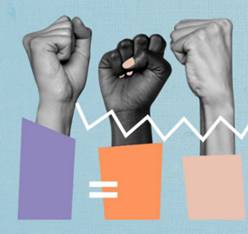
Conclusion: From Rights to Action
International Women’s Day 2026 underscores that progress requires more than symbolic gestures—it demands rights, justice, and sustained action. India’s women are now leaders in entrepreneurship, governance, education, health, and technology, turning opportunity into tangible change. Through access to credit, training, and supportive ecosystems, millions of women are contributing to a women-led development agenda, shaping the nation’s growth and advancing the vision of Viksit Bharat.
Across every village, classroom, farm, and enterprise, women in India are proving that empowerment is both a journey and a destination, ensuring that the country’s future is built on equality, inclusion, and the leadership of Nari Shakti.