Nearly ₹800 crore transferred directly to workers in two years; education, housing and food security initiatives strengthened ahead of International Workers’ Day
TFP Bureau, Raipur, April 30: Ahead of International Workers’ Day on May 1, the Chhattisgarh government has reiterated its commitment to improving the social and economic conditions of labourers through a range of welfare schemes and direct financial support.
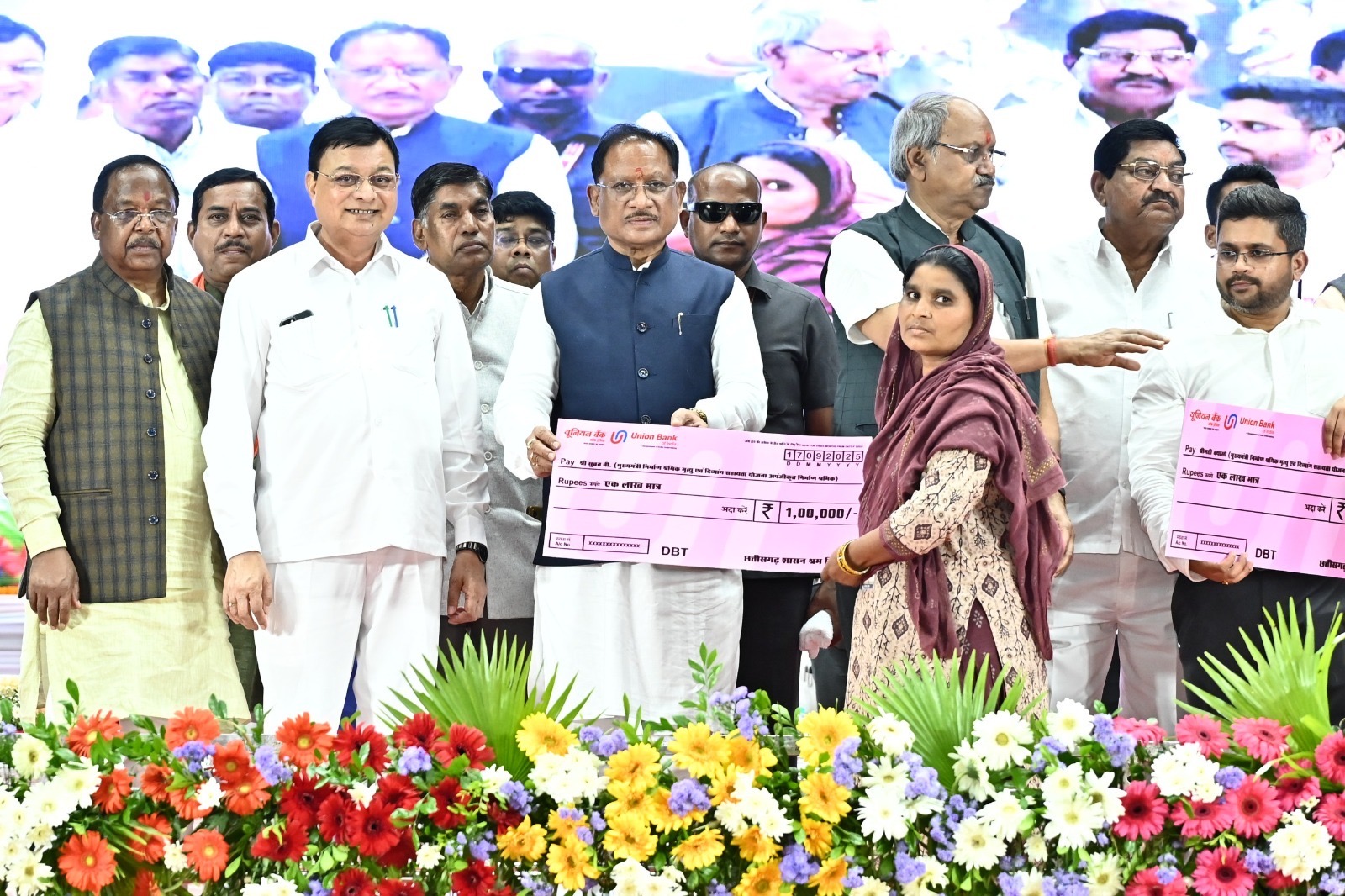
Under the leadership of Chief Minister Vishnu Deo Sai, the state government has transferred nearly ₹800 crore directly into the bank accounts of workers over the past two years and four months through various welfare schemes using the Direct Benefit Transfer (DBT) system.
Officials said these initiatives are being implemented through three key boards of the Labour Department—the Chhattisgarh Building and Other Construction Workers Welfare Board, the Chhattisgarh Unorganized Workers State Social Security Board, and the Chhattisgarh Labour Welfare Board—aimed at ensuring financial assistance and social security for workers and their families.
As part of the government’s focus on education, 200 children of workers will be admitted to leading private schools in the state this year under the Atal Utkrisht Shiksha Yojana, offering them access to quality education.
Significance of International Workers’ Day
International Workers’ Day, observed globally on May 1, commemorates the struggle for workers’ rights, social justice and better working conditions. The day traces its origins to the 1886 workers’ protests at Haymarket Square in Chicago, where labourers demanded an eight-hour workday. In 1889, the Second International officially declared May 1 as International Labour Day.
In India, Labour Day was first observed in 1923 in Chennai (then Madras). Dr. B. R. Ambedkar, who chaired the drafting committee of the Indian Constitution, played a key role in labour reforms by reducing working hours from 12 to eight hours and introducing maternity benefits for women workers.
Chief Minister Sai has emphasised that the Labour Department plays a vital role in bringing positive changes to workers’ lives. He has directed officials to ensure effective implementation of welfare schemes while conducting technology-enabled surprise inspections of industrial units to safeguard workers’ rights.
“Worker’s child will not remain a labourer”: Minister
State Labour Minister Lakhanlal Dewangan said the government is working to ensure that the children of labourers have access to education and opportunities for a better future.
“The child of a labourer in the state will no longer be destined to remain a labourer,” Dewangan said, highlighting several welfare initiatives currently being implemented by the department.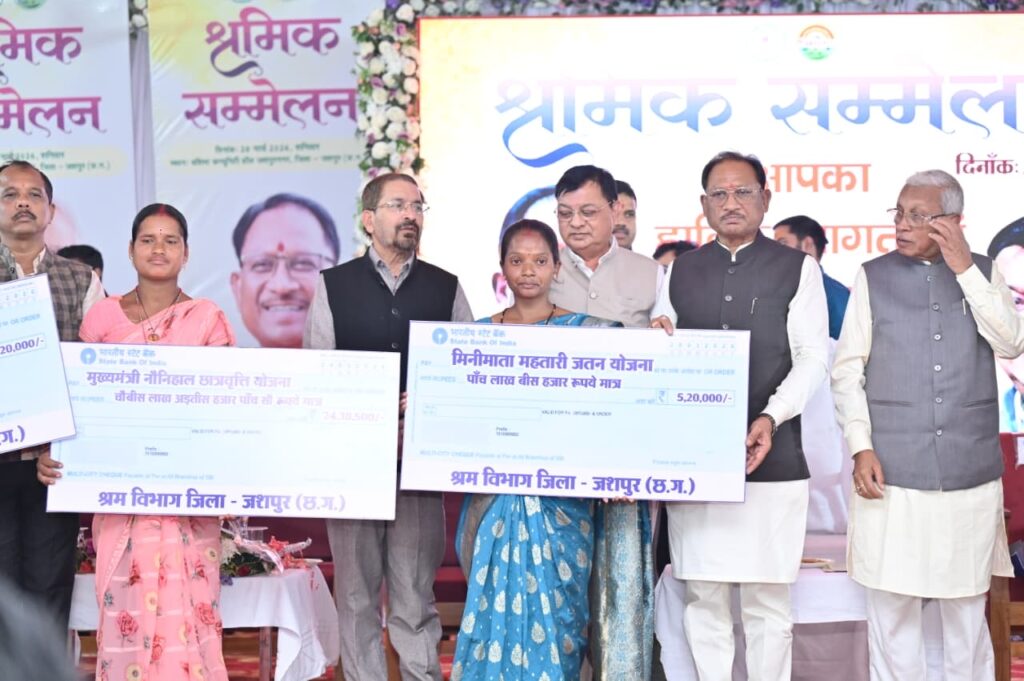
Key schemes include the Chief Minister Naunihal Scholarship Scheme, Minimata Mahtari Jatan Scheme, Chief Minister Shramik Aujar Kit Scheme, Chief Minister Noni Babu Meritorious Education Incentive Scheme, assistance for free uniforms and study materials for children of construction workers, sports excellence incentives, the Chief Minister Construction Worker Housing Assistance Scheme, and the Shaheed Veer Narayan Singh Shram Anna Scheme.
The Labour Department has been allocated ₹256 crore in the 2026–27 state budget to expand welfare programmes and strengthen labour support systems.
Expansion of subsidised meals and housing aid
Under the Shaheed Veer Narayan Singh Shram Anna Scheme, 38 subsidised food centres are currently operating across various districts. Workers are provided a hot meal—comprising dal, rice, vegetables and pickles—for just ₹5. The government plans to expand the scheme to all districts during the current financial year.
Housing assistance for workers has also been increased from ₹1 lakh to ₹1.5 lakh per unit, while the subsidy for e-rickshaw assistance has similarly been enhanced to ₹1.5 lakh.
Over 33 lakh workers registered
According to official data, more than 33.14 lakh workers have been registered under the Building and Other Construction Workers Welfare Board since September 5, 2008. The board currently runs 26 welfare schemes, covering 60 categories of workers.
During 2025–26, the board collected ₹315 crore through the 1% labour cess, taking the total cess collection since inception to ₹2,808 crore. Of this, ₹2,558 crore has been spent on worker welfare schemes as of March 2026.
Focus on safety and health
The state government has also prioritised workplace safety and healthcare for labourers. A budget of ₹10 crore has been earmarked for industrial health and safety measures this financial year.
Additionally, ₹76.38 crore has been allocated for Employees’ State Insurance (ESI) services, which provide medical care to workers and their families.
Officials said the government’s labour welfare initiatives aim to ensure employment opportunities, fair wages and social security, reinforcing the message of “work for every hand and dignity for every worker.”