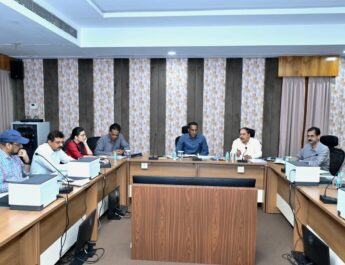

TFP Bureau, New Delhi, May 9, 2025 — In a major step toward reforming India’s coal sector and ensuring reliable, affordable power supply, the Cabinet Committee on Economic Affairs (CCEA), chaired by Prime Minister Shri Narendra Modi, has approved a revised version of the SHAKTI (Scheme for Harnessing and Allocating Koyala Transparently in India) Policy. The decision, made during a cabinet meeting held on May 7, 2025, is set to further simplify and strengthen coal allocation for the power sector.
The revised SHAKTI Policy consolidates multiple coal linkage provisions into just two streamlined “Windows,” aimed at making coal distribution more transparent, competitive, and accessible. It marks a significant progression from the earlier nomination-based system to a more market-oriented model introduced under the original SHAKTI framework in 2017.
Two Windows for Simplified Coal Linkage
Under the revised policy, coal linkages will now be granted through two categories:
-
Window I: Linkage at the notified price for central and state-owned power producers, including their joint ventures and subsidiaries.
-
Window II: Linkage through auctions at a premium above the notified price, open to all domestic coal-based power producers and even imported coal-based (ICB) plants, allowing them to secure coal flexibly for periods ranging from 12 months to 25 years.
Reform to Fuel Power Generation and Economic Growth
The updated policy introduces greater flexibility, wider eligibility, and improved access to coal. It is expected to increase power production, lower electricity tariffs, and support economic growth. By encouraging optimal utilization of Un-requisitioned Surplus (URS) capacity and allowing power sale in open markets, the policy is also set to deepen the country’s power markets.
Officials stated that the reform will revitalize stressed power assets, drive investment in pithead thermal power plants, and reduce reliance on imported coal—furthering India’s push for energy self-sufficiency under the Atmanirbhar Bharatmission.
Support for Coal-Rich States and Local Development
Increased mining activities resulting from greater coal demand are expected to generate additional revenue for coal-bearing states, which can be directed toward regional development and welfare of local communities. The move also aligns with the government’s broader goals of inclusive development and energy security.
Key Highlights of the Revised SHAKTI Policy:
-
Coal linkage now mapped into two transparent allocation windows.
-
Support for power plants with existing and new Power Purchase Agreements (PPAs).
-
Inclusion of ICB plants for domestic coal allocation.
-
Flexibility for power producers to sell electricity via open market mechanisms.
-
Boost to coal-based thermal capacity expansion and reduced dependence on global coal markets.
Government officials emphasized that the revised SHAKTI Policy is not just a step toward efficient coal utilization but a strategic leap toward a more secure, self-reliant, and affordable energy future for India.