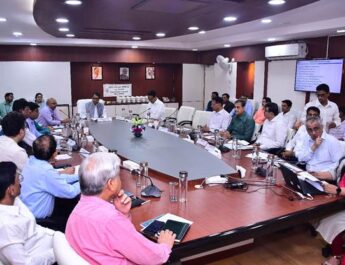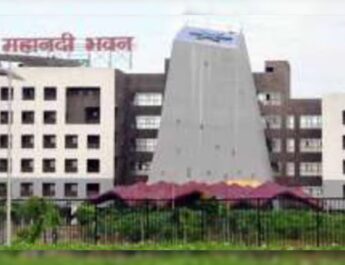
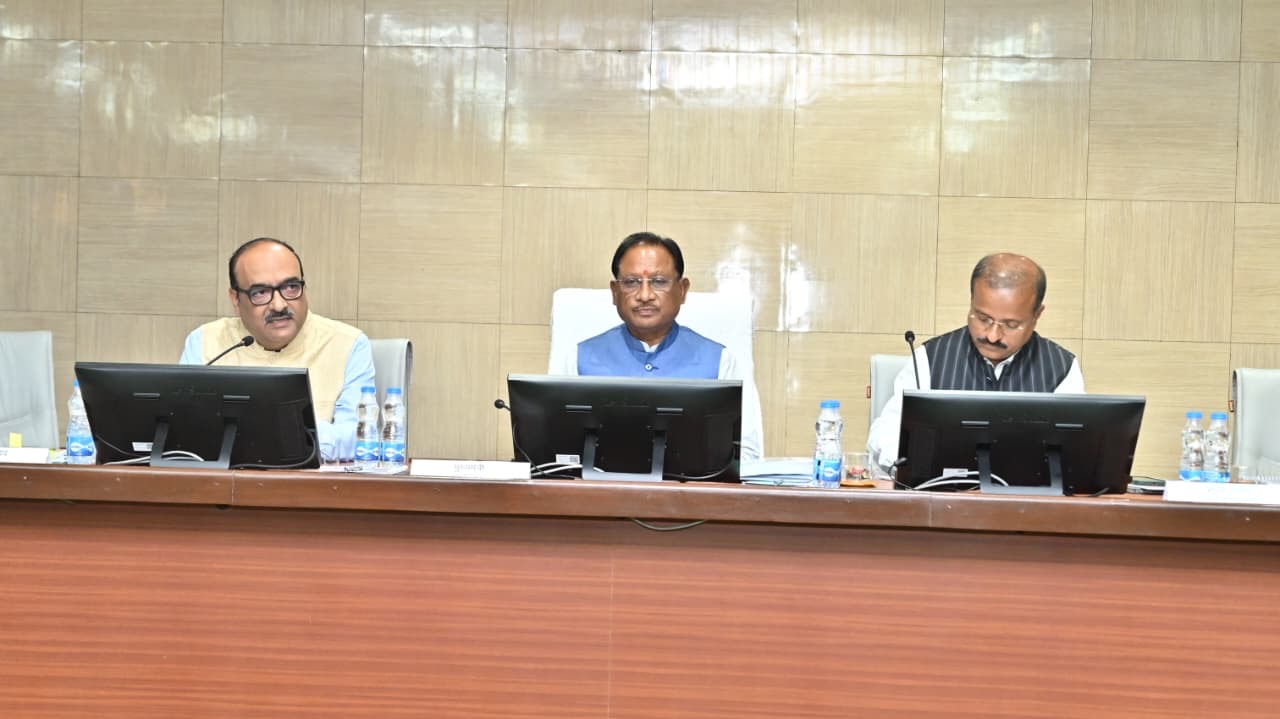
TFP Bureau, Raipur, October 12, 2025: Chief Minister Vishnu Deo Sai has set a clear roadmap for Chhattisgarh’s administrative machinery, emphasizing discipline, transparency, and accountability as the cornerstones of good governance. Chairing a marathon nine-hour Collectors’ Conference 2025 at Mahanadi Bhawan, the Chief Minister gave a firm message that governance must reflect in real outcomes, not just in reports. The meeting, which began ahead of schedule, symbolized his hallmark of punctuality and result-driven administration. Chief Secretary Vikas Sheel, all departmental secretaries, divisional commissioners, and district collectors attended the conference.
Opening the session, Chief Minister Sai said that the “ultimate measure of governance lies in the visible transformation of people’s lives.” He directed officers to ensure that every welfare scheme and government service reaches its intended beneficiary within the stipulated time. “Any negligence or delay at any level will not be tolerated,” he warned. The CM said the purpose of such conferences was not just to review files but to redefine public service standards and establish a culture of discipline, dedication, and measurable results.
Paddy Procurement: CM’s Zero-Tolerance for Lapses
The Chief Minister announced that the paddy procurement process across the state would begin on November 15 and instructed all districts to complete preparations well in advance. He cautioned that any irregularity in procurement would invite direct action against the concerned collector. Each procurement centre must be monitored in real time through the Integrated Command and Control Centre, especially in border districts, to prevent the illegal inflow of paddy from neighbouring states. The CM further directed that Secretary-in-Charge officers must personally supervise operations at sensitive procurement centres to maintain complete transparency.
Special emphasis was laid on tribal and remote areas. The CM ordered 100 percent registration of farmers belonging to Particularly Vulnerable Tribal Groups (PVTGs) through special registration camps. Reviewing the PM Kisan Samman Nidhi, he instructed that no eligible farmer should be left out and that benefits must be transferred promptly. “Farmers are the backbone of our economy—their welfare is our moral and administrative responsibility,” he asserted.
Energy, Health, and Public Welfare
During the review of the Energy Department, CM Sai directed the expansion of the Pradhan Mantri Suryaghar Muft Bijli Yojana to cover more rural beneficiaries. He said banks should simplify loan procedures to ensure no eligible family is deprived of solar power benefits. The CM reiterated that energy reforms must prioritize ease of access, reliability, and affordability for rural consumers.
In the health sector, CM Sai reaffirmed that quality healthcare remains the state government’s foremost priority. He ordered that 100 percent institutional deliveries be ensured and immunization records be verified through field inspections. Maternal death audits must be conducted for every case to devise preventive measures. He also emphasized the smooth functioning of Nutrition Rehabilitation Centres (NRCs) and Wellness Centres, calling for mass awareness campaigns against non-communicable diseases (NCDs).
The CM issued a strong directive to make Chhattisgarh a malaria-free state. He instructed officials to identify hotspot areas, especially in Bastar division, and intensify anti-malaria drives. Under the Pradhan Mantri Vaya Vandana Yojana, he ordered the immediate registration and card distribution for all eligible senior citizens to ensure timely pension delivery.
Education: From Zero Dropouts to Digital Transparency
Highlighting education as the foundation of development, CM Sai said that achieving a zero dropout rate and 100 percent Gross Enrolment Ratio (GER) must be non-negotiable targets. He stressed that educational outcomes should be visible in classrooms, not just on paper. “Teaching materials must not remain locked in cupboards—they should be part of daily learning,” he said, directing collectors to personally verify classroom activities.
The CM lauded Bijapur district’s initiative of employing local teachers to teach in Gondi language, which has significantly improved attendance and reduced dropouts. He encouraged all districts to adopt similar culturally inclusive approaches to education. Sai announced that by December 31, all students in the state will be issued Aadhaar-linked APAR IDs to ensure transparent distribution of scholarships, uniforms, and textbooks. He also declared the upcoming launch of the “Chief Minister’s Education Quality Mission,” which will introduce school grading, social audits, and periodic assessments to raise academic standards statewide.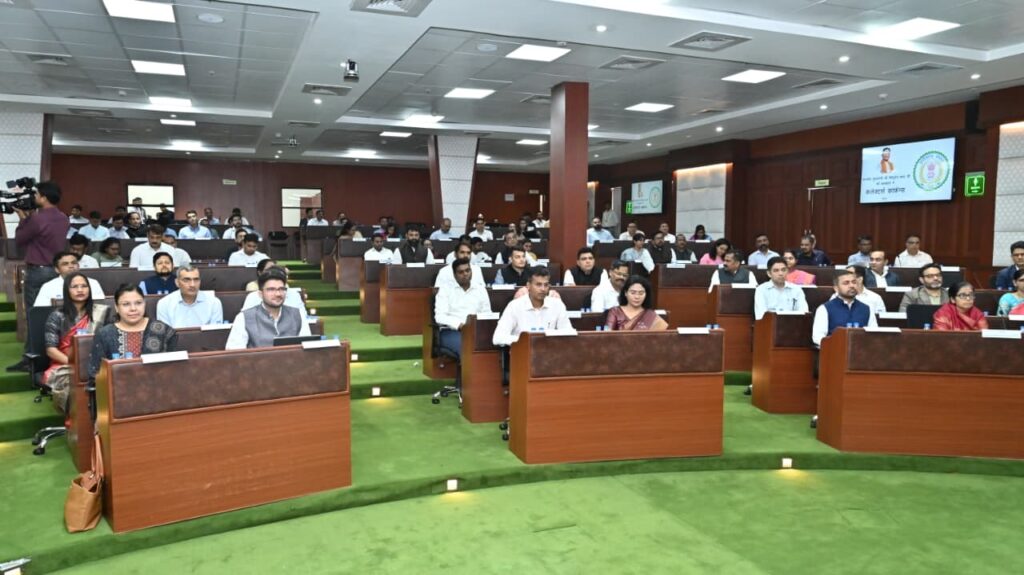
Tribal Welfare and Rural Development
The CM stressed the importance of the “Dharti Aaba Abhiyan,” which integrates 17 departments for holistic tribal development, covering livelihoods, hostels, water supply, dairy, fisheries, and tourism. He congratulated officials for Chhattisgarh’s top rank in the national “Aadi Karmyogi Abhiyan,” which has reached 6,650 villages across 128 blocks, empowering tribal youth towards self-reliance.
Reviewing the PM Janman Yojana, CM Sai instructed that all works be completed by March 2026, particularly in PVTG habitations. Over two lakh residents in 2,300 villages have benefited from the scheme so far. He commended Manendragarh and Dhamtari districts for exemplary performance and urged other districts to replicate their success.
Urban Governance, Civic Reforms, and Cleanliness
Turning to urban issues, the CM directed the Urban Administration Department to ensure uninterrupted water supply in all municipalities and completion of pending PM Awas Yojana (Urban) houses by December 31, 2025. Completed houses must be allotted to beneficiaries within two months, and contractors delaying work will face penalties. Under the “Mor Gaon Mor Pani Abhiyan,” rainwater harvesting systems have already been installed in over 1.5 lakh homes.
CM Sai expressed dissatisfaction over delays in payments under the Swachh Bharat Mission, stating that such negligence hampers the momentum of the cleanliness drive. He instructed that all payments be processed on time and ordered collectors to conduct morning inspections of wards before 7 a.m. to monitor cleanliness, sanitation, and waste management.
Skill Development, Employment, and E-Governance
To boost youth employment, the CM directed the Technical Education and Skill Development Department to organize a state-level job fair and ensure that all PM Kaushal Vikas Yojana batches are completed on schedule. He emphasized linking skill training with actual employment opportunities, saying, “Training without jobs has no meaning.” He instructed collectors to identify land for Livelihood Colleges, prepare skill-gap analyses, and organize quarterly loan fairs to promote entrepreneurship.
On e-governance, CM Sai highlighted that all citizens must receive certificates and services promptly under the Lok Seva Guarantee Act. He reviewed the progress of 86 online services available through the e-District project and instructed collectors to digitize more services to ensure transparency and efficiency.
Zero Tolerance Policy on Corruption and Accountability
Issuing a strong warning, the CM reiterated that the government’s Zero Tolerance Policy against corruption applies to all sectors—from paddy procurement and sand mining to administrative decisions. “Strictest action will be taken against any officer or employee found guilty of irregularities,” he said. He emphasized timely payments to contractors and warned that delays would be treated as administrative negligence.
He also ordered all departments to operationalize biometric attendance systems at district and tehsil levels to ensure accountability. Officers were directed to conduct surprise inspections and submit reports of corrective action taken against non-performing officials.
Concluding the conference, Chief Minister Vishnu Deo Sai urged collectors to focus on result-oriented administration, respect public representatives, and maintain constant communication with citizens. “Governance is not just about execution—it is about empathy, engagement, and responsibility,” he said. “A sensitive administration earns people’s trust, and that trust is the true measure of success.”
With his decisive leadership and emphasis on efficiency, the Chief Minister’s directives mark a new phase in Chhattisgarh’s governance model—one defined by discipline, transparency, and people-centric progress.