

TFP Bureau, Raipur, December 24, 2025: The Chhattisgarh government has made significant strides in strengthening technical education, skill development and employment generation, with a sharp rise in student enrolment, expansion of institutions and focused interventions in innovation and livelihood training. These developments were outlined by Shri Guru Khushwant Saheb, Minister for Technical Education, Employment and Skill Development, during a press conference held here on Wednesday.
The Minister said the Technical Education Department is continuously working towards the coordinated development of technical and vocational education in the state. At present, 29 engineering colleges, 53 polytechnic institutions and 101 pharmacy colleges are operating under the department, offering 30 undergraduate and 36 postgraduate engineering courses, along with 21 three-year diploma programmes in polytechnics. Nearly 60,000 students are currently enrolled across these institutions, with a 20 per cent increase in admissions recorded this academic year compared to previous years.
From the academic session 2025–26, the state has launched Chhattisgarh Institutes of Technology on the lines of IITs by upgrading select government engineering colleges and polytechnic institutions. These institutes will introduce emerging disciplines such as Robotics and Internet of Things. New Institutes of Technology will soon be established in Raipur, Bilaspur and Durg, the Minister announced.
To promote innovation and entrepreneurship, the state government has signed an MoU with i-Hub Gujarat to establish an i-Hub in Chhattisgarh. An innovation hub has already been set up at Government Engineering College, Raipur, where students are receiving mentoring for startups and technology-driven ventures.
The department has also signed MoUs with Apanatech Pvt Ltd for employment opportunities, CSRBOX Pvt Ltd for job-oriented training, and industry bodies CII and Young Indians to integrate student innovation projects with industrial applications. The National Education Policy 2020 has been implemented by Chhattisgarh Swami Vivekananda Technical University from the 2025–26 academic session.
Under the Chief Minister’s Higher Education Loan Interest Subsidy Scheme, students from economically weaker sections pursuing technical and vocational courses are receiving interest subsidies on education loans up to ₹4 lakh. So far, ₹22.53 crore has been disbursed to 11,643 students.
The department has also carried out large-scale promotions and pay-scale upgrades, including promotion of 204 faculty members under the Career Advancement Scheme, and benefits extended to over 400 non-teaching staff across engineering colleges and polytechnics.
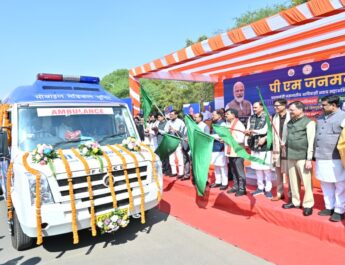
Under central schemes, 3,326 youth were trained under PM Kaushal Vikas Yojana 4.0, while 12,952 beneficiaries received livelihood training under PM Vishwakarma. Training was also imparted to 726 youth from Particularly Vulnerable Tribal Groups under PM-JANMAN and over 1,400 youth under the Nal Jal Mitra Programme.
At the state level, the Chief Minister’s Skill Development Scheme trained 14,109 youth, of whom 10,089 have already secured employment. Special programmes under Niyad Nellanaar and rehabilitation initiatives trained surrendered youth and those from Naxal-affected families.
To strengthen skills in Bastar division, the government has allocated ₹400 lakh to establish Skill Development Centres in every development block and ₹1,000 lakh for residential training facilities in LWE areas. Hostels, relaxed Aadhaar norms for surrendered youth, and registration of rehabilitation centres as Vocational Training Providers are further supporting inclusive skilling.
Chhattisgarh has increased the number of ITIs from 197 to 201, introduced new-age trades such as Drone Technician, 5G Network Technician and 3D Printing, and closed obsolete courses. Placement camps, career guidance in schools, and pre-coaching for Agniveer recruitment have also been intensified.
The Minister said Chhattisgarh is steadily building a future-ready workforce by aligning education, skills and industry needs, ensuring that youth across all regions—especially tribal and LWE areas—benefit from inclusive growth and sustainable employment opportunities.