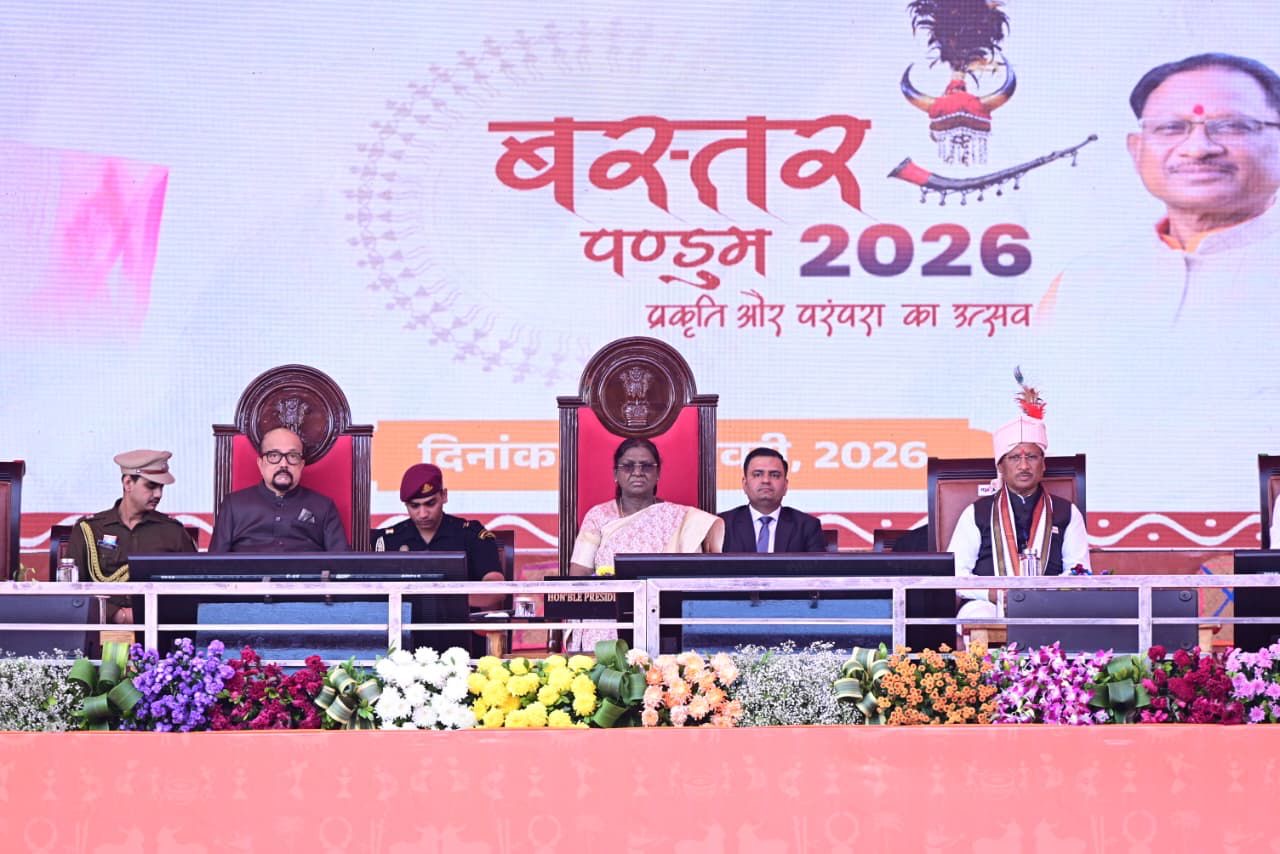
President Droupadi Murmu receives a warm welcome in Jagdalpur and later visits a grand Bastar Pandum exhibition, praising it as a powerful platform for preserving and showcasing the rich tribal traditions of Chhattisgarh to the world.
TFP Bureau,Raipur, February 7, 2026: President of India Smt. Droupadi Murmu arrived in Jagdalpur on Friday on a significant visit to Bastar, where she was accorded a warm and ceremonial welcome and later toured a grand exhibition organised as part of Bastar Pandum, celebrating the region’s vibrant tribal culture, traditions and artistic heritage.
Upon her arrival at Maa Danteshwari Airport, Jagdalpur, the President was received by Governor Shri Ramen Deka and Chief Minister Shri Vishnu Deo Sai, who welcomed her with bouquets. Union Minister of State Shri Tokhan Sahu, Deputy Chief Minister Shri Vijay Sharma, Forest Minister Shri Kedar Kashyap, Member of Parliament Shri Mahesh Kashyap, Jagdalpur MLA Shri Kiran Singh Deo and Mayor Shri Sanjay Pandey were also present to greet the President.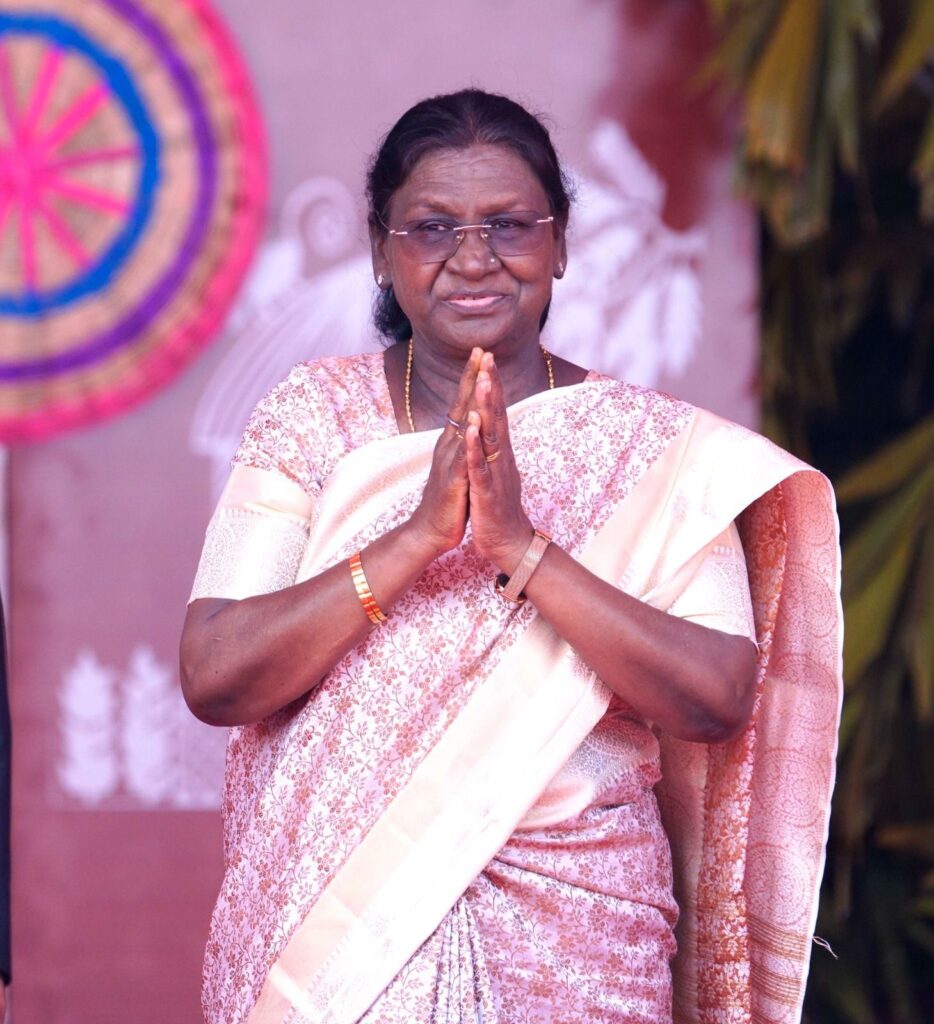
Welcoming the President, Chief Minister Shri Vishnu Deo Sai described her visit as a moment of pride and honour for Bastar and the entire state of Chhattisgarh. He said her presence on the sacred and historic land of Maa Danteshwari symbolised respect for the region’s rich tribal culture, traditions and heritage, and would further strengthen efforts towards inclusive development and recognition of tribal identity.
Following her arrival, President Murmu visited the Bastar Pandum venue, where she toured an extensive exhibition deeply rooted in the earthy essence of Bastar and its ancient tribal traditions. The President interacted with local artisans, craftsmen and residents, keenly observing their work and seeking detailed information about the artistic processes and cultural significance of the exhibits.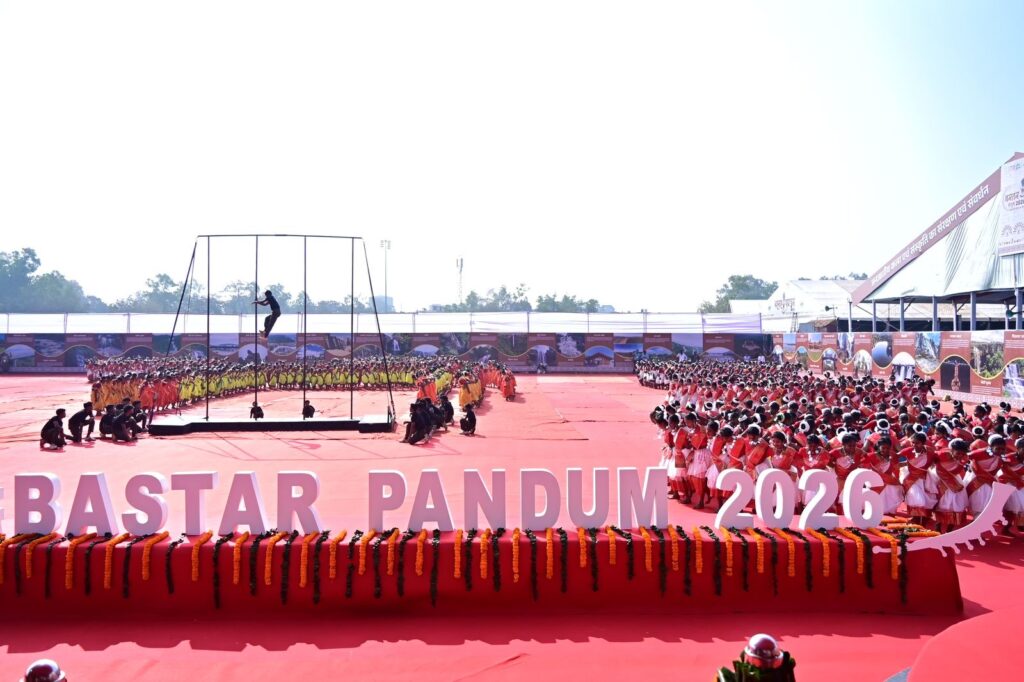
The President appreciated Bastar Pandum as a meaningful initiative for preserving tribal heritage and giving it a global identity. She noted that such platforms play a vital role in sustaining traditional knowledge systems while creating new opportunities for artisans and local communities.
The exhibition featured a wide range of traditional crafts, including Dhokra metal art, terracotta figurines, wood carving, sisal and jute crafts, bamboo products, wrought iron artefacts, tribal paintings, traditional attire and jewellery, as well as displays of folk art and literature. A special section showcased Dhokra art, one of India’s oldest tribal metal craft traditions based on the lost-wax casting technique. Crafted entirely by hand using clay, wax, brass and traditional furnaces, the artefacts vividly depicted deities, nature and rural life.
Clay figurines representing local terracotta art reflected folk beliefs, village life and traditional faiths, while intricately carved wooden sculptures made from teak, sal and bija wood demonstrated the high level of skill and artistry of Bastar’s craftsmen. The President also reviewed stalls featuring sisal and jute-based fabrics and handicrafts.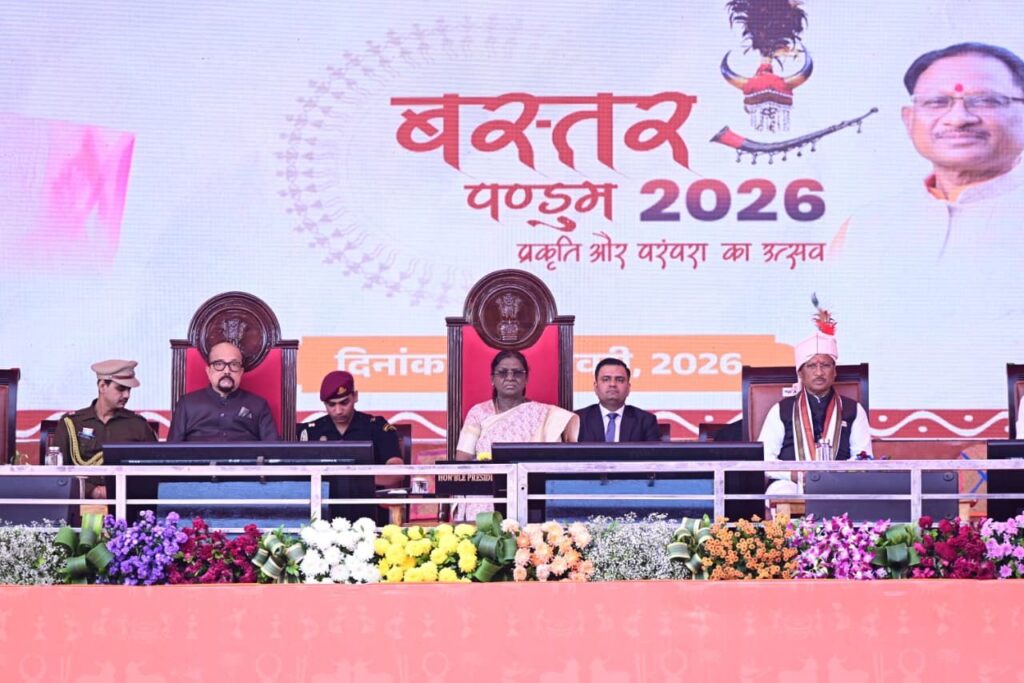
Bamboo craft stalls displayed traditional utility and decorative items, while wrought iron artefacts drew attention for their fine craftsmanship and aesthetic appeal. Tribal jewellery stalls particularly captivated the President, showcasing ornaments made from silver, beads, shells and metals that symbolise social customs and cultural identity of tribal communities.
Another highlight was Tumba art, featuring traditional musical instruments and decorative items crafted from dried gourd-like fruits. At the tribal attire and jewellery stall, young men and women from communities such as Dandami Madia, Abujhmadia, Muria, Bhatra and Halba presented their traditional costumes and ornaments, offering visitors a living glimpse of Bastar’s diverse tribal identity.
The President also visited an exhibition of tribal paintings, where simple colours and symbolic motifs depicted forests, folk deities, festivals and everyday life. These artworks reflected a cultural legacy passed down through generations and underscored the close relationship between tribal communities and nature.
A local cuisine stall offered traditional food items integral to tribal life, including Jondhari lai laddoos, Jondhara, Mandia pej, Aamat, Chapda chutney, Bhenda chutney, Kulthi dal, Paan bobo and Tikhur, along with traditional beverages such as Landa and Salfi. Folk painting displays and literature related to Bastar’s history, culture and tribal society further enriched the exhibition experience.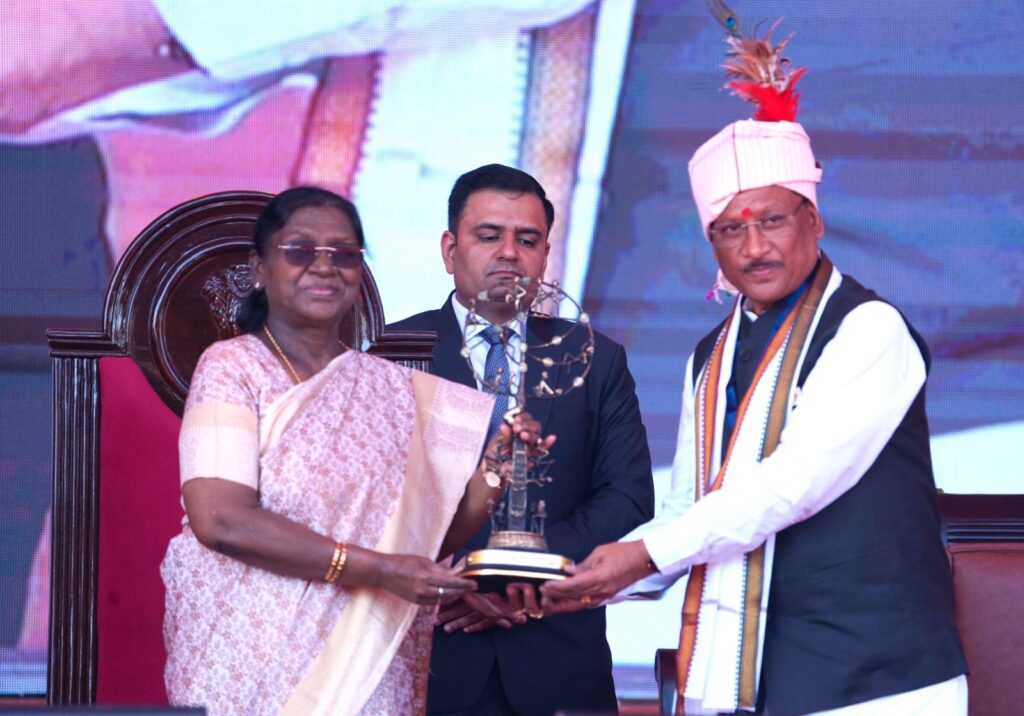
President Murmu’s visit to Jagdalpur and her interaction with artisans and cultural practitioners highlighted the national importance of Bastar’s tribal heritage. The visit was widely seen as an affirmation of the region’s cultural richness and a boost to ongoing efforts to preserve, promote and globally showcase Chhattisgarh’s tribal traditions.