Statement of Intent aims to strengthen maternal and child health services and mobilise CSR support in underserved regions
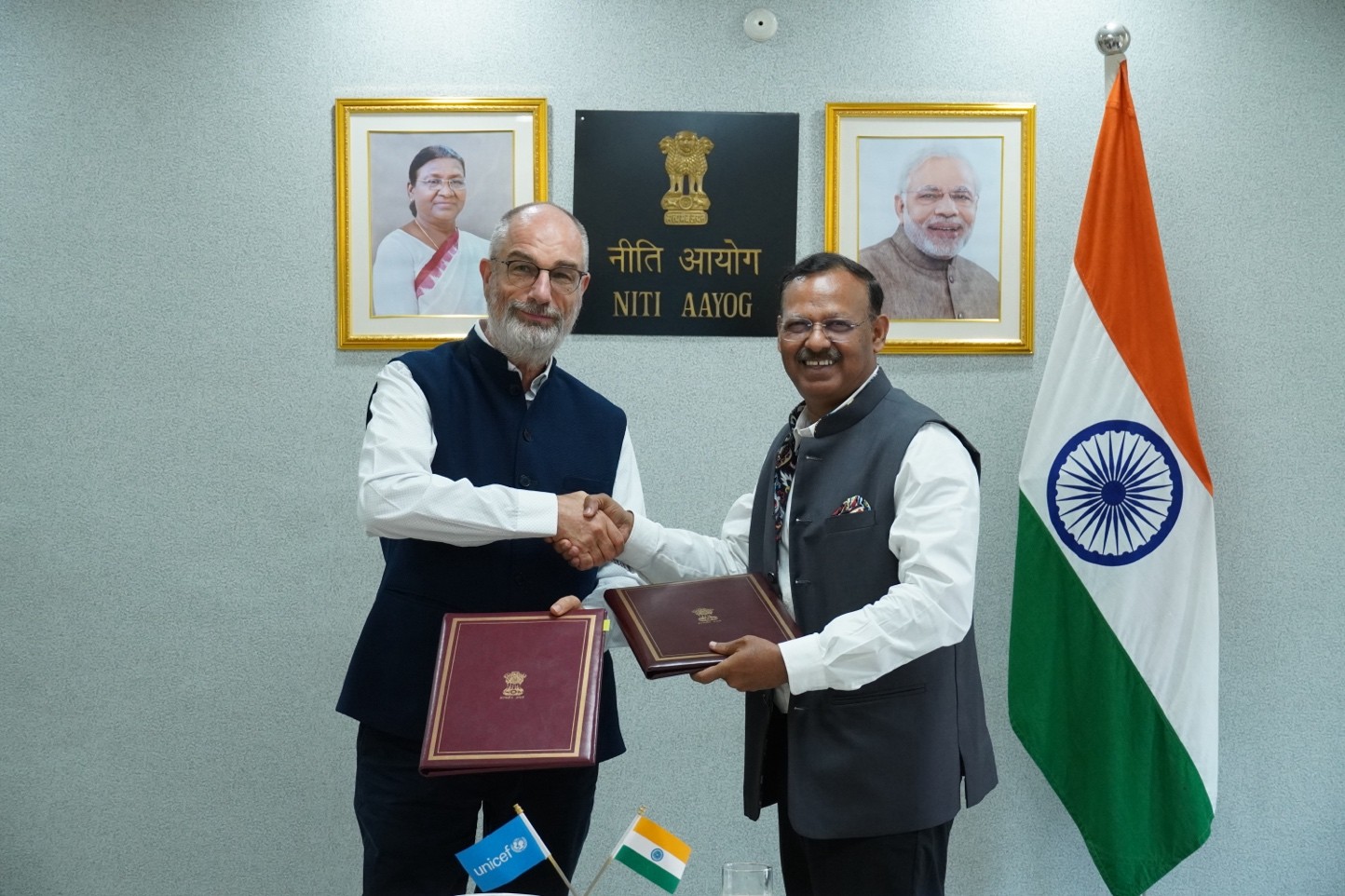
TFP Bureau, New Delhi, March 5,2026: In a major step toward improving nutrition and health outcomes in underserved regions, NITI Aayog and UNICEF India on Thursday signed a Statement of Intent (SoI) to strengthen strategic interventions in Aspirational Districts and Aspirational Blocks across the country.
The agreement was signed by Rohit Kumar, Additional Secretary and Mission Director of the Aspirational Districts and Blocks Programme at NITI Aayog, and Arjan de Wagt, Deputy Representative of UNICEF India. The partnership aims to combine the expertise and resources of both organisations to accelerate improvements in maternal and child nutrition, particularly in regions facing persistent developmental challenges.
Under the collaboration, both institutions will work together to strengthen implementation systems for nutrition and health programmes at the grassroots level, especially at the block level where service delivery often faces operational challenges. The initiative is expected to promote stronger coordination among multiple stakeholders including government departments, private sector organisations, civil society groups and local communities.
Speaking on the occasion, Rohit Kumar said that the Aspirational Districts and Blocks Programme has demonstrated how convergence of government schemes, collaborative partnerships and data-driven governance can significantly accelerate development outcomes. He emphasised that partnerships with organisations such as UNICEF India will further strengthen efforts to address critical health and nutrition issues while improving last-mile delivery of services in high-priority districts and blocks.
He noted that nutrition and health indicators remain key priorities under the Aspirational Districts Programme, which focuses on improving outcomes in sectors such as health, education, agriculture, water resources, financial inclusion and skill development. Enhanced cooperation with development partners, he said, will help scale innovative solutions and ensure that government initiatives reach the most vulnerable populations.
As part of the partnership, UNICEF India will extend technical support through its IMPAct4Nutrition (I4N) platform. The platform works to mobilise private sector participation in nutrition initiatives by encouraging corporate social responsibility (CSR) investments and collaboration with industry associations and public sector enterprises.
Through the I4N platform, UNICEF will help channel CSR resources toward targeted nutrition programmes in Aspirational Districts and Blocks. The initiative will focus on improving Anganwadi infrastructure, enhancing nutrition literacy among communities, increasing the uptake of Integrated Child Development Services (ICDS) and strengthening the capacity of frontline workers involved in maternal and child care.
Officials said that several key activities will be undertaken as part of the collaboration. These include mobilising corporate partners to support nutrition and health programmes, strengthening community participation, improving monitoring and evaluation systems, and promoting knowledge-sharing platforms that can identify successful interventions and replicate them across different regions.
The partnership will also support the dissemination of best practices from high-performing districts and blocks, enabling other regions to adopt proven models for improving nutrition and health outcomes. By focusing on community engagement and capacity-building, the initiative aims to create sustainable improvements in the delivery of essential services.
Experts believe that improved nutrition and maternal health are crucial for long-term social and economic development, particularly in districts where malnutrition and inadequate healthcare services continue to affect vulnerable populations. Collaborative efforts involving government institutions, development organisations and private sector partners are increasingly seen as essential for addressing these challenges effectively.
The signing of the Statement of Intent reflects the shared commitment of NITI Aayog and UNICEF India to strengthen health and nutrition outcomes through evidence-based strategies, coordinated action and stronger partnerships across sectors. Officials said the collaboration will contribute to accelerating progress in India’s most underserved regions and help ensure that development benefits reach communities that need them the most.