Jal Jeevan Mission brings piped drinking water to Abujhmad hamlet near Maharashtra border; women relieved from long daily walks for water
TFP Bureau, Raipur, April 12,2026:
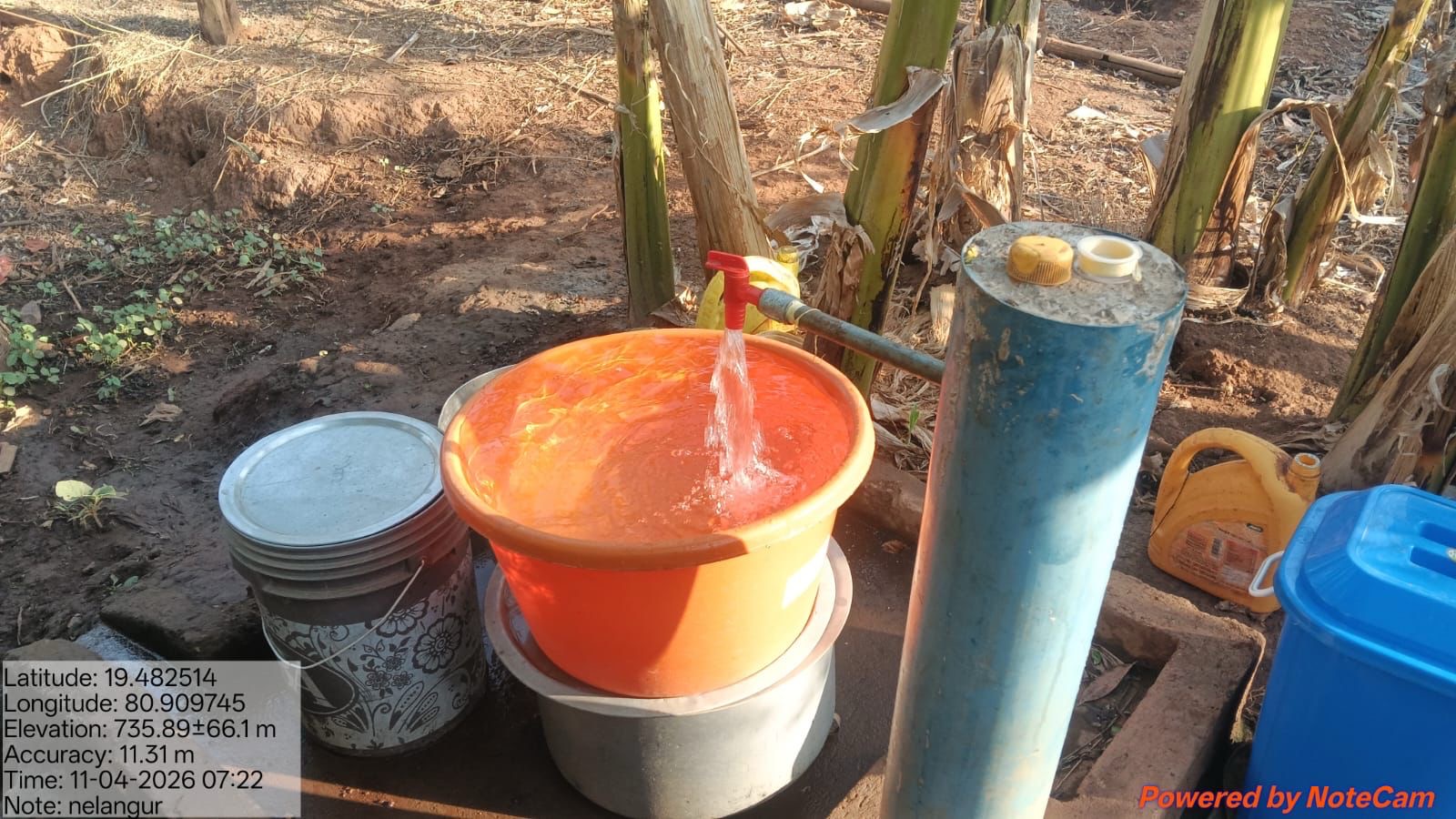
In a significant milestone for rural development in Chhattisgarh’s remote tribal belt, piped drinking water has reached every household in Nelangur village for the first time, bringing relief to residents who had long struggled with severe water scarcity. The initiative, implemented under the Jal Jeevan Mission, marks a major step toward improving basic amenities in the forested Abujhmad region of Narayanpur district.
Located in the Orchha block near the Maharashtra border, Nelangur has historically been one of the most remote and difficult-to-access villages in the state. Dense forests, challenging terrain, and the area’s past association with Maoist activity had long hindered the delivery of essential services such as drinking water, healthcare and infrastructure. The arrival of tap water inside homes has therefore become a symbol of change and development for the community.
Officials said the piped water supply system was established under the Jal Jeevan Mission to ensure safe drinking water access for every household. The scheme has been designed to provide functional household tap connections to rural homes across India.
Narayanpur Collector Namrata Jain said the water supply infrastructure in Nelangur has been built using a sustainable system powered by solar energy. Water is lifted from a nearby source through a solar-powered pump and distributed to homes through a network of pipelines, ensuring uninterrupted supply even in areas with limited electricity availability.
“The use of solar pumping technology has reduced dependency on conventional power sources and has made the system reliable and environmentally sustainable,” she said.
Relief for Women and Improved Daily Life
For the residents of Nelangur, the most visible impact of the project has been on the daily lives of women and children. Until recently, women had to walk several kilometres through forested terrain to fetch drinking water from streams or wells, often spending several hours each day on the task.
With water now available directly inside homes, those long and physically demanding journeys have come to an end. Villagers say the change has not only reduced hardship but also allowed women to spend more time on household activities, childcare and livelihood work.
The availability of safe water has also improved awareness about sanitation and hygiene within the village. Local officials believe that access to piped drinking water will help reduce waterborne diseases and improve overall public health conditions in the region.
Development Gains Momentum in Abujhmad
The successful implementation of the Jal Jeevan Mission in Nelangur reflects the broader push for development in the Abujhmad region under the leadership of Chief Minister Vishnu Deo Sai. The region, once known primarily for its isolation and security challenges, is gradually witnessing improvements in infrastructure, connectivity and public services.
Officials noted that the return of relative peace in several Maoist-affected areas has enabled government departments to accelerate development work. Roads, schools, healthcare facilities and drinking water projects are now being implemented more effectively in remote villages that were previously beyond the reach of regular administrative services.
Nelangur village, situated about 52 kilometres from the Narayanpur district headquarters, had long been identified as a priority area for drinking water supply. With the new system now operational, residents say their longstanding demand for reliable water access has finally been met.
A Step Toward Inclusive Development
Authorities said the success of the project demonstrates that government welfare schemes are increasingly reaching even the most remote and border villages of the state. Officials are continuing efforts to strengthen the water supply infrastructure to ensure consistent and long-term service to every household.
The initiative is also seen as an important step toward building trust between local communities and the administration by delivering tangible improvements in everyday life.
As tap water begins flowing in homes across Nelangur, villagers say the development has brought not only convenience but also hope that more public services will soon follow, transforming the quality of life in the remote tribal heartland of Chhattisgarh.