
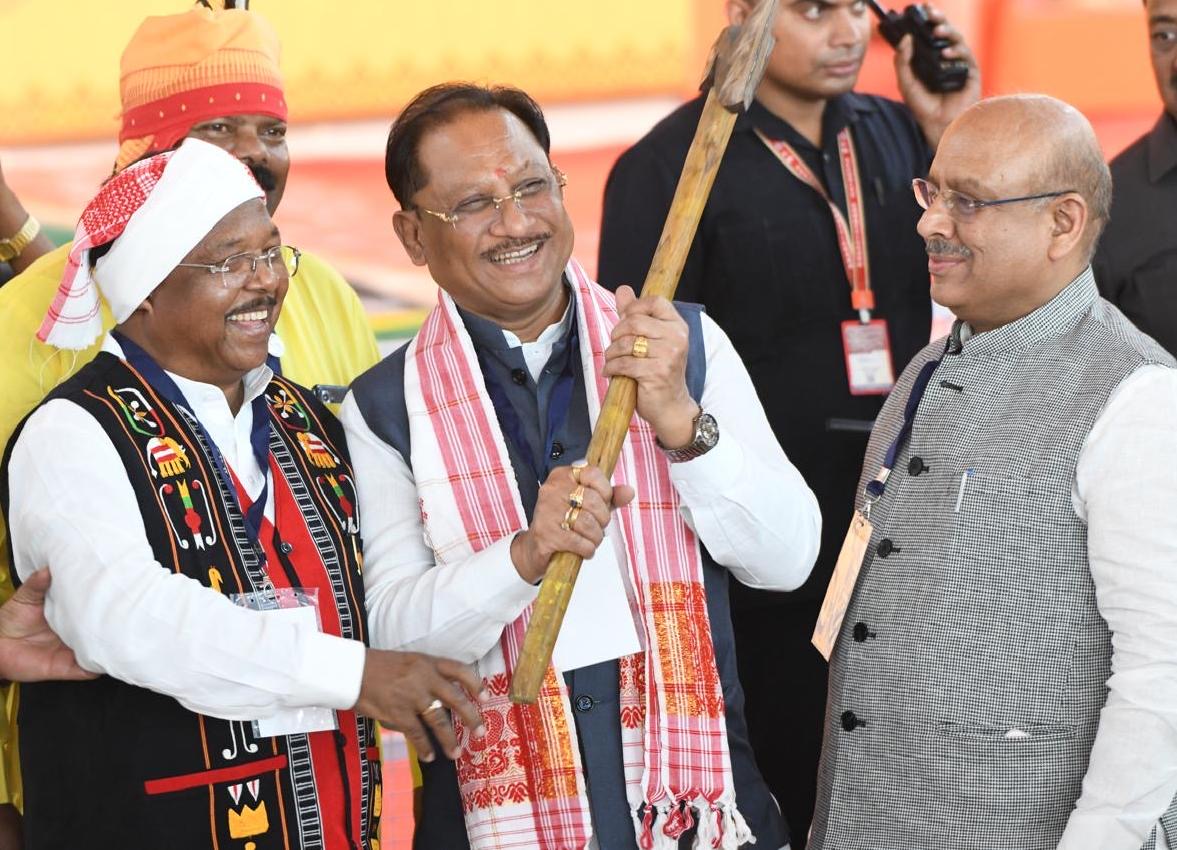
Chief Minister Vishnu Deo Sai Says Tribal Communities Can Show the World the Path of Development in Harmony with Nature
TFP Bureau, New Delhi, May 24, 2026: The historic Red Fort grounds in the national capital witnessed a grand celebration of tribal heritage, identity, and cultural consciousness on Sunday during the National Tribal Cultural Conclave organised to commemorate the 150th birth anniversary year of Bhagwan Birsa Munda.
Thousands of tribal representatives, youth, social activists, and members of traditional communities from different parts of the country gathered at the conclave, which emerged as a vibrant platform highlighting the richness of India’s indigenous traditions and cultural diversity.
Union Home Minister Shri Amit Shah attended the event as the Chief Guest. Chhattisgarh Chief Minister Shri Vishnu Deo Sai, along with state ministers Shri Kedar Kashyap and Shri Ramvichar Netam, also participated in the programme, adding significance to the occasion. Delhi Chief Minister Smt. Rekha Gupta paid a courtesy visit to Chief Minister Shri Sai during the event.
Organised jointly by the Janjati Suraksha Manch and the Janjati Jagriti Samiti, the conclave transformed the Red Fort grounds into a colourful reflection of tribal life and traditions. The venue resonated with the beats of traditional drums, folk music, and cultural performances by tribal artists from across the country, showcasing India’s diverse tribal heritage through dance, music, costumes, and rituals.
Addressing the gathering, Chief Minister Shri Vishnu Deo Sai said tribal communities are not only protectors of nature but also represent the oldest and most vibrant embodiment of India’s cultural soul. He stated that tribal societies have preserved the delicate balance between human life and nature for centuries while safeguarding “Jal, Jangal aur Zameen” — water, forests, and land.
He said the tribal way of life offers valuable lessons to the modern world at a time when environmental crises and unbalanced development have become global concerns. According to Shri Sai, tribal philosophy promotes coexistence with nature and sustainable living, making it highly relevant in the present era.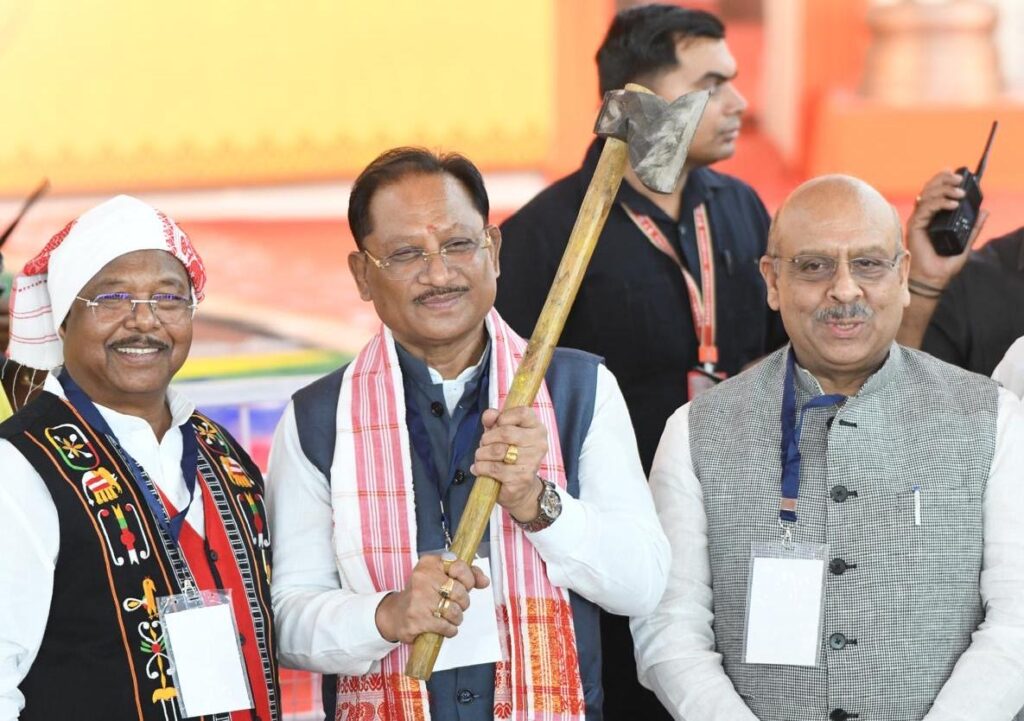
The Chief Minister said the identity of Chhattisgarh is deeply linked with its tribal culture and traditions. He noted that nearly 44 per cent of the state’s geographical area is covered by forests, which form not only a symbol of natural wealth but also the foundation of tribal life and heritage.
Shri Sai highlighted the historic contribution of tribal communities to India’s freedom struggle and nation-building process. Referring to legendary tribal icons such as Bhagwan Birsa Munda and Chhattisgarh’s martyr Veer Narayan Singh, he said their sacrifices and struggles for self-respect, rights, and cultural identity continue to inspire future generations.
The Chief Minister said the Chhattisgarh government is working continuously for the preservation and promotion of tribal culture, traditions, and values. He stated that initiatives such as “Adi Parab,” “Bastar Pandum,” and the “Bastar Olympics” are aimed at providing national recognition to tribal talent, traditional sports, arts, and cultural practices.
According to Shri Sai, such programmes are helping tribal youth reconnect with their roots while simultaneously creating wider awareness about tribal heritage at the national level.
Special emphasis was also laid on the preservation of tribal languages and cultural identity. Shri Sai said the state government has initiated efforts to provide primary education in tribal languages such as Gondi, Halbi, and Sadri so that children remain connected to their mother tongue and traditional knowledge systems.
He remarked that language is not merely a medium of communication but the foundation of a community’s identity, history, and collective memory. The Chief Minister further informed that traditional tribal centres of faith, including Devgudis, are being conserved and developed across tribal regions from Bastar to Surguja.
He said preserving tribal spiritual and cultural heritage is essential not only for protecting traditions but also for strengthening the identity and self-confidence of future generations.
Throughout the conclave, cultural performances by tribal artists from different states captivated the audience and reflected the spirit of unity in diversity. Traditional folk dances, indigenous musical instruments, and colourful attire turned the event into a powerful symbol of India’s rich tribal heritage and collective cultural consciousness.
The conclave also highlighted the importance of tribal values such as community living, environmental balance, discipline, and harmony with nature. Speakers at the event stressed that these principles can provide a humane and sustainable direction to modern development models.
Chief Minister Shri Vishnu Deo Sai said tribal communities are not merely symbols of India’s past but also an important force shaping the country’s future. He added that the cultural wisdom and sustainable lifestyle of tribal societies can guide the nation toward balanced and inclusive development.
The National Tribal Cultural Conclave at the Red Fort ultimately emerged as more than just a cultural gathering, serving as a strong national message for tribal unity, cultural renaissance, social dignity, and nature-centric development.