Environment Minister O.P. Choudhary directs industries to complete plantation targets by July 31, maintain 33% green belts and strengthen environmental compliance
TFP Bureau, Raipur, July 12,2016: Housing and Environment Minister O. P. Choudhary on Sunday called for stronger collaboration between industry and environmental conservation, stressing that the survival of planted saplings is more important than achieving plantation targets alone.
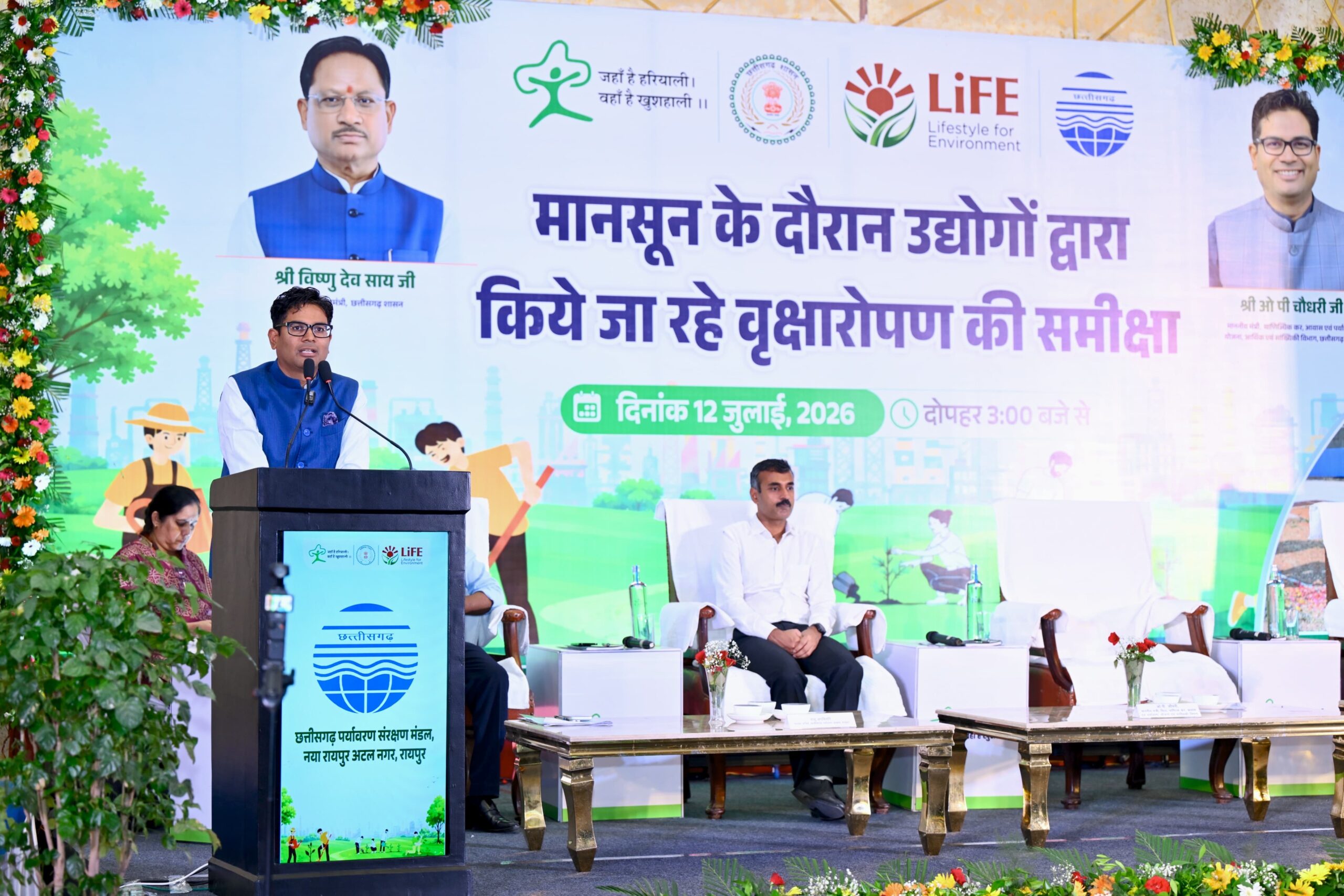
Chairing a high-level review meeting at Babylon Capital in Raipur, the minister assessed the progress of plantation programmes undertaken by medium and large industrial units during the 2026 monsoon season. Senior representatives of industries, along with officials from the Housing and Environment Department and the Chhattisgarh Environment Conservation Board, attended the meeting.
Addressing the gathering, Choudhary said the state government, under the leadership of Chief Minister Vishnu Deo Sai, is committed to achieving the vision of a “Developed Chhattisgarh” in line with the national goal of Viksit Bharat 2047. He said industrial growth and environmental conservation must go hand in hand and that no compromise would be made on environmental standards.
The minister said plantation should not be viewed merely as a numerical exercise and urged industries to focus on the long-term survival of saplings through proper maintenance, irrigation and monitoring. He encouraged the use of native and long-living tree species, including peepal, neem, shirish, mango and jackfruit, and highlighted the Miyawaki plantation method as an effective way to rapidly increase green cover.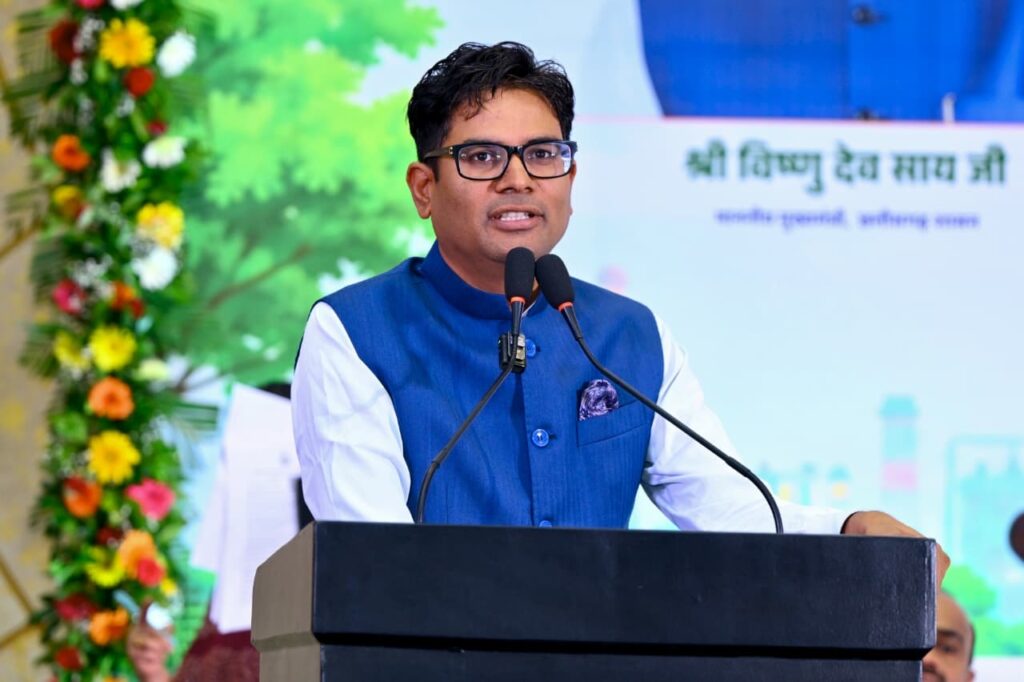
He directed industries to complete their plantation targets by July 31 and ensure quality plantation by August 15. He also instructed that all plantation data be uploaded on the designated online portal, adding that digital monitoring would be used to track progress.
Calling environmental protection a moral responsibility, Choudhary said ensuring clean air, clean water and a safe environment is the greatest legacy that can be left for future generations. He urged industries to undertake large-scale plantation through their Corporate Social Responsibility (CSR) initiatives and encourage greater public participation in environmental campaigns.
The minister also highlighted the state’s ongoing initiative to develop Nava Raipur as a “Peepal City”. He said around 70,000 saplings have already been planted, while more than one lakh peepal trees will be added over the next five years. He further informed that work has begun on the rejuvenation and beautification of Sendh Lake, where nearly 25,000 saplings have been planted using the Miyawaki method on a three-acre island to create a natural habitat for migratory birds.
Ankit Anand said nearly 22 lakh saplings have already been planted this year, achieving about 90 per cent of the annual target. He said the state aims to plant 25 lakh saplings during the current plantation season, with the figure expected to cross 30 lakh through active participation from industries.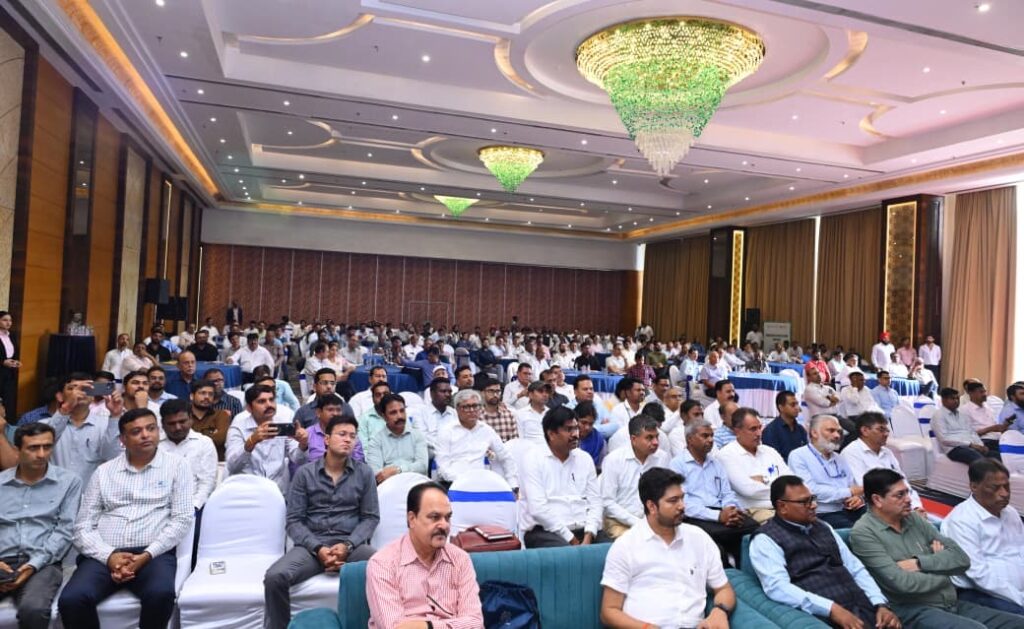
Anand also said more than 320 industries are being monitored through Online Continuous Emission Monitoring Systems (OCEMS). While notices have been issued for violations, the Board’s primary objective is to improve compliance and reduce pollution rather than impose penalties. He urged industries to maximise the use of recycled water and prioritise native tree species.
Raju Agasimani directed industrial units to plant at least 2,500 saplings per hectare, develop dense three-layer green belts and ensure that a minimum of 33 per cent of every industrial campus is covered with greenery. He also instructed industries to use only approved tree species, irrigate plantations with recycled water wherever possible and keep their emission monitoring systems operational round the clock with mandatory calibration every three months.
Officials said the meeting concluded with a renewed commitment from industries to strengthen environmental stewardship while supporting the state’s industrial growth through sustainable practices.