CM Vishnu Deo Sai worships farm implements and cattle, plants Parijat sapling; traditional games, folk dances, cuisine and modern farming technology add colour to celebrations
TFP Bureau, Raipur, August 12, 2026: The spirit of Chhattisgarh’s rural life and rich folk traditions came alive at the Chief Minister’s residence in Nava Raipur on Wednesday as Hareli Tihar, the state’s first major folk festival, was celebrated with traditional fervour and enthusiasm.
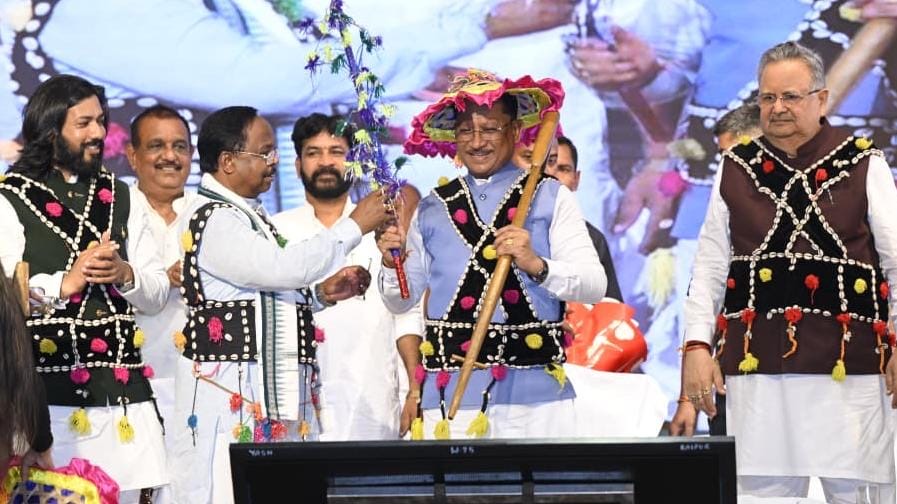
Chief Minister Vishnu Deo Sai performed rituals dedicated to Lord Shiva, Mother Cow and agricultural implements, praying for good rainfall, a bountiful harvest, farmers’ prosperity and the well-being of the people. Assembly Speaker Dr Raman Singh, ministers, public representatives, farmers, officials and a large number of citizens participated in the celebrations.
Greeting the people of Chhattisgarh, particularly the farming community, on the occasion, Chief Minister Sai said Hareli reflects the deep bond between agriculture, nature and rural life. He said the festival provides an opportunity to express gratitude to the land, livestock, farming tools and nature.
“Hareli teaches us to respect nature and understand our responsibility towards preserving it,” the Chief Minister said, emphasising that the prosperity of farmers is fundamental to the progress of villages and the state.
 Traditional welcome in ‘Pink Auto’
Adding a distinctive Chhattisgarhi touch to the celebrations, Chief Minister Sai and Assembly Speaker Raman Singh, dressed in traditional attire, arrived at the venue in a pink auto-rickshaw driven by Sangeeta Yadav.
The programme began with the worship of Gauri-Ganesh and Navagrahas, followed by the ritual Abhishek of the Shivling. The Chief Minister also worshipped traditional agricultural implements, including the plough, spade and other tools, before paying obeisance to Chhattisgarh Mahtari.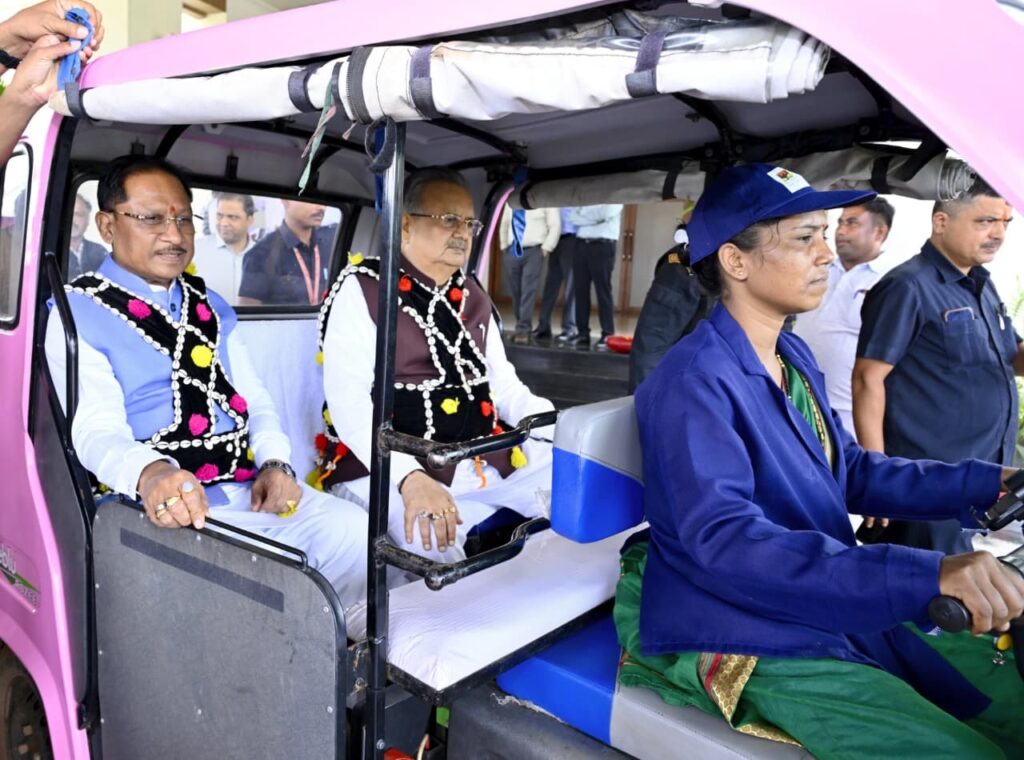
At the Gaushala, Sai performed the Aarti of the cow and fed green fodder, gram, jaggery and the traditional ‘Londi’ to the cow and calf. He said livestock remains an integral part of rural households and agriculture and that traditional practices promoting animal care should be passed on to younger generations.
Farmers’ welfare and modern agriculture highlighted
The Chief Minister said both the Central and state governments have taken several measures to strengthen the economic position of farmers. He highlighted zero-interest agricultural loans through cooperative banks, efforts to expand irrigation and crop insurance, and the use of modern technology in farming.
He said the state government is procuring paddy at ₹3,100 per quintal, up to 21 quintals per acre, benefiting lakhs of farming families.
The Chief Minister also visited stalls showcasing agricultural machinery and technology. A cheque of ₹16 lakh was handed over to Raipur farmer Indra Kumar Verma as a subsidy for purchasing a harvester. Sai said mechanisation can reduce cultivation costs and labour requirements while increasing productivity.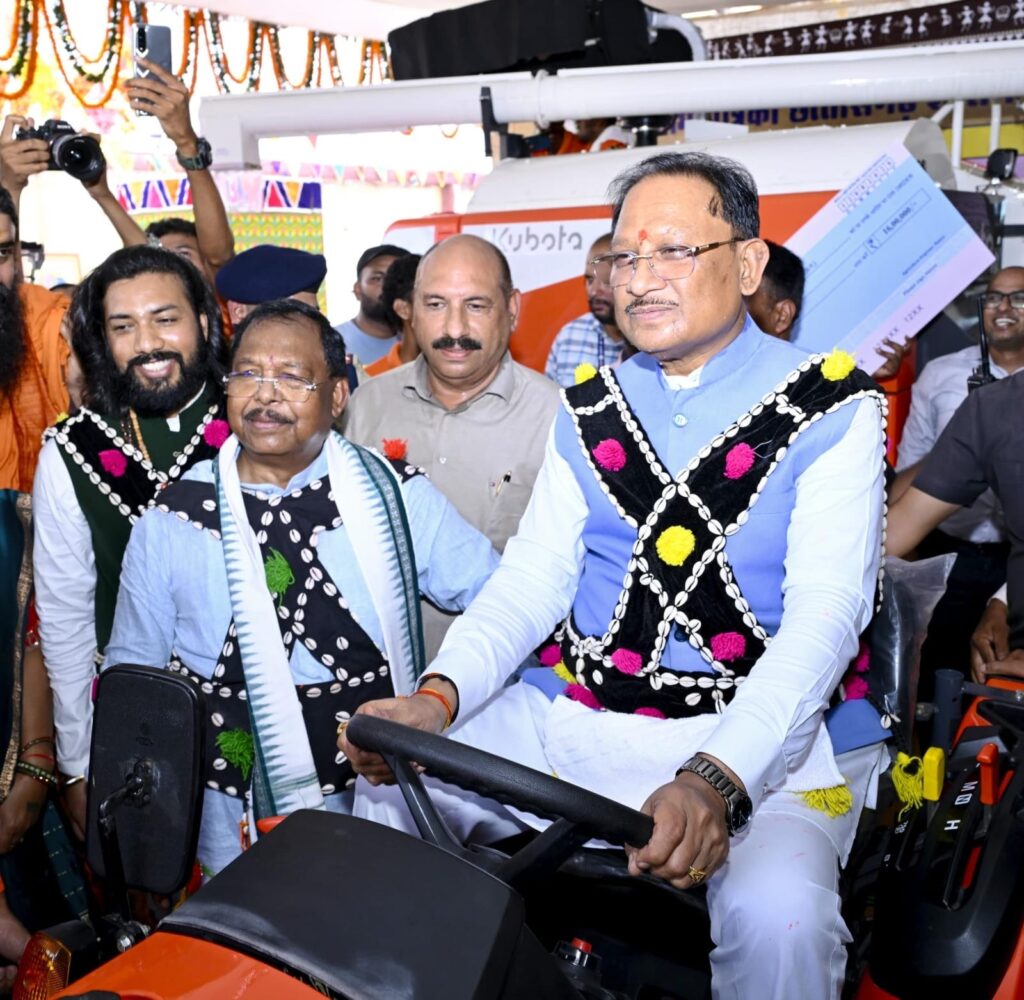
‘Drone Didi’ showcases new opportunities for women
At the Agriculture Department stall, Sai interacted with ‘Drone Didi’ Chandrakali Verma, who explained how she uses drones for spraying Nano Urea, Nano DAP and pesticides.
Verma has undertaken drone spraying across more than 2,500 acres and earned around ₹7 lakh over the past two years. Appreciating her achievements, the Chief Minister said technology-driven agriculture is creating new avenues for women’s income and self-reliance.
He also distributed mini-kits of pigeon pea and black gram to farmers and reviewed products prepared by Krishi Mitras, including Brahmastra and Neemastra.
Parijat plantation conveys message of environmental conservation
As part of the festival’s message of respecting and protecting nature, Chief Minister Sai and Assembly Speaker Raman Singh planted Parijat saplings at the Chief Minister’s residence. Ministers and representatives of various corporations, boards and commissions also participated in the plantation drive.
Sai said planting trees must be accompanied by their proper care and protection to ensure a greener and safer future for coming generations.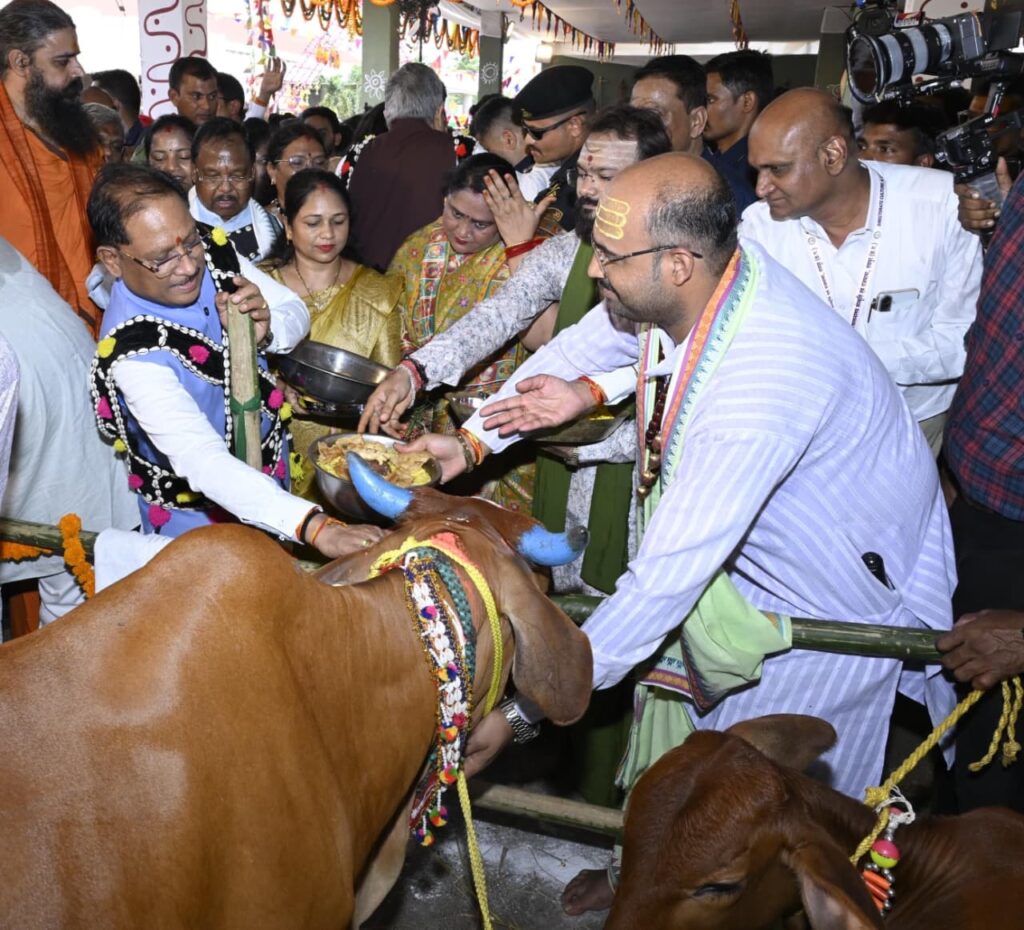
Gedi, Billas and folk performances recreate village atmosphere
The Chief Minister’s residence was decorated with neem and mango leaves, marigold flowers and traditional ornaments, creating the atmosphere of a Chhattisgarhi village fair.
Traditional games such as Gedi, Billas, Goti and Bati attracted visitors, while the Rahchuli swing added to the festive mood. Folk artists performed Chhattisgarhi songs and dances accompanied by Mandar, Dholak and other traditional instruments.
Joining the celebrations, Chief Minister Sai danced with folk artists to traditional melodies, drawing enthusiastic applause from the gathering. Stalls serving traditional delicacies such as Thethri, Khurmi and Bada also became a major attraction.
‘Prosperity of farmers is foundation of state’s prosperity’
Assembly Speaker Raman Singh said Hareli reflects Chhattisgarh’s agricultural traditions, cultural identity and reverence for nature. He said the government is continuously working to improve farmers’ livelihoods and noted initiatives such as the ₹3,100-per-quintal paddy procurement price and Mahtari Vandan Yojana.
Agriculture Minister Ramvichar Netam described Hareli as a celebration of agriculture, greenery, livestock and respect for farmers. He said the festival carries an important message of environmental conservation and provides an opportunity to pass traditional knowledge to the younger generation.
Chief Minister Sai said rapid development must go hand in hand with the preservation of Chhattisgarh’s cultural heritage, traditional knowledge, folk arts, rural games and culinary traditions. He expressed hope that the state’s fields would prosper, farmers’ homes would become more prosperous and Chhattisgarh would continue its journey towards development.
Women and Child Development Minister Lakshmi Rajwade, Revenue Minister Tank Ram Verma, School Education Minister Gajendra Yadav, Skill Development Minister Guru Khushwant Saheb, MLAs, public representatives, senior officials, farmers and citizens were among those present.