IIPA publication documents Jashpur’s administrative evolution, tribal culture, natural wealth and development journey; expected to serve as a reference for policymakers, researchers and students
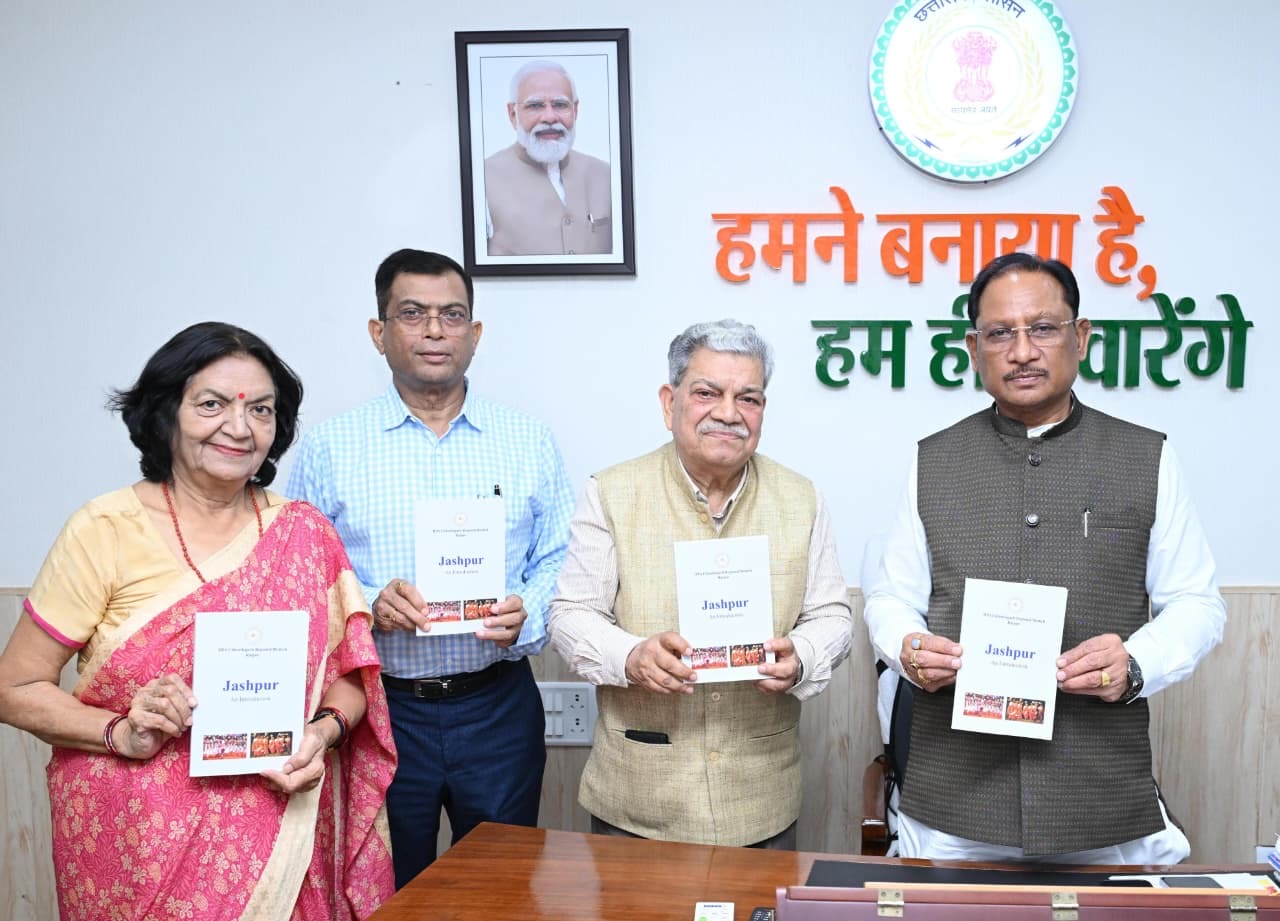
TFP Bureau, Raipur, August 24, 2026: Chhattisgarh Chief Minister Vishnu Deo Sai on Monday released ‘Jashpur: Ek Parichay’ (Jashpur: An Introduction), a comprehensive publication brought out by the Indian Institute of Public Administration (IIPA), Delhi.
The book presents an in-depth account of Jashpur district’s history, administrative evolution, governance systems, socio-economic transformation, tribal culture, natural resources and development potential. It traces the district’s administrative journey from the post-Independence period to its present phase of development.
The publication is expected to serve as an important reference for administrators, policymakers, researchers and students seeking to understand the district’s distinctive social, cultural, geographical and administrative characteristics.
Jashpur Has a Distinctive Identity
Congratulating the Chhattisgarh Regional Branch of IIPA on the publication, Sai said Jashpur is one of the most distinctive regions of Chhattisgarh, with immense potential for development while retaining a rich natural and cultural heritage.
He said the district’s mountains, valleys, rivers, waterfalls and dense forests, combined with its rich tribal traditions, give Jashpur a unique identity. Bringing its development journey and administrative experiences together in a single volume would help the country and the world better understand the region, he added.
The Chief Minister said studying the history, society, culture, natural resources and administrative systems of a region is essential for understanding its development trajectory. The book, he said, provides not only a snapshot of present-day Jashpur but also insights into the changes that have shaped its administrative and development landscape over the years.
Development Must Reflect Local Characteristics
Sai noted that Jashpur’s geographical and ecological character differs significantly from Chhattisgarh’s plains and industrial regions. Located in the broader Chhotanagpur Plateau region, the district has distinctive geographical features, climate, forest resources and livelihood patterns.
He said tribal communities that have lived in the region for generations have preserved their traditions and a close relationship with nature. This combination of cultural diversity and ecological wealth makes Jashpur important from both development and research perspectives.
Focus on Inclusive and Sustainable Development
The Chief Minister said Jashpur has made steady progress in recent years in infrastructure, rural development, education, healthcare, livelihoods and administrative reforms.
He stressed that future development plans should be based on the district’s local requirements and characteristics. Studies such as Jashpur: Ek Parichay, he said, can provide administrators with a deeper understanding of ground realities and help identify appropriate development priorities.
Sai emphasised that the ultimate objective of government programmes should be to bring meaningful improvements to the lives of the last person in the queue. While expanding education, healthcare, roads, connectivity, employment and livelihood opportunities in remote and tribal areas, he said equal attention must be paid to preserving local culture and natural resources.
Agriculture, Forest Produce and Tourism Offer Major Potential
The Chief Minister said Jashpur has considerable potential for strengthening its economy through agriculture, forest produce, tourism, local products and entrepreneurship, particularly among women and young people.
He described the district as one of Chhattisgarh’s richest regions in terms of nature-based tourism. Its forests, mountains, waterfalls, rivers and scenic valleys, coupled with tribal culture, traditional arts, folk traditions and local cuisine, could help establish Jashpur as a distinctive tourism destination.
Systematic documentation and promotion of these attributes, he added, could help bring greater national and international recognition to the district.
IIPA’s Role in Strengthening Public Administration
Sai highlighted the contribution of the Indian Institute of Public Administration to research, training, publications and policy discussions aimed at strengthening public administration in the country.
He said the institute’s initiative to study administration and development at the district level was particularly significant because local administrative experiences are essential to understanding the broader development journey of India.
The Chief Minister said district administration is the critical link between government and citizens, playing a central role in implementing welfare schemes, delivering public services and addressing local issues. Documenting the administrative evolution, successful initiatives and challenges of districts can therefore provide valuable lessons for improving governance.
Those present at the book release included Suyogya Kumar Mishra, Chairman of the IIPA Chhattisgarh Regional Branch, Raipur, and former Chief Secretary; Dr Indira Mishra, Vice-Chairman and former Additional Chief Secretary; and Ajay Singh, Vice-Chairman, former Chief Secretary and current State Election Commissioner of Chhattisgarh.