Bastar Dussehra Committee delegation invites Chief Minister to 75-day festival; traditional rituals and chariot procession remain central to the celebration
TFP Bureau, Raipur, October 8, 2026: Chief Minister Vishnu Deo Sai on Thursday described Bastar Dussehra as a distinctive expression of the region’s tribal culture, faith, traditions and collective participation.
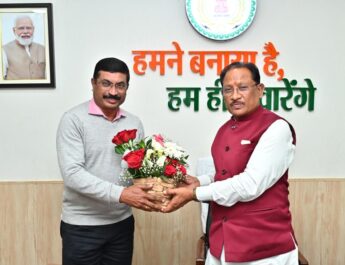
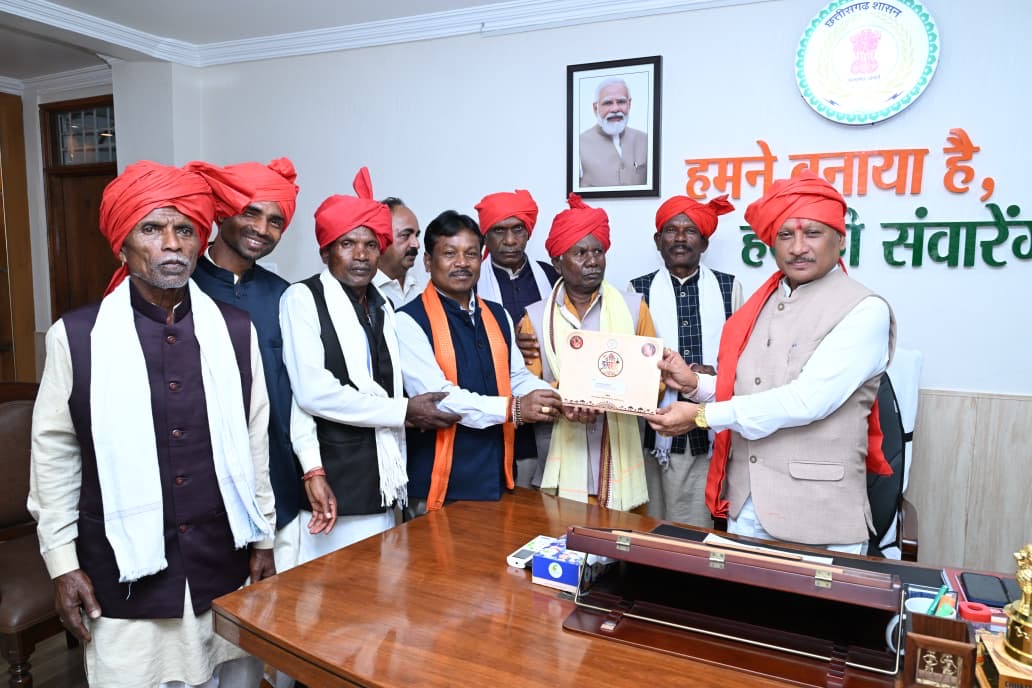
A delegation of the Bastar Dussehra Committee, led by Bastar MP Mahesh Kashyap, met Mr Sai at his residence office in Raipur and invited him to attend the Bastar Dussehra Festival 2026. The delegation also honoured the Chief Minister with a traditional Paga.
Mr Sai thanked the delegation for the invitation and extended his best wishes for the successful organisation of the festival. He said Bastar Dussehra was more than a festival, reflecting centuries-old traditions, religious practices, tribal culture and social harmony.
He said the state government was committed to preserving and promoting Bastar’s cultural heritage and tribal traditions.
The delegation briefed the Chief Minister on the historical background of Bastar Dussehra, its religious rituals and preparations for this year’s celebrations.
75-day celebration
Bastar Dussehra is celebrated over nearly 75 days, beginning traditionally with Hareli Amavasya and continuing through a series of religious ceremonies and rituals until Trayodashi of the Ashwin Shukla Paksha.
This year’s celebrations began on August 12 with the traditional Patjatra Puja. According to the festival schedule, Kachhangadi Puja will be held on October 10, Bel Puja on October 18 and Muria Darbar on October 23.
Different communities of Bastar have traditionally been assigned specific roles in the ceremonies and arrangements associated with the festival.
Unlike the conventional Dussehra celebrations associated with the victory of Lord Ram over Ravana, Bastar Dussehra is primarily centred on the worship of Maa Danteshwari, the revered deity of the Bastar region.
The festival is also traditionally associated with Chalukya ruler Purushottam Dev. According to the tradition cited by the committee, Purushottam Dev visited the Jagannath Temple in Puri and received the title of ‘Rathpati’, giving the chariot a special place in the Bastar Dussehra celebrations.
Collective participation
The participation of different sections of Bastar society is a defining feature of the festival. Traditional roles are assigned to communities and functionaries including Manjhis, Chalkis and Member-Memberin, while local communities take part in religious rituals, chariot construction and other arrangements.
The continuation of these practices across generations has made Bastar Dussehra an important expression of the region’s social and cultural traditions.
The festival draws visitors and devotees from different parts of India and abroad, with its chariot procession, religious rituals, tribal traditions and folk culture forming major attractions.
Mr Sai said Bastar’s culture was an important part of Chhattisgarh’s heritage and that traditions such as Bastar Dussehra helped connect younger generations with their cultural roots. He emphasised the need for collective efforts to preserve and promote these traditions.
The delegation included MP Mahesh Kashyap, Pargana Karekote’s Manglu Manjhi, Balram Manjhi, Padam Chalki, Samaru Chalki, Damru Chalki, Laxman Manjhi, members of the Bastar Dussehra Committee, Manjhis, Chalkis, Member-Memberin and other representatives.