
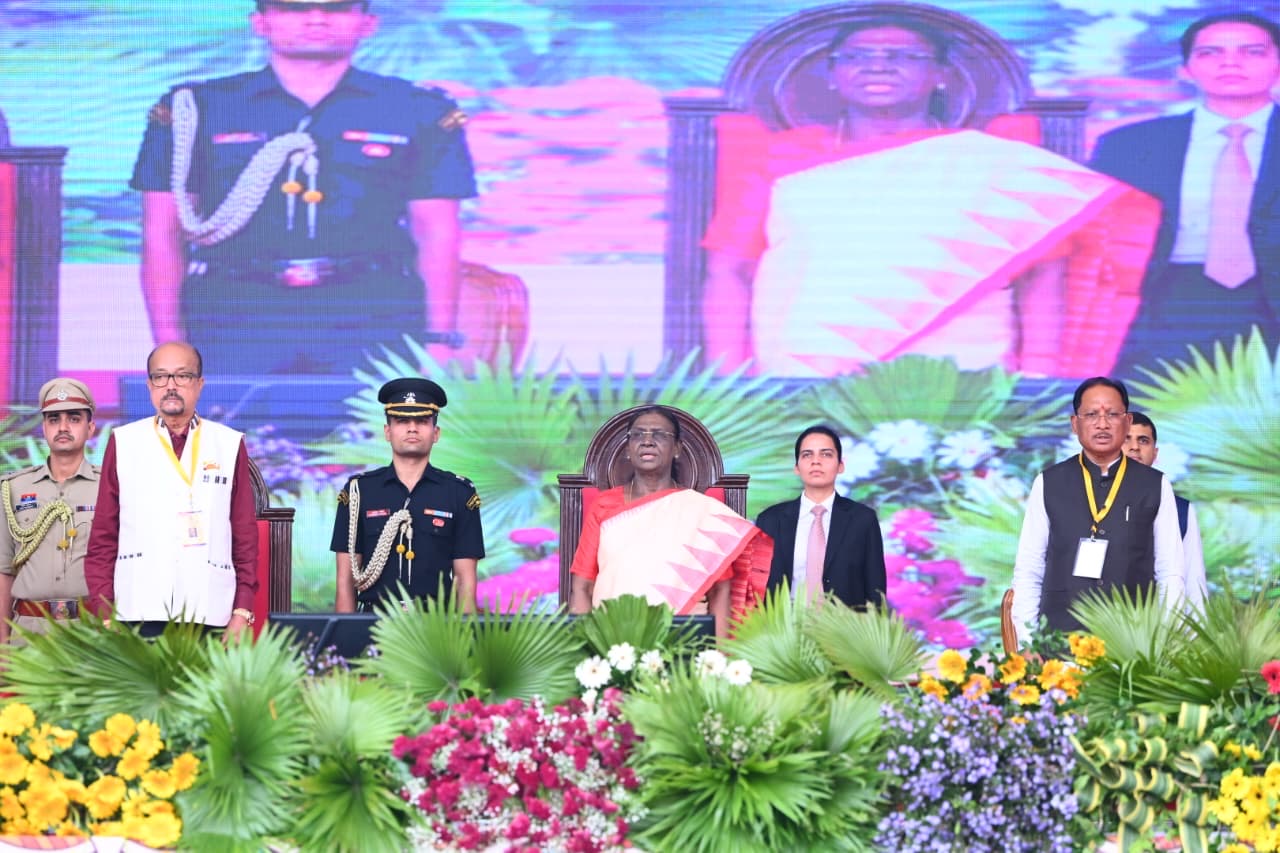
At Jagdalpur celebrations, President highlights the festival’s 75-day legacy, social harmony and nature conservation; CM Vishnu Deo Sai announces enhanced monthly honorariums of ₹5,000 for Manjhis and ₹3,500 for Chalkis
TFP Bureau, Jagdalpur/Raipur, October 23, 2026: President Droupadi Murmu on Friday praised the unique traditions and rich tribal heritage of Bastar Dussehra, describing the 75-day festival as a powerful symbol of collective faith, social harmony and democratic values. She said the region’s cultural traditions reflect the strength of community participation and the importance of preserving India’s diverse heritage.
Participating in the world-renowned festival in Jagdalpur, the President paid obeisance to Goddess Danteshwari and expressed happiness at being part of an event that brings together different communities through shared rituals and responsibilities.
Chief Minister Vishnu Deo Sai said Bastar was entering a new phase of reconstruction and development after the decline of Maoist violence. On the occasion, the state government announced an increase in the monthly honorarium for traditional community representatives, raising the amount for Manjhis from ₹2,000 to ₹5,000 and for Chalkis from ₹1,500 to ₹3,500.
Muria Darbar reflects grassroots democracy
The President highlighted the Muria Darbar, a traditional gathering held during Bastar Dussehra, as an example of democratic dialogue at the grassroots level. Representatives of different communities come together to discuss public concerns and social issues, with collective deliberation helping identify solutions.
She said the tradition demonstrated how dialogue, mutual respect and cooperation could strengthen democratic values. Governor Ramen Deka also described the Muria Darbar as a platform where people’s voices are heard and decisions emerge through discussion.
Deka said Bastar Dussehra’s significance extended beyond its grandeur, offering a lesson in inclusivity and collective responsibility. From sourcing timber for the ceremonial chariot to its construction and operation, people from different villages and communities fulfil traditional roles that have been preserved across generations.
Tribal youth have immense potential, says President
Murmu said tribal communities possessed considerable talent and potential and should receive the opportunities, encouragement and resources needed to excel in every field.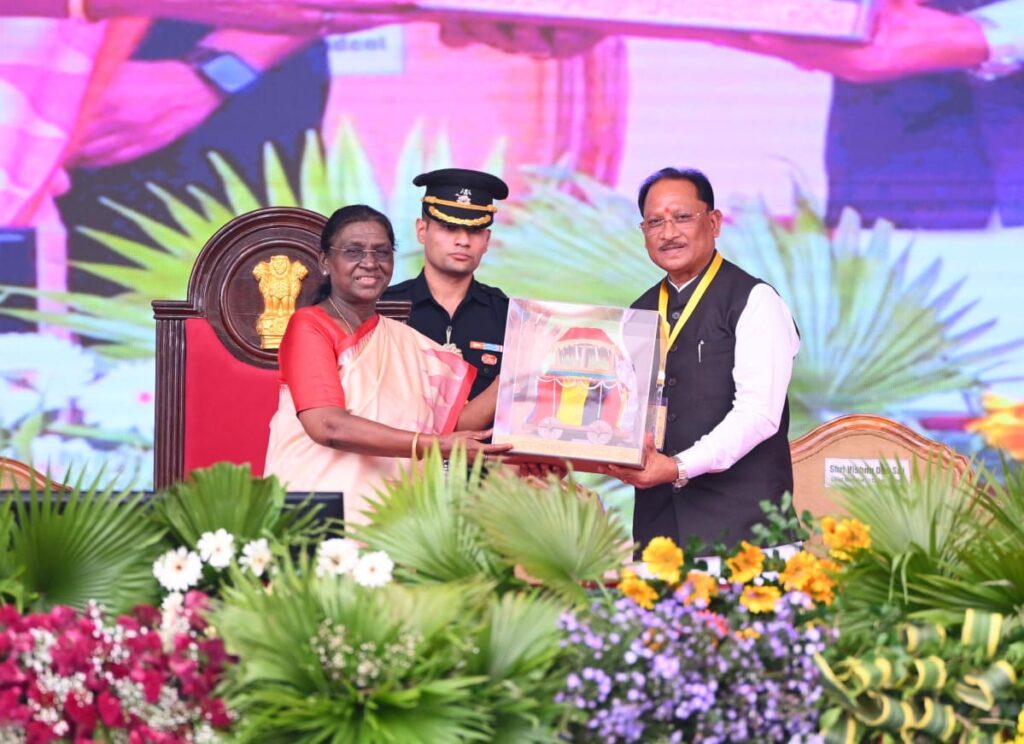
She praised the participation of young people in the Bastar Olympics, saying that with proper support and platforms, youth from the region could compete at national and international levels, including in prestigious sporting events such as the Olympics.
The President also referred to the Bastar Pandum cultural festival, which showcases tribal art, customs and traditions. She recalled meeting a delegation from Bastar at Rashtrapati Bhavan, including festival winners and traditional community representatives, and said such initiatives helped connect young people with their cultural roots.
Bastar’s cultural legacy linked to Dandakaranya
Referring to the region’s religious and historical significance, Murmu noted its association with Dandakaranya in the Ramayana tradition. She highlighted the cultural significance of Mata Shabari and said the heritage of tribal communities formed an integral part of India’s broader civilisational traditions.
Drawing lessons from the ideals of Lord Rama, Mata Sita and Mata Shabari, she urged people to uphold morality, dignity and human values in daily life. She stressed that preserving Bastar’s cultural heritage was a collective responsibility.
The President also praised the tribal tradition of respecting forests, trees and natural resources. She said nature was central to tribal life and called for greater conservation efforts, extensive tree plantation and protection of forests for future generations.
Government outlines development roadmap for Bastar
Chief Minister Sai said the state government had drawn up a roadmap to extend development benefits to remote areas of Bastar. Under the Niyad Nellanar scheme, government services and welfare programmes are being extended to interior settlements.
He referred to road connectivity initiatives under the Pradhan Mantri Gram Sadak Yojana and PM-JANMAN, as well as transport services under the Mukhyamantri Gramin Bus Yojana in areas where roads have been constructed.
Sai also highlighted the launch of a rail service between Raipur and Raoghat, ongoing work on the Raoghat-Jagdalpur railway line and the development of the Raipur-Visakhapatnam Expressway, a significant stretch of which passes through the Bastar region.
To strengthen livelihoods, the government is working to help forest-produce collectors secure fair prices through Van Dhan Kendras. Tourism promotion measures include support for homestay facilities.
In healthcare and education, the Chief Minister cited the establishment of a super-specialty hospital in Jagdalpur and the commencement of operations at the medical college in Geedam from the current academic session. Plans are also underway to develop Education Cities in Orchha and Jagargunda.
Sai said initiatives such as Bastar Pandum and the Bastar Olympics were helping showcase the region’s cultural strengths and encouraging greater participation by young people.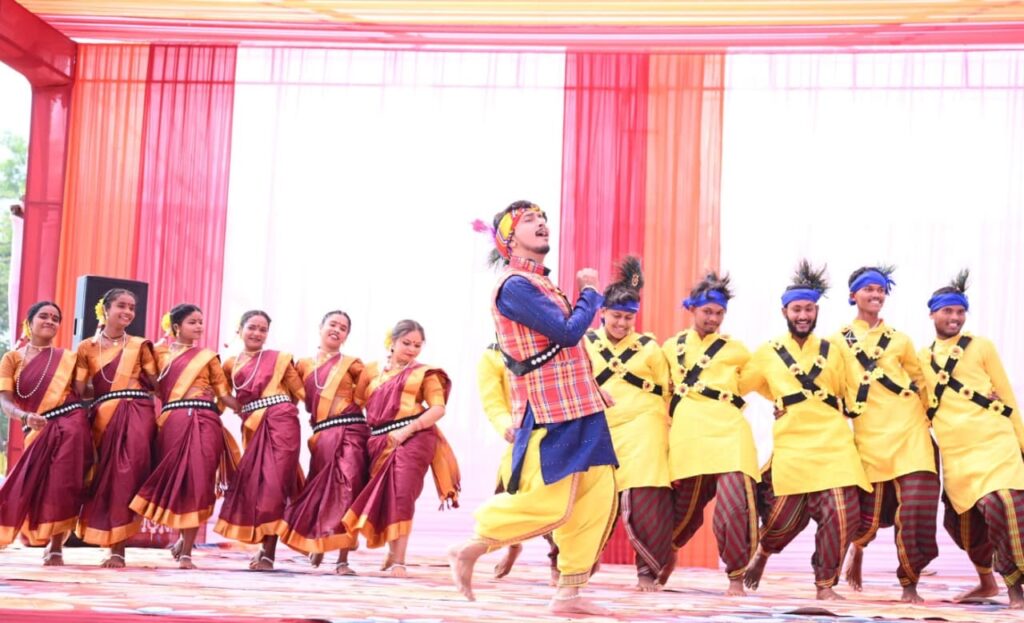
Honorarium hike for traditional representatives
Culture Minister Rajesh Agrawal said Bastar Dussehra stood apart from other festivals because of its duration, distinctive rituals, deep-rooted faith and extensive public participation.
He highlighted the decision to increase the monthly honorarium for Manjhis to ₹5,000 and Chalkis to ₹3,500, describing it as recognition of their role in preserving the region’s traditions and cultural identity.
The festival’s forthcoming rituals include Kutumb Jatra, during which village deities are ceremonially seen off, and the farewell procession of the palanquins of Goddess Danteshwari and Goddess Mawali scheduled for October 27.
Leaders and traditional representatives attend
The event was attended by Governor Ramen Deka, Chief Minister Vishnu Deo Sai, Culture Minister Rajesh Agrawal, Deputy Chief Minister Vijay Sharma, Forest Minister Kedar Kashyap, Agriculture Minister Ram Vichar Netam, Education Minister Gajendra Yadav and Women and Child Development Minister Lakshmi Rajwade.
Other attendees included Bastar MP and Bastar Dussehra Committee president Mahesh Kashyap, Kanker MP Bhojraj Nag, Jagdalpur MLA Kiran Singh Deo, Kondagaon MLA Lata Usendi and Mayor Sanjay Pandey, along with senior administrative and police officials, traditional Manjhi-Chalki representatives, members of the festival committee and local residents.
The President prayed to Goddess Danteshwari for the well-being of Bastar’s people and the continued progress and development of Chhattisgarh.
