

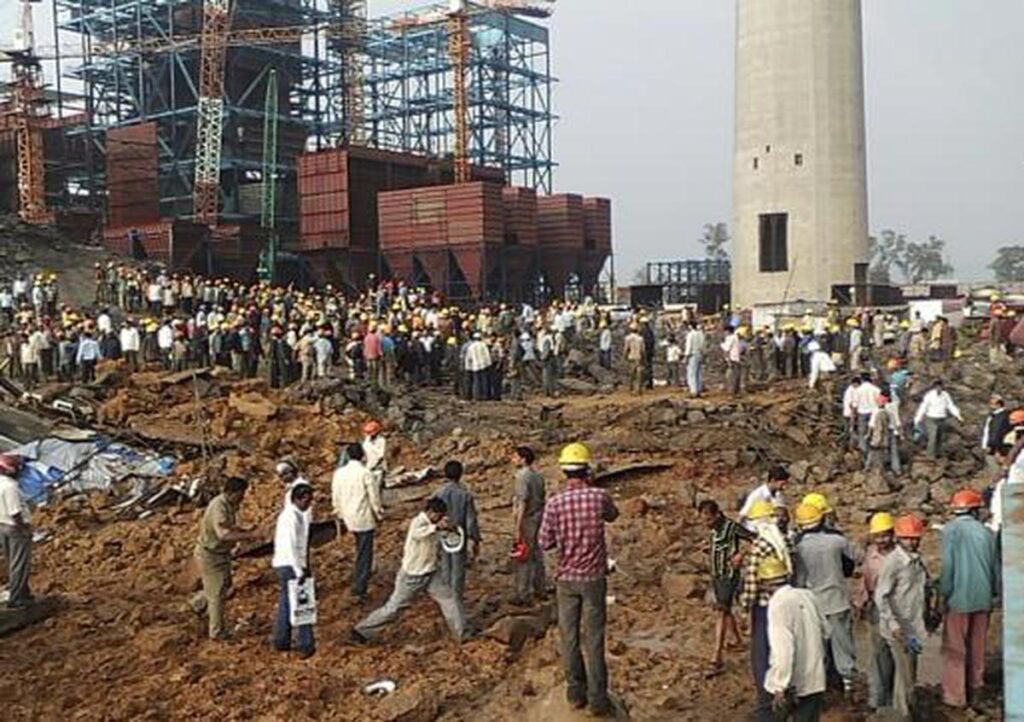
TFP Bureau, Korba, October 4, 2025: A major industrial accident at Bharat Aluminium Company Limited (BALCO) in Korba has once again put the spotlight on the alarming safety and environmental conditions at one of India’s key industrial hubs. On Friday, an Electrostatic Precipitator (ESP) — a crucial pollution-control device installed at BALCO’s 540 MW power plant — suddenly collapsed, exposing the fragile state of plant safety and maintenance systems. The ESP, built by SEPCO in 2004–05, had long exceeded its operational life. Although no casualties were reported, the incident has reignited fears of toxic dust emissions and raised questions about long-term neglect, underinvestment in maintenance, and poor regulatory oversight.
The collapse comes as a grim reminder of Korba’s tragic industrial past. In 2009, a 275-metre-high chimney under construction at the BALCO power plant collapsed during heavy rain, killing at least 45 workers and injuring dozens more. Investigations at the time had revealed substandard construction practices, inadequate safety supervision, and administrative failures — yet, 16 years later, little seems to have changed. Workers allege that despite repeated warnings and inspections, BALCO’s management continues to prioritize production targets over safety and environmental compliance.
Chronic environmental mismanagement and NGT scrutiny
Beyond the immediate safety lapse, the incident has revived public anger over BALCO’s long and troubling record of environmental violations, particularly its handling of fly ash — a hazardous byproduct of coal-based power generation. Numerous environmental and regulatory failures have been documented regarding fly ash management at BALCO’s facilities in Korba. Over the past decade, major incidents such as ash dyke breaches, fugitive dust emissions, and illegal dumping have severely impacted local ecosystems and the health of nearby residents. The National Green Tribunal (NGT) has intervened multiple times to hold the company accountable for persistent non-compliance with fly ash disposal rules.
In September 2017, a major ash dyke breach at BALCO’s power plant released fly ash slurry into the Belgiri Nala, which drains into the Hasdeo River — one of Chhattisgarh’s key water sources. The contamination prompted the Chhattisgarh Environment Conservation Board (CECB) to order the temporary shutdown of BALCO’s 1,200 MW plant for violating environmental norms. Subsequent reports revealed that the plant had failed to maintain its dykes and that its High Concentration Slurry Disposal (HCSD) system was underperforming.
A 2022 complaint filed before the NGT alleged that BALCO had been illegally dumping fly ash along roadsides, in local ponds, and even in open drains — practices that have contributed to widespread dust pollution in Balco Nagar and surrounding villages. Investigations confirmed that the company continued to use an old red mud pond for ash disposal, despite its inadequate capacity and poor lining, allowing toxic leachate to seep into the soil and groundwater.
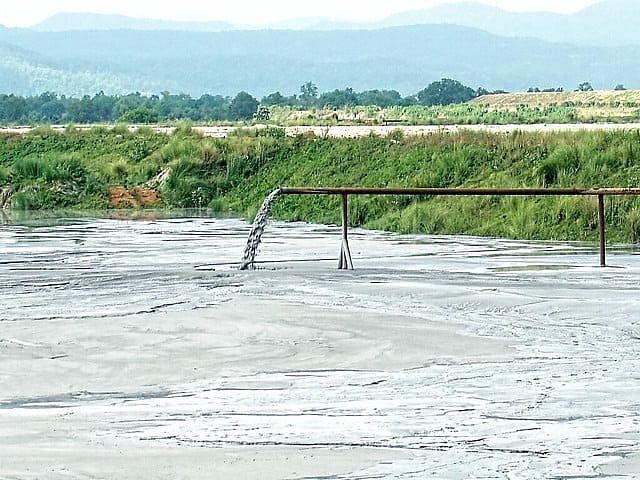
Scientific analysis of fly ash from the plant has found toxic heavy metals such as arsenic, lead, selenium, and mercury — elements known to cause serious health complications. Prolonged exposure has been linked to respiratory illnesses, chronic bronchitis, skin diseases, and even an elevated risk of cancer among residents of nearby settlements. Local citizens complain of increasing respiratory disorders and recurring episodes of eye and skin irritation, particularly among children and elderly populations.
Fly ash menace and public suffering
The situation is further aggravated by the mismanagement of fly ash transportation and dumping in residential and public zones. The Balco Nagar bypass, a critical road connecting industrial and residential areas, has been rendered nearly unmotorable by hundreds of overloaded trucks transporting fly ash daily to unregulated disposal sites. Dust clouds from these trucks have made breathing difficult for residents, who also face deteriorating air quality and damaged infrastructure. Locals allege that despite repeated representations to the Pollution Control Board and local administration, enforcement has been superficial and largely ineffective.
“Every day, the air turns grey with ash. The trucks spill dust all along the way, and our children are growing up in toxic conditions,” said Suresh Patel, a resident of Balco Nagar. “We hear of digital monitoring and green initiatives, but on the ground, we see only dust and neglect.”
Regulatory action and corporate claims
The NGT’s 2022 directive required BALCO and other Korba-based industries to adopt safer and more efficient fly ash disposal and utilization technologies. While BALCO’s official reports claim a high rate of fly ash utilization, environmental audits and tribunal reports have contradicted these assertions. A 2013 report had already flagged inefficiencies in BALCO’s HCSD system, and a 2023 NGT filing revealed that no fly ash had been lifted from one of BALCO’s dykes between 2018 and 2022, despite company claims to the contrary.
In May 2024, BALCO announced the launch of a “digital ash control tower” to enhance transparency and efficiency in its fly ash operations. However, Friday’s ESP collapse has cast doubt on the effectiveness and sincerity of such technological measures. Environmentalists argue that while BALCO publicizes innovation and sustainability initiatives, ground-level implementation remains poor, and regulatory compliance continues to lag.
Public outrage and the call for accountability
The cumulative effect of these repeated industrial and environmental failures has eroded public trust in BALCO’s management and in the regulatory institutions tasked with oversight. The ESP collapse, which could have released large volumes of unfiltered particulate matter, underscores the pressing need for comprehensive safety audits and independent environmental monitoring.
Experts and civil society organizations are calling for the Centre and State Governments to take immediate corrective steps, including stricter enforcement of environmental laws, real-time emissions monitoring, and a transparent review of BALCO’s compliance record. Activists insist that Korba — once envisioned as an “energy capital” — is fast becoming a symbol of unchecked industrial exploitation.
The people of Korba, living under the shadow of towering chimneys and ash dykes, are demanding more than promises — they are demanding accountability. Without urgent action, the combination of aging infrastructure, lax oversight, and environmental neglect threatens not only the health and safety of workers but the very future of one of India’s most vital industrial regions.