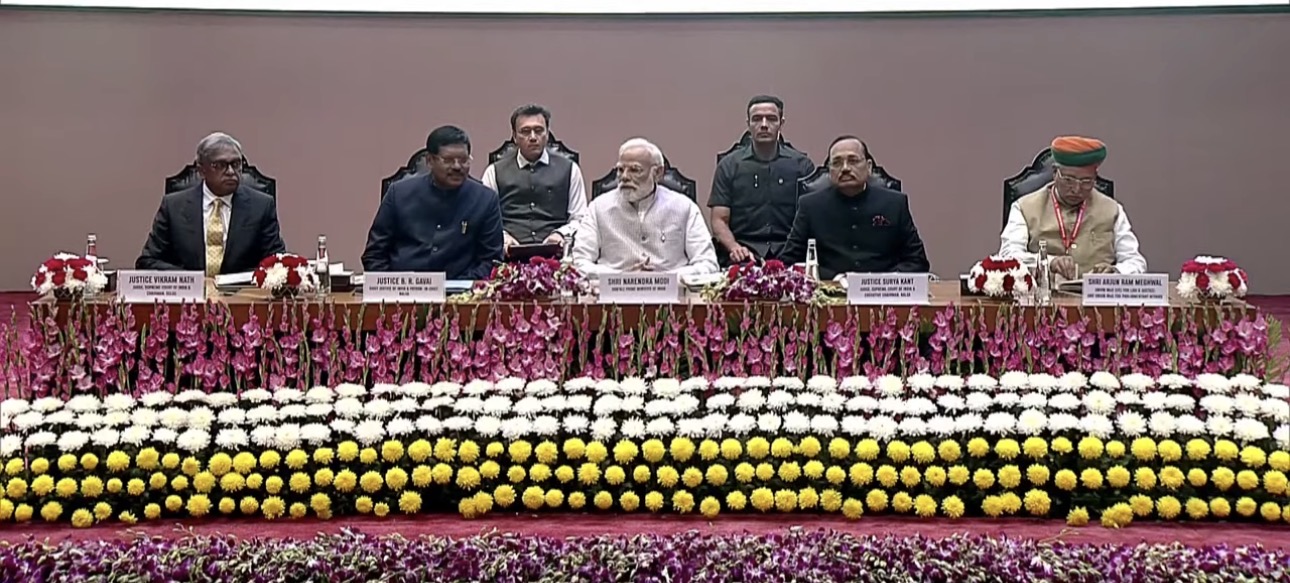
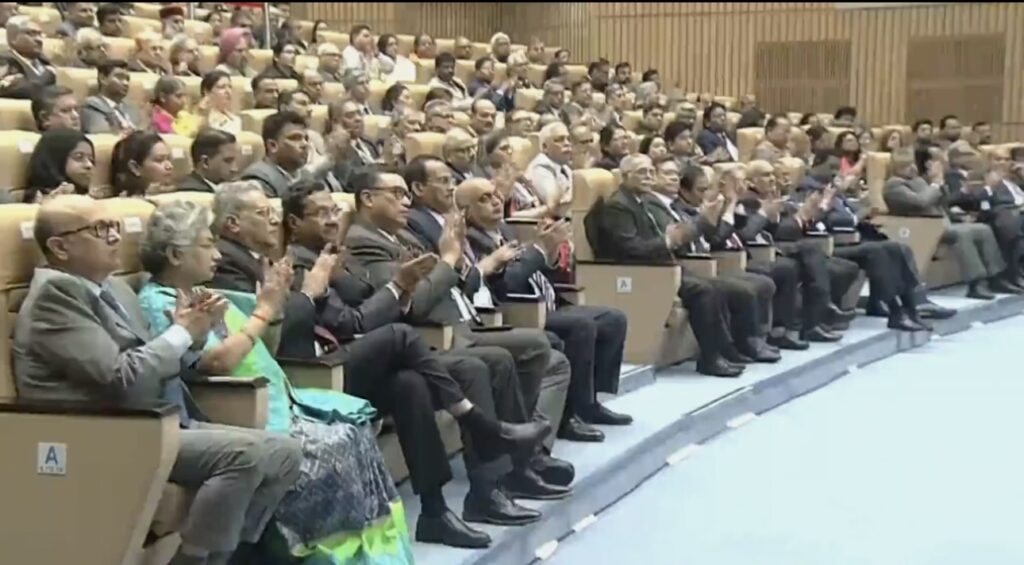
TFP Bureau, New Delhi, November 8, 2025. Prime Minister Narendra Modi inaugurated the National Conference on “Strengthening Legal Aid Delivery Mechanisms” at the Supreme Court of India, underlining that accessible, timely and inclusive justice is the foundation of social justice. The two-day conference, organised by the National Legal Services Authority (NALSA), brings together members of the judiciary, legal services institutions and policymakers to deliberate on reforms in legal aid delivery.
Addressing the gathering, the Prime Minister said that the programme associated with Legal Services Day and efforts to reinforce legal aid mechanisms would significantly strengthen India’s judicial ecosystem. Extending his best wishes for the 20th National Conference, he noted that legal aid serves as a critical bridge between the judiciary and citizens, particularly the poor, deprived and marginalised.
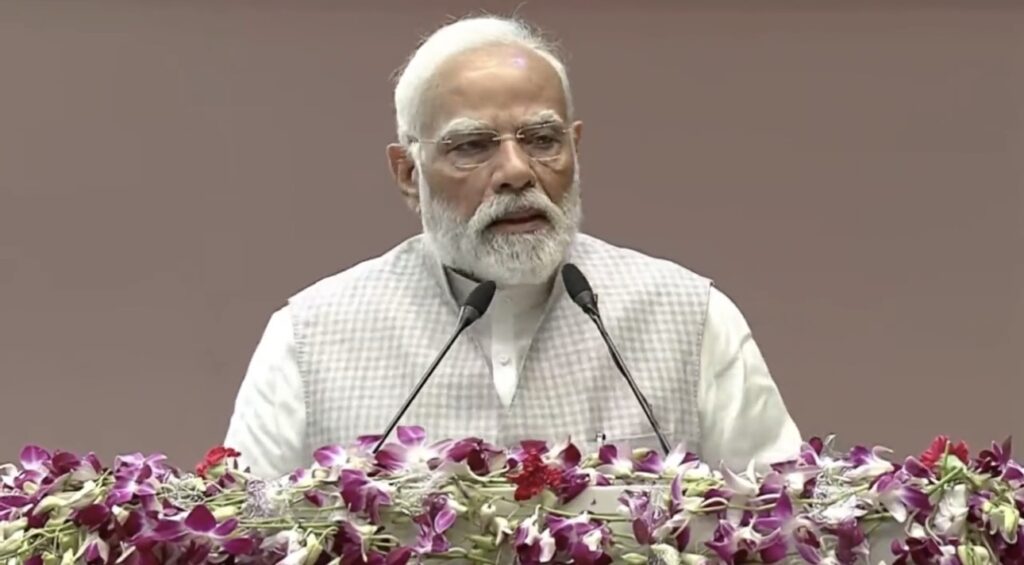
Highlighting the success of Lok Adalats and pre-litigation settlements, Shri Modi said lakhs of disputes are being resolved swiftly and at low cost. Under the Legal Aid Defence Counsel System, nearly 8 lakh criminal cases have been settled in the past three years, ensuring “ease of justice” for those most in need.
The Prime Minister emphasised that Ease of Doing Business and Ease of Living can be fully realised only when Ease of Justice is ensured. Over the past 11 years, the government has removed more than 40,000 compliances, decriminalised over 3,400 legal provisions under the Jan Vishwas Act and repealed more than 1,500 obsolete laws. He said that long-standing legal codes have now been replaced with the Bharatiya Nyaya Sanhita.
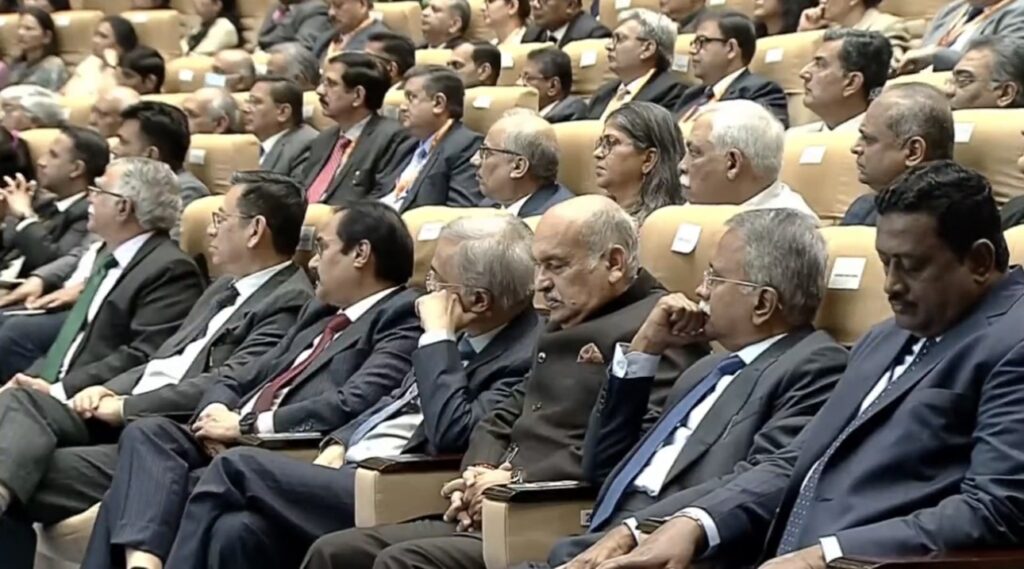
Marking 30 years of NALSA, Shri Modi commended the institution for its work in connecting underprivileged citizens with the justice system. He said that those who approach legal services authorities often lack resources and representation, and offering them hope is the true meaning of “service.”
The Prime Minister also launched NALSA’s Community Mediation Training Module, describing it as a modern extension of India’s long-standing civilizational tradition of resolving disputes through dialogue. He said the new Mediation Act advances this tradition and expressed confidence that the training module will strengthen community-based dispute resolution while reducing litigation.
Shri Modi noted that technology is reshaping justice delivery. Highlighting the eCourts project, he said that innovations such as e-filing, digital summons, virtual hearings and video conferencing have simplified access to justice. The government has allocated over Rs. 7,000 crore for the third phase of the project, underscoring its commitment to judicial modernisation.
The Prime Minister stressed the importance of legal awareness, saying that citizens cannot seek justice unless they understand their rights and the law. He called for greater outreach to vulnerable groups and encouraged law students to engage with rural communities to help spread legal knowledge.
Reiterating that justice must be delivered in the language understood by the recipient, Shri Modi said that this principle must guide lawmaking and judicial processes. He welcomed the Supreme Court’s initiative to translate more than 80,000 judgments into 18 Indian languages, adding that similar efforts should continue at the High Court and district court levels.
Concluding his address, the Prime Minister urged all stakeholders to envision the future of India’s justice delivery system as the country moves toward developed-nation status. He congratulated NALSA and the legal fraternity on their continued contributions to strengthening legal aid delivery.
Chief Justice of India Justice B.R. Gavai, Union Minister Arjun Ram Meghwal and other dignitaries were present at the event.