Higher Education Minister calls for deeper engagement of universities and colleges to ensure effective, on-ground implementation of the National Education Policy during a high-level workshop in Raipur.
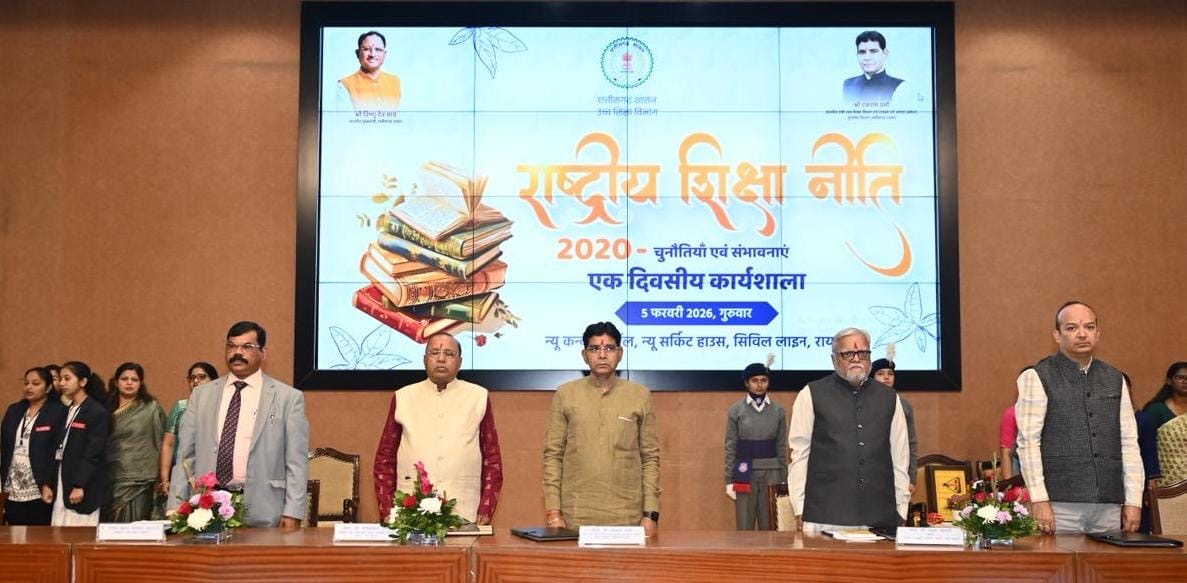
Raipur, February 6, 2026: Emphasising that education reforms must translate into tangible benefits for students, Chhattisgarh Higher Education Minister Shri Tank Ram Verma on Wednesday said the National Education Policy (NEP) 2020 is reshaping the education system to be employment-oriented, innovative and globally competitive. He was addressing a one-day high-level workshop organised by the Higher Education Department at the New Circuit House, Civil Lines, Raipur, to deliberate on the challenges and opportunities associated with the effective implementation of the policy.
The workshop brought together vice-chancellors, registrars, college principals, senior professors and education experts to review the progress of NEP implementation and to outline future strategies. Shri Verma said the collective responsibility of all stakeholders is to ensure that NEP 2020 does not remain confined to policy documents but reaches every student across universities and colleges. He urged academic leaders to study the policy in depth and play a proactive role in translating its provisions into classroom practices.
Highlighting the need for structured monitoring, the Minister stressed the importance of regular reviews through state-level committees, district cluster systems, task force meetings and strong university-level monitoring mechanisms. He said such systems would help identify gaps early and ensure uniform implementation across institutions.
Shri Verma also underlined the importance of integrating Indian knowledge traditions into higher education curricula. He said reconnecting students with India’s cultural heritage, values and traditional knowledge systems is a key objective of NEP 2020. Local folk art, crafts and indigenous knowledge will be incorporated into academic programmes, while online competitions and academic activities related to Indian knowledge traditions will be organised to enhance student awareness and participation. He added that more detailed and multi-day workshops should be conducted in the future to deepen understanding of the policy among educators.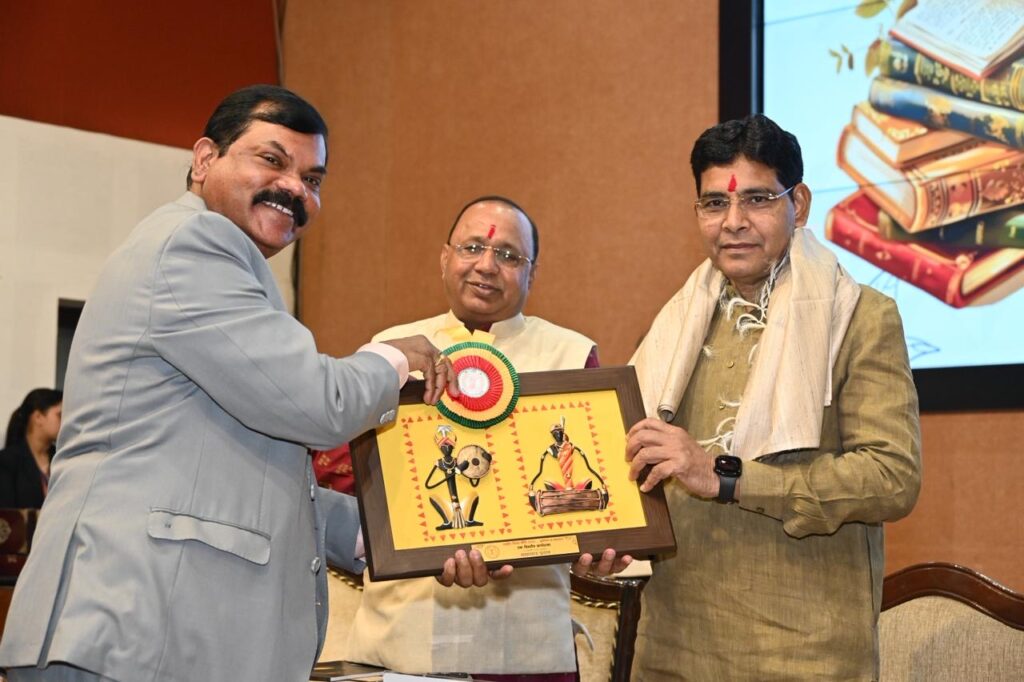
The workshop featured eminent educationists and policymakers as special guests, including Shri Atul Kothari, Chairman of the Bharatiya Shiksha Sanskriti Utthan Nyas; Dr Om Prakash Sharma, National Co-convenor of Shiksha Sanskriti Utthan Nyas; Dr Rajiv Prakash, Director of IIT Bhilai; noted educationist Shri Dilip Kesharwani; and Dr Narayan Gawandkar. Faculty members from various colleges and universities across the state also participated.
Higher Education Commissioner Dr Santosh Kumar Dewangan, in his address, outlined the core objectives of NEP 2020 and highlighted the roadmap for its effective implementation in Chhattisgarh. Chief speaker Shri Atul Kothari elaborated on key provisions of the policy, including the integration of Indian knowledge systems, the academic credit framework, multiple entry and exit options for students, and the formation of task forces to guide implementation.
Dr Rajiv Prakash shared practical insights and experiences related to implementing NEP reforms in technical and higher education institutions, while Dr Om Prakash Sharma discussed the broader national and state-level perspective on policy execution.
The workshop concluded with an interactive question-and-answer session, during which experts addressed queries raised by participants on curriculum reforms, governance structures and operational challenges. The deliberations underscored the state government’s commitment to aligning higher education in Chhattisgarh with the vision of NEP 2020, focusing on quality, inclusivity and future-ready skills for students.