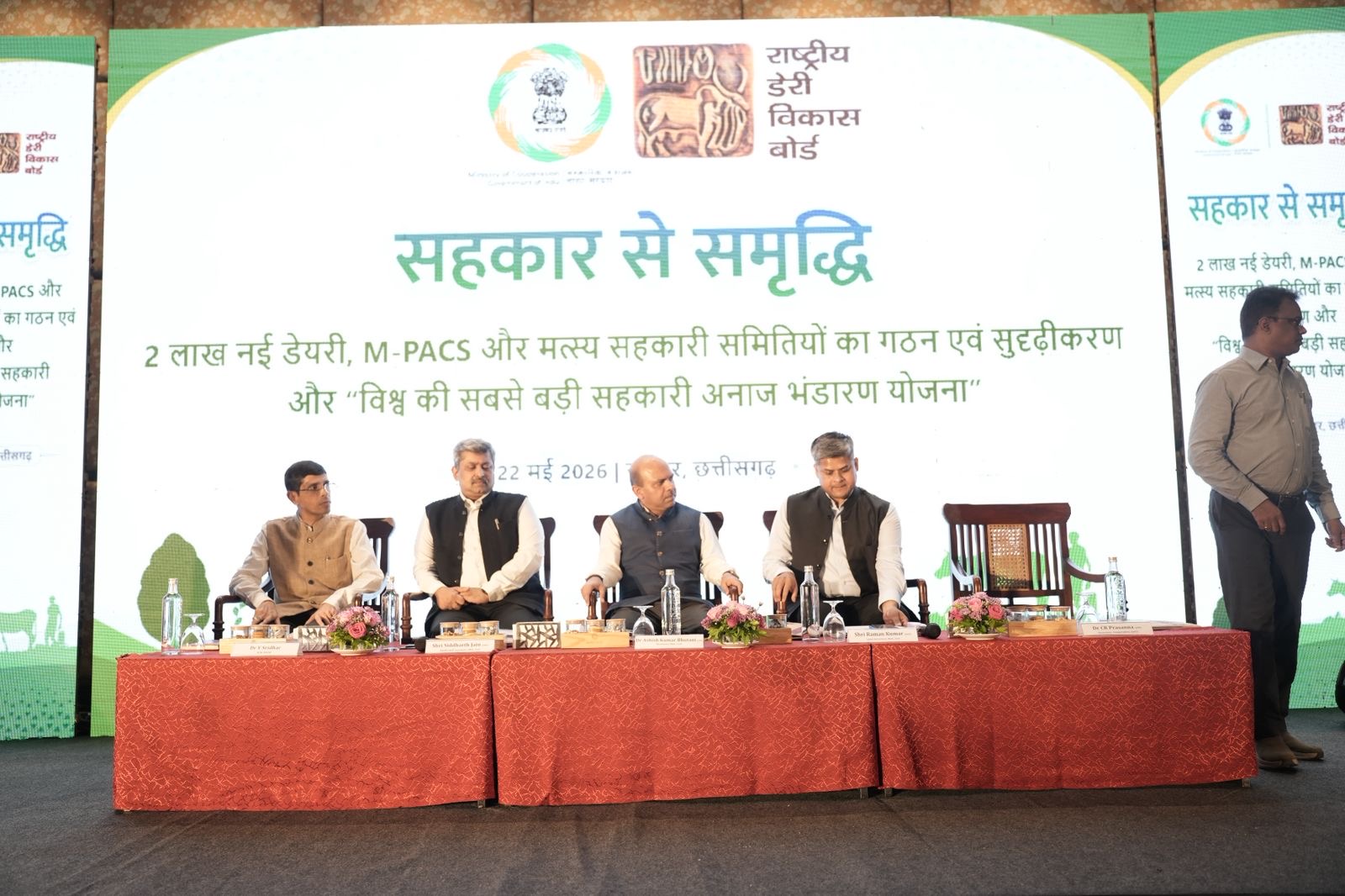
Extensive discussions held on strengthening dairy, fisheries, and multipurpose PACS, while reviewing progress of the world’s largest cooperative grain storage scheme under the vision of “Sahakar se Samriddhi.”
TFP Bureau, Raipur, May 23, 2026: A one-day regional cooperative workshop for six eastern and central Indian states concluded in Nava Raipur on Friday, with a strong focus on strengthening cooperative institutions, empowering rural economies, and expanding employment opportunities through the cooperative sector.
The workshop was organized jointly by the Union Ministry of Cooperation and the National Dairy Development Board (NDDB) as part of efforts to realize Prime Minister Narendra Modi’s vision of “Sahakar se Samriddhi” (From Cooperation to Prosperity).
The programme brought together senior officials and representatives from Bihar, Chhattisgarh, Madhya Pradesh, Jharkhand, Odisha, and West Bengal to deliberate on strategies aimed at modernizing and expanding cooperative activities across rural India.
Union Ministry of Cooperation Secretary Dr. Ashish Kumar Bhutani presided over the workshop and emphasized the need to transform cooperative institutions into strong pillars of rural economic development. He highlighted the importance of making the cooperative sector modern, self-reliant, technologically efficient, and employment-oriented.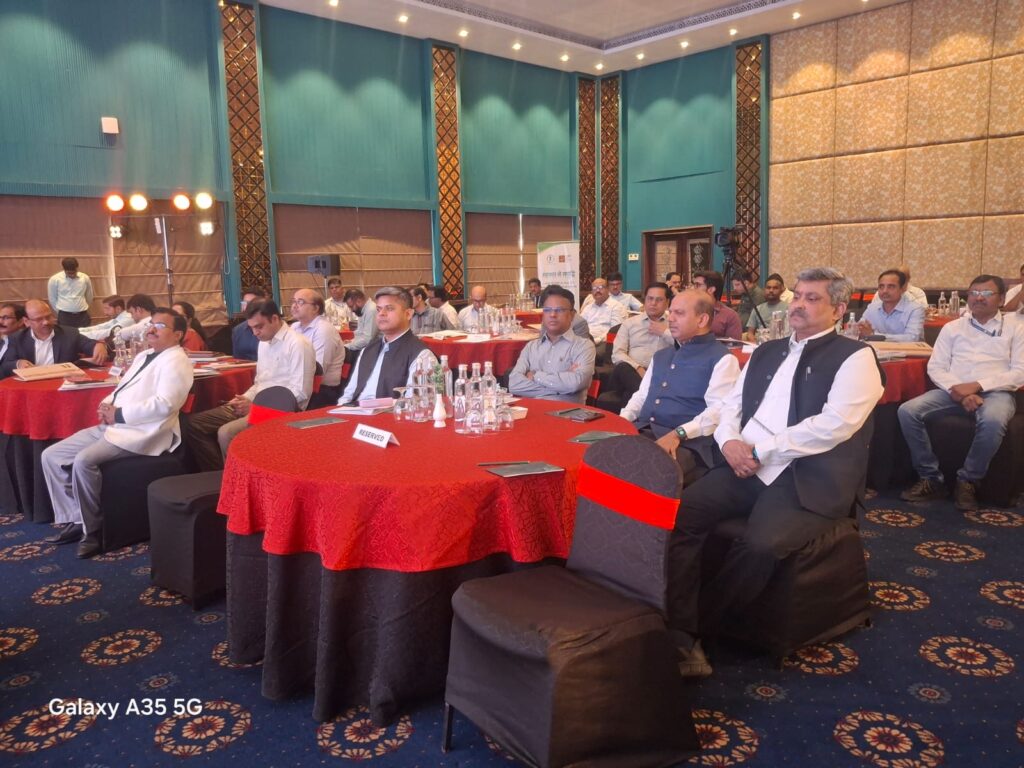
The workshop focused extensively on strengthening Dairy, Fisheries, and Multipurpose Primary Agricultural Credit Societies (PACS), which are increasingly being developed as comprehensive rural service centers instead of institutions limited only to credit distribution.
Officials reviewed the progress being made toward the national target of establishing 200,000 new Dairy, Fisheries, and Multipurpose PACS across the country. Detailed discussions were also held regarding the implementation of the world’s largest cooperative grain storage scheme, which aims to enhance rural storage infrastructure and improve agricultural supply chain management.
Participants noted that the expansion and diversification of PACS would play a key role in increasing farmers’ income and promoting economic activities in villages. Under the evolving cooperative model, PACS are being encouraged to undertake multiple activities including fertilizer and seed distribution, paddy procurement, operation of Public Distribution System (PDS) outlets, dairy farming, fisheries, warehousing, and rural entrepreneurship initiatives.
Experts at the workshop observed that developing PACS into multipurpose institutions would help create employment opportunities at the village level while ensuring easier access to essential services for farmers, livestock rearers, and fish farmers.
The meeting also featured detailed deliberations on the business diversification and expansion strategies of PACS committees. Officials discussed ways to make these institutions financially stronger, sustainable, and capable of contributing more effectively to the rural economy.
Reviewing various schemes launched under the initiative of Union Cooperation Minister Amit Shah, participants emphasized the need for coordinated implementation and better institutional support to strengthen cooperative-based economic models in rural areas.
The workshop is being viewed as an important step toward boosting cooperation-driven development and empowering grassroots institutions through integrated economic activities and infrastructure support.
Senior officials from multiple departments and institutions participated in the programme, including Additional Secretary Siddharth Jain and Joint Secretary Raman Kumar from the Union Ministry of Cooperation, Chhattisgarh Cooperation Secretary Dr. C.R. Prasanna, Commissioner of Cooperation and Registrar Mahadev Kavre, and Dr. V. Sridhar from the NDDB, Anand, Gujarat.
Representatives from NABARD, the Food Corporation of India (FCI), NAFED, warehousing agencies, dairy and fisheries departments, Apex Bank, and MARKFED also attended the workshop and shared inputs on strengthening cooperative infrastructure and expanding rural economic activities.
Officials expressed confidence that the expansion of cooperative institutions and implementation of modern cooperative models would significantly contribute to rural development, employment generation, agricultural growth, and self-reliance among farmers and rural communities.