
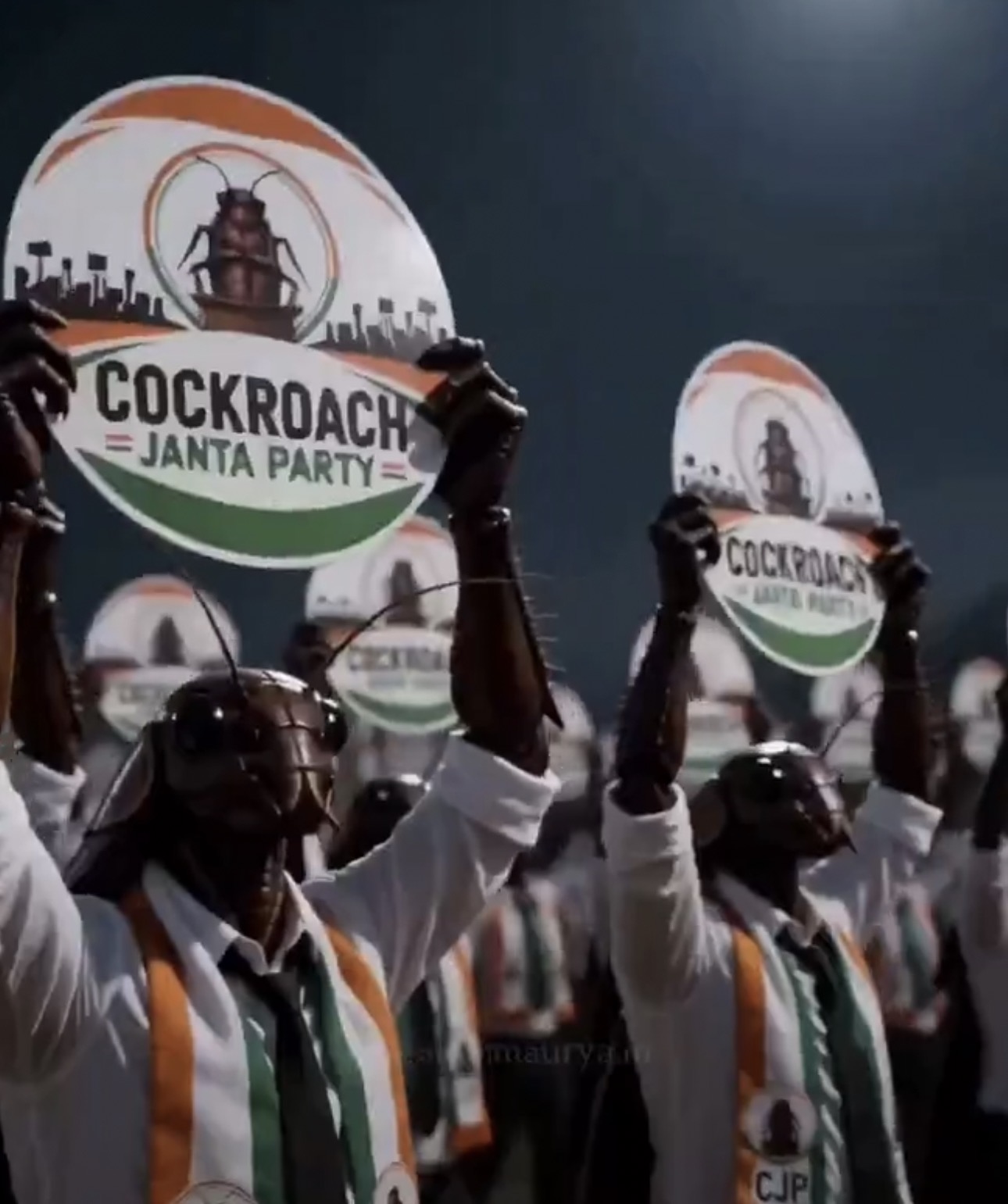
Viral meme-based digital movement gains massive popularity among youth after controversy surrounding remarks linked to the Chief Justice of India triggers online discussions on unemployment, education, and governance.
TFP Bureau, New Delhi, May 22, 2026: A satirical social media movement titled “Cockroach Janata Party (CJP)” has emerged as one of the most talked-about online trends in the country, rapidly gaining traction across digital platforms following recent public discussions linked to remarks made by Chief Justice of India Justice Surya Kant during a court hearing.
The online trend began circulating widely after controversy erupted over comments referring to unemployed youth during judicial proceedings. The remarks triggered intense reactions and debate across social media platforms, with several users interpreting them as insensitive toward young job seekers. Subsequently, Justice Surya Kant clarified that his observations were specifically directed at individuals holding fake degrees and were not intended as criticism of the youth in general.
Amid the growing online debate, the “Cockroach Janata Party” surfaced as a satirical digital movement, using memes, parody content, and humorous political commentary to address issues such as unemployment, education, governance, and institutional accountability.
The trend reportedly originated around May 16, 2026, and quickly gained popularity, especially among Gen Z users and young audiences on Instagram and other social media platforms. According to online reports, the page witnessed an extraordinary rise in followers within just a few days, with its social media following being compared by users to that of major political parties in the country.
Although the name and branding resemble a political outfit, the “Cockroach Janata Party” is not a registered political organization. Social media users and digital commentators have largely described it as a satirical internet movement aimed at highlighting political and social concerns through humour and meme culture.
Posts shared under the trend reportedly focus on issues including employment opportunities, the quality of education, political polarization, governance, and the functioning of democratic institutions. Many of the posts use sarcasm and fictional campaign-style messaging to attract attention and encourage online engagement.
Several posts linked to the movement also refer to a satirical “manifesto,” which includes humorous demands and commentary related to judicial independence, electoral reforms, media ownership, and institutional transparency. However, analysts and social media observers have emphasized that the movement should primarily be viewed as digital satire rather than a serious political initiative.
The phenomenon has also drawn reactions from political figures, opposition leaders, content creators, and social media influencers, further amplifying its reach and visibility online. Internet users have widely discussed the trend under the broader context of “meme politics,” where satire and humour are increasingly becoming tools for political commentary and public expression among younger audiences.
Experts observing the trend say the popularity of such online movements reflects growing youth engagement with political and social issues through unconventional digital formats. They note that satire-based content often resonates strongly with younger demographics because it combines humour with commentary on real-life concerns.
The rapid rise of the “Cockroach Janata Party” also highlights the increasing influence of social media-driven narratives in shaping public discourse, especially around topics related to employment, governance, and democratic institutions.
While the trend continues to dominate online conversations, observers believe it represents more of a cultural and social media phenomenon than a formal political development.