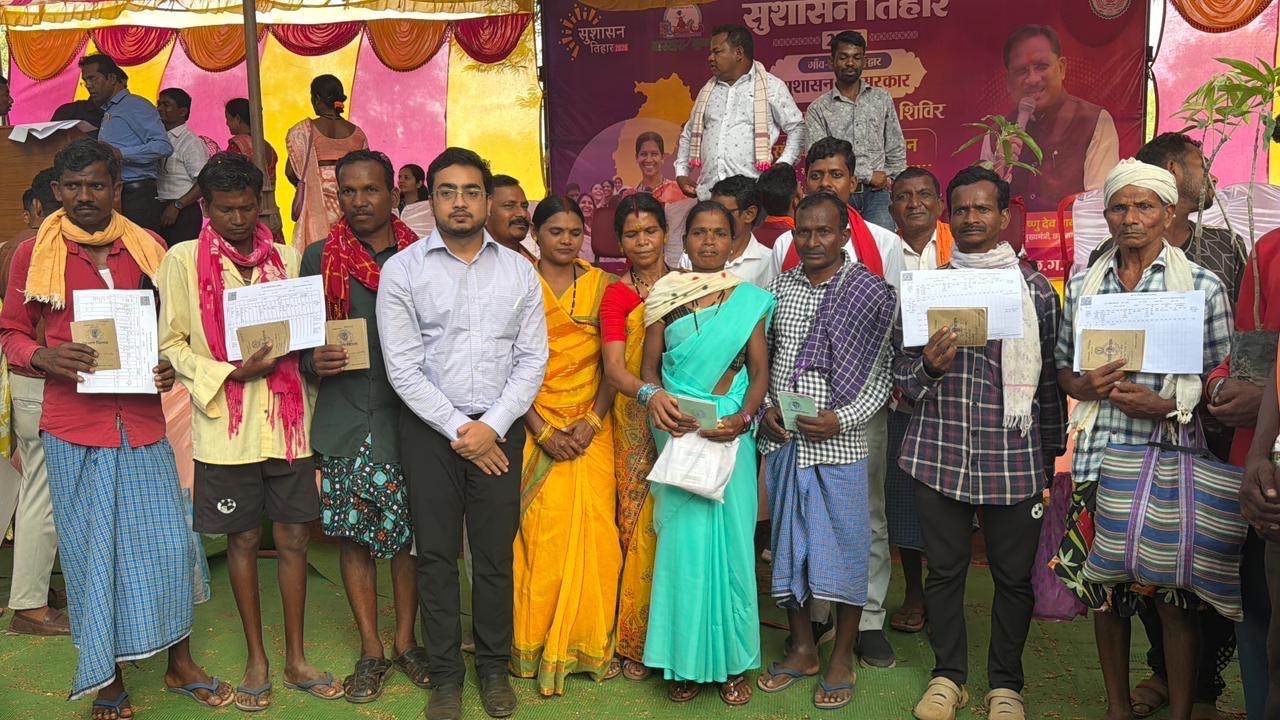
A special campaign in Bastar district has transformed the traditionally cumbersome process of mutation after a landowner’s death by combining digital land records with grassroots administration, resolving over 8,200 cases and paving the way for faster access to government benefits for farmers and tribal families.
TFP Bureau, Raipur, June 20, 2026: In a significant example of technology-driven governance, the Bastar district administration has introduced a proactive model for resolving long-pending land mutation cases, replacing the conventional application-based approach with doorstep service delivery and coordinated field-level action.
The initiative focuses on Fauti Namantaran—the transfer of land ownership to legal heirs following a landowner’s death—a process that has historically remained delayed due to bureaucratic procedures, lack of awareness, and dependence on intermediaries. Officials say the new model aims to reduce family disputes, improve land record accuracy, and enable beneficiaries to access government welfare schemes more quickly.
Instead of waiting for applications from affected families, the district administration launched a special campaign covering 611 villages across Bastar. Data compiled up to June 12, 2026, indicates that pending mutation cases identified during the campaign have been processed and corresponding land records updated within a span of four months.
The programme relied on close coordination between Tehsildars, Naib Tehsildars, Gram Sachivs, Patwaris, and Kotwars. Village Secretaries prepared records of deaths over the previous four years and assisted families in obtaining death certificates where necessary. Patwaris matched these records with the state’s digital land database, identified landholdings requiring mutation, contacted legal heirs, and prepared succession documents.
Kotwars played a crucial role by conducting on-ground verification of family details and beneficiary claims, helping ensure transparency and minimise the possibility of fraudulent entries.
According to district figures, field officials identified 8,651 cases requiring mutation. Of these, 8,241 have already been resolved through the online mutation system after completing statutory procedures such as public notices and settlement of objections, leaving only 410 cases pending.
Performance varied across the district’s 10 tehsils, with Tokapal recording the highest number of identified cases and resolving 1,454 out of 1,553. Bakawand disposed of 1,142 out of 1,153 cases, while Jagdalpur cleared 1,057 of 1,061 cases. Bastar, Bhanpuri, Lohandiguda, Karpawand, Nangur, Darbha, and Bastanar also reported substantial progress despite differing geographical and logistical challenges.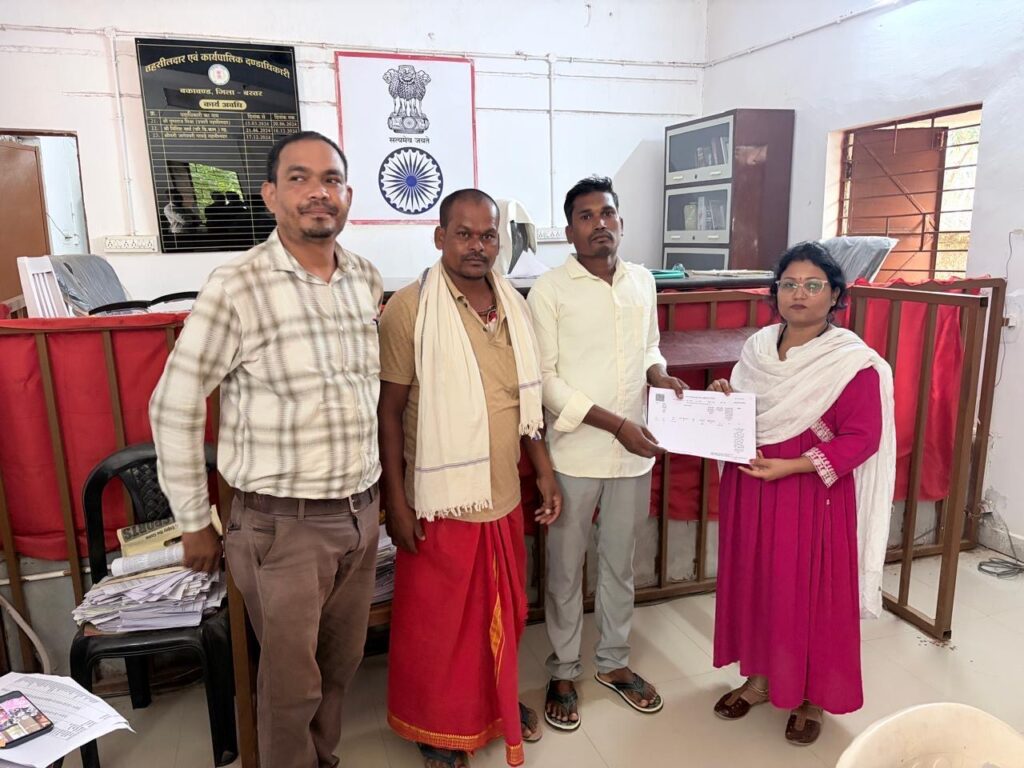
Officials said the initiative has significantly reduced the role of middlemen by integrating digital tracking with suo motuadministrative action. Updated land records have enabled eligible heirs, including many tribal families and farmers, to access institutional credit and government programmes such as the Kisan Credit Card scheme and agricultural subsidies without prolonged delays.
Encouraged by the results, the Bastar administration has now launched the next phase of the campaign with the objective of achieving complete disposal of mutation cases pending for up to the last ten years. The district’s proactive governance model is being viewed as a potential template for revenue reforms in other rural and tribal regions facing similar challenges. Click here to see the Video