Nationwide surveys on migration, household debt, investment and farmers’ living conditions to provide crucial data for policy formulation
TFP Bureau, Raipur, July 21,2026: Fieldwork for the 81st Round of the National Sample Survey (NSS) has commenced across Chhattisgarh as part of a nationwide exercise aimed at generating reliable socio-economic data for evidence-based policymaking. Conducted under the guidance of the Ministry of Statistics and Programme Implementation (MoSPI), Government of India, and implemented by the Directorate of Economics and Statistics, Chhattisgarh, the survey will continue from July 2026 to June 2027.
The latest round of the NSS comprises three major national surveys—the Migration Survey, the All-India Debt and Investment Survey (AIDIS), and the Situation Assessment Survey (SAS) of Agricultural Households. Officials said the findings will help governments design more effective development programmes and welfare schemes based on comprehensive and updated data.
The Migration Survey will collect information on the movement of individuals and families, including reasons for migration, duration of stay, and factors such as employment, education, marriage and other socio-economic conditions. The data is expected to provide valuable insights into changing migration patterns and their social and economic impact across the country.
The All-India Debt and Investment Survey will assess the financial health of households by collecting information on borrowings, sources of credit, investments, assets and liabilities. The survey is expected to offer a comprehensive picture of household finances and financial inclusion, helping policymakers understand access to institutional and non-institutional credit.
The Situation Assessment Survey of Agricultural Households will focus on farmers’ income, agricultural and allied activities, cultivation costs, availability of resources, debt levels and overall living standards. Officials said the survey findings will support the formulation of more targeted agricultural policies and farmer welfare programmes.
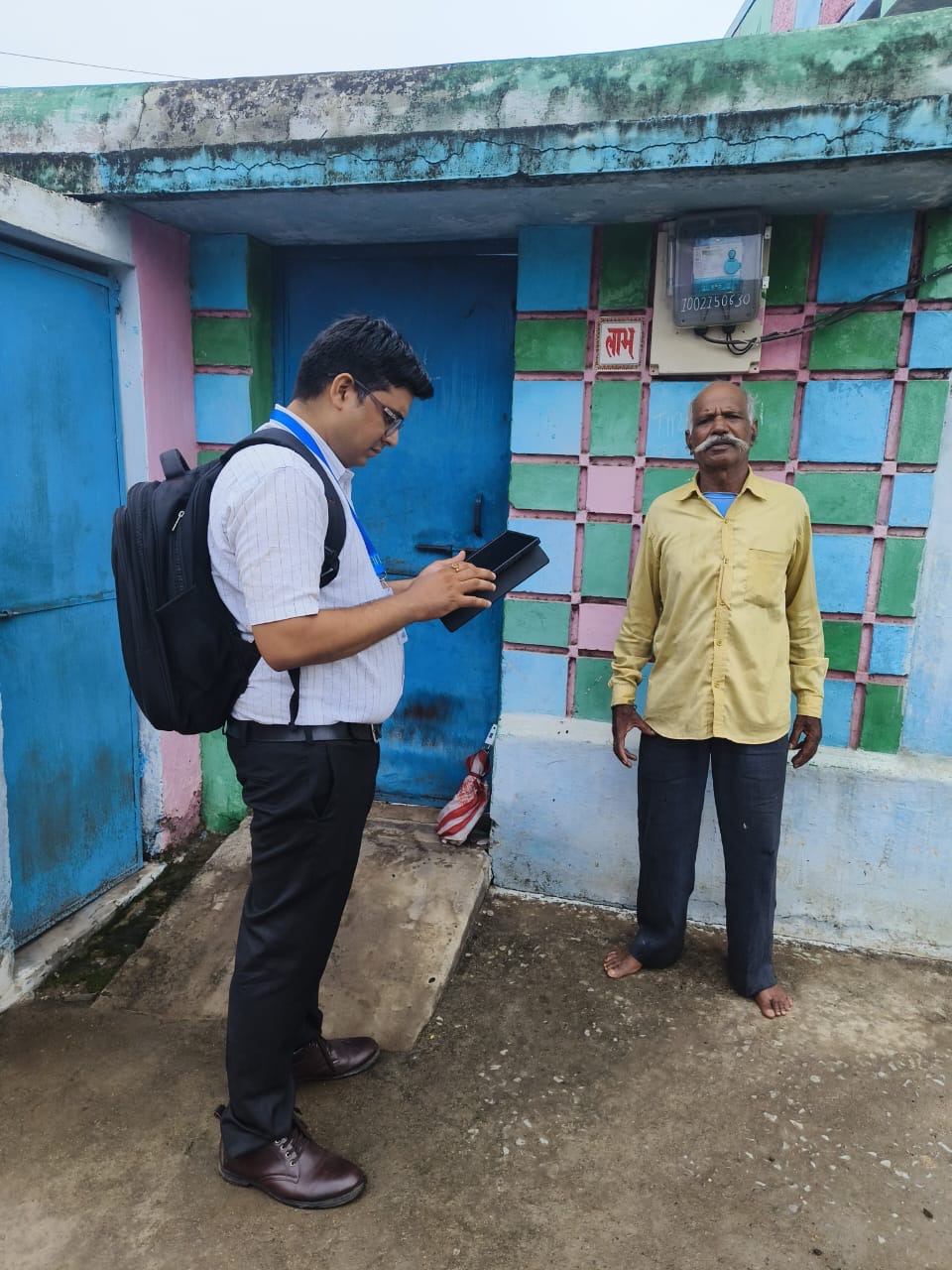
Data will be collected from selected rural and urban households using the tablet-based Computer Assisted Personal Interviewing (CAPI) system. Trained enumerators and supervisors will conduct the surveys, ensuring greater accuracy, transparency and timely collection of information through digital technology.
The Directorate of Economics and Statistics has assured citizens that all information collected during the survey will remain strictly confidential in accordance with the provisions of the Statistics Act, 2008, and will be used exclusively for statistical purposes.
Appealing for public cooperation, the Directorate urged selected households to provide accurate and complete information to survey teams. Officials said the quality of data generated through the National Sample Survey will play a vital role in shaping future public policies, welfare programmes and development initiatives for both Chhattisgarh and the country.