
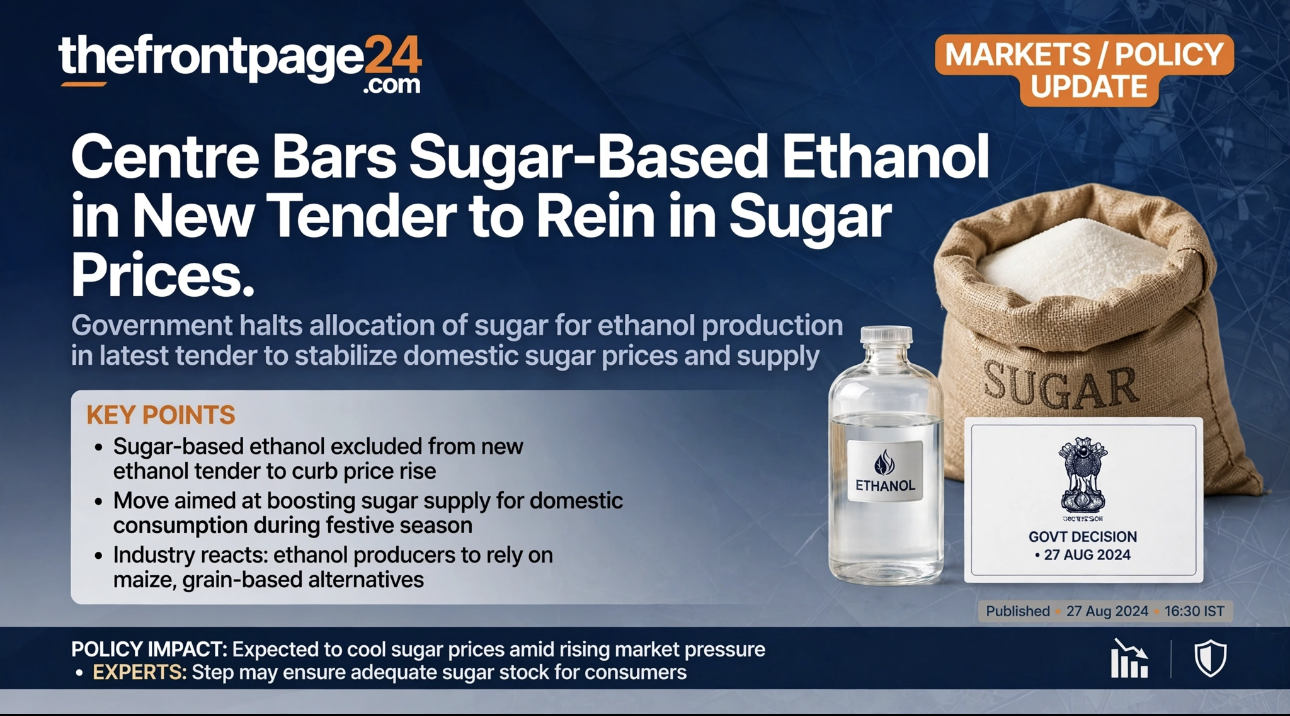
New procurement policy for 2026-27 prioritises domestic sugar supplies while keeping the 20% ethanol-blending target in focus; grain-based ethanol producers may gain opportunities as sugar mills reassess their strategies
TFP Bureau, New Delhi, October,19,2026: The Centre has revised its ethanol procurement policy for the 2026-27 supply year, excluding ethanol made from sugarcane juice, sugar, sugar syrup and B-heavy molasses from a new tender issued by state-run oil marketing companies. The move aims to divert more sugarcane towards sugar production, boost domestic supplies and ease upward pressure on prices amid concerns over output.
The policy change is expected to affect sugar mills, ethanol producers and sugarcane farmers. However, the government’s ethanol-blending programme will continue, with greater emphasis on alternative feedstocks such as maize, rice and other approved raw materials.
BPCL issues tender for 11 billion litres
Bharat Petroleum Corporation Limited (BPCL), on behalf of state-owned oil marketing companies, issued a tender on October 16 for the procurement of approximately 11 billion litres, or 1,100 crore litres, of ethanol for the supply period from November 2026 to October 2027.
Under the revised framework, procurement will cover ethanol produced from maize, damaged or broken grains, surplus rice supplied by the Food Corporation of India, C-heavy molasses and other feedstocks permitted under the biofuel policy. Ethanol derived from sugarcane juice, sugar syrup and B-heavy molasses has been excluded from the tender.
The decision reflects the government’s effort to balance the availability of sugar for domestic consumers with the continued need to supply ethanol for petrol blending.
Production concerns raise supply worries
The policy shift comes amid concerns over sugar production in the 2026-27 season. Deficient rainfall in major sugarcane-producing states, including Maharashtra and Karnataka, could affect crop yields, while floods, plant diseases and pest attacks in other regions may add to the pressure on output.
Industry estimates cited in the market suggest that sugar production could be around 28 million tonnes, against projected domestic consumption of 28.5 million to 29 million tonnes. In the previous supply year, sugar equivalent to approximately three million tonnes was diverted towards ethanol production.
Against this backdrop, restricting the use of certain sugar-based raw materials for ethanol is intended to make more sugarcane available for manufacturing sugar and reduce the risk of a domestic supply shortfall.
Will consumers see lower sugar prices?
The key question for consumers is whether the policy will translate into cheaper sugar. Reducing the diversion of sugarcane-based materials towards ethanol could help mills produce more sugar and improve domestic availability.
However, an immediate fall in retail prices is not guaranteed. The eventual impact will depend on actual production, market demand, existing stocks, weather conditions and the pace at which additional sugar reaches the market.
The policy is therefore aimed at easing supply pressures, but its effectiveness in bringing down prices will become clearer in the coming months.
Sugar mills may face an earnings impact
The revised tender could also alter the revenue mix of sugar mills that have invested in ethanol production. Mills using sugarcane juice, sugar syrup and B-heavy molasses may need to reassess their production plans and sales strategies following the exclusion of these feedstocks from the tender.
A greater focus on sugar production could support domestic availability, but the impact on mill profitability will depend on sugar prices, ethanol revenues, production costs and payments to sugarcane farmers. The financial implications are likely to vary across mills, depending on their existing infrastructure and feedstock options.
Ethanol blending programme to continue
The government has promoted ethanol blending to reduce dependence on imported crude oil, save foreign exchange and encourage the use of alternative fuels. The national target of 20% ethanol blending in petrol remains central to the programme.
With sugar-based ethanol excluded from the new tender, grain-based production is expected to assume a greater role in meeting procurement requirements. However, increased use of maize and rice for ethanol production will require close monitoring of its potential effects on food supplies, animal feed availability and agricultural markets.
The tender also reportedly reduces the procurement price for maize-based ethanol from ₹71.86 per litre to ₹68.86 per litre. The change could affect production costs and profit margins for manufacturers relying on maize as a feedstock.
Government faces a balancing act
The Centre faces the challenge of ensuring adequate sugar supplies for domestic consumers while maintaining the availability of ethanol needed for petrol blending. The revised procurement policy seeks to balance these priorities by limiting the diversion of key sugar-based raw materials and broadening reliance on alternative feedstocks.
The final outcome will depend on sugar production during the season, market prices and the ability of grain-based ethanol producers to meet procurement requirements without creating fresh pressures on food and agricultural markets.