
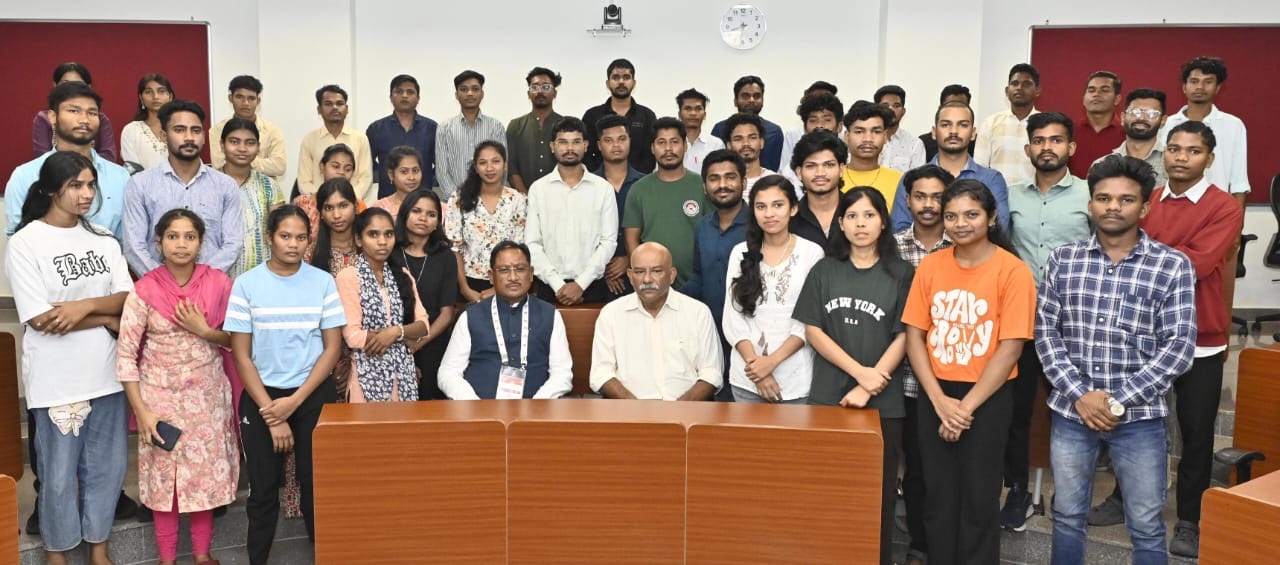
TFP Bureau, Raipur, June 16, 2025: A wave of transformation is sweeping across Dantewada as 50 local youth, once grappling with limited opportunities, are charting bold new paths toward entrepreneurship, thanks to a unique collaboration between IIM Raipur, the Dantewada District Administration, and the Chhattisgarh Government.
The two-month residential Entrepreneurship Certificate Program – Batch 2 concluded at IIM Raipur on June 13, 2025, not just with the awarding of certificates but with a sense of renewed purpose and confidence among participants. The program provided in-depth, hands-on training in business development, marketing, branding, innovation, and digital tools, specifically tailored to help the youth leverage local resources such as Mahua and tamarind for economic empowerment.
Participants like Rakesh Yadav from Dantewada shared how the training opened his eyes to the untapped potential of forest produce. “Mahua and tamarind can become the foundation of livelihoods in our region. I’m no longer just dreaming—I’m moving toward making those dreams a reality,” he said. Others, including Abhishek Gupta of Kirandul, Tejasv Kumar of Bijapur, Neelam Pandey, and Shilpa Kumari from Bacheli, echoed similar sentiments, calling the program a turning point in their lives.
The initiative was brought to life under the leadership of Dantewada Collector Shri Kunal Dudawat, who not only identified and selected deserving candidates but also facilitated their exposure to premier management education. His vision and efforts demonstrated that with the right guidance and opportunities, youth from even the most challenging backgrounds can excel.
Conducted between April 23 and June 13, the program nurtured the entrepreneurial spark within the youth into a robust flame of innovation and ambition. It was a holistic experience that went beyond theory, integrating practical lessons in value addition, branding strategies, digital literacy, and market linkages.
Chief Minister Shri Vishnu Dev Sai also interacted with the trainees during their course, inspiring them with words of encouragement. He lauded the initiative and stated, “The youth of Bastar have tremendous potential. With the right training and direction, they can become symbols of progress not only for their communities but for the entire state.”
The impact of the initiative is already visible on the ground. Areas once synonymous with conflict are now witnessing the emergence of local enterprises—Mahua-based industries, tamarind processing units, and community-led tourism initiatives. What began as a training program is now laying the foundation for a new narrative of Bastar—one rooted in entrepreneurship, self-reliance, and inclusive growth.
This initiative stands as a testament to what can be achieved when administrative intent, institutional excellence, and grassroots potential come together. The success of these 50 youth from Dantewada signals a broader transformation for the entire Bastar region—a move from despair to development, from limitations to leadership.