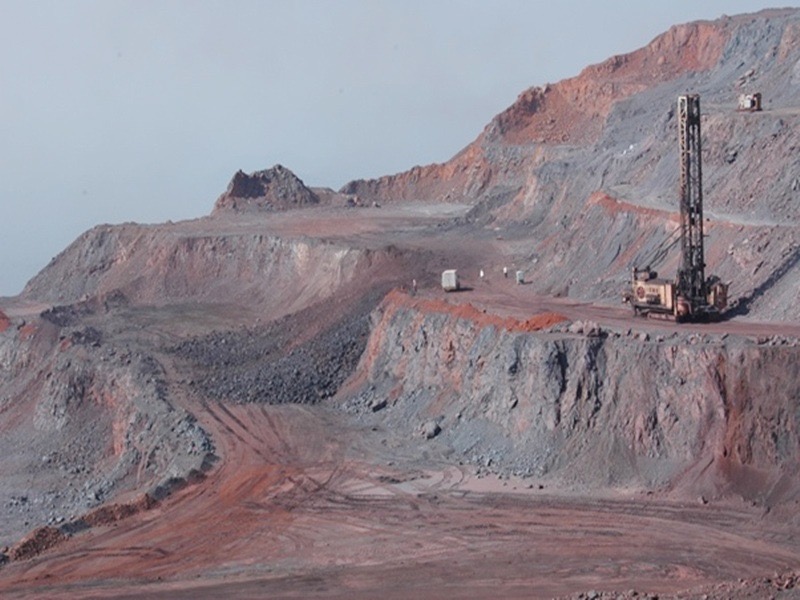
TFP Bureau, Raipur, October 5, 2025: Chhattisgarh, one of India’s richest states in terms of mineral resources, has emerged as a national model for transparency, innovation, and sustainable growth in the mining sector. Over the past two decades, the state has implemented sweeping reforms in mineral administration, transforming itself into one of the most efficiently managed mining regions in the country. Through the integration of technology, accountability, and scientific exploration, Chhattisgarh has set a new standard in responsible resource utilization.
Chief Minister Vishnu Deo Sai said that mineral wealth is not merely an economic asset but the foundation for the state’s comprehensive and inclusive development. He stated that Chhattisgarh’s progress in mining represents the perfect blend of digital governance, sustainable practices, and people-centric policies. “Chhattisgarh has proved that growth can be achieved through transparency and responsibility. Our aim is to ensure that the benefits of mining reach every household while preserving the environment for future generations,” he added.
The state’s contribution to India’s mining landscape is significant, accounting for nearly ten percent of Chhattisgarh’s GDP and about seventeen percent of the country’s total mineral output. Since its formation in 2000, Chhattisgarh’s mineral revenue has witnessed extraordinary growth, increasing 34 times—from ₹429 crore to a record ₹14,592 crore in 2024–25. This achievement is a result of consistent policy reforms, improved governance mechanisms, and an unrelenting focus on digital transparency. The discovery of new deposits of iron ore, coal, limestone, bauxite, and tin ore has further enhanced Chhattisgarh’s reputation as a hub of critical, strategic, and rare earth minerals. These findings have not only strengthened the state’s economic position but have also drawn global attention to its mineral potential.
Under the Mineral Auction Rules 2015, which were framed as part of the Mines and Minerals (Development and Regulation) Act, 60 mineral blocks have been successfully auctioned in Chhattisgarh so far. These include 15 iron ore, 14 bauxite, 18 limestone, and 13 critical and strategic mineral deposits. The auction process for five additional blocks—two limestone, one iron ore, one gold, and one base metal—is also underway. The government’s decision to conduct all auctions online has eliminated human interference and made the system fair, efficient, and corruption-free.
To promote scientific mining and research, the Directorate of Geology and Mining has signed Memorandums of Understanding with premier institutions like IIT Mumbai, IIT (ISM) Dhanbad, and Coal India Limited. These partnerships have accelerated the exploration of critical minerals, supported technological advancement, and strengthened collaboration in sustainable mining techniques.
Digitalization has been at the heart of the transformation. The introduction of the Mineral Online 2.0 portal has completely digitized mineral management in the state, enabling faster, transparent, and accurate administration. It serves as a single-window system for all licensing, monitoring, and reporting activities, making the entire process more accessible to stakeholders. Similarly, in accordance with the Ease of Doing Business policy, the government has launched an online mechanism for sand mine allocation in collaboration with MSTC, ensuring full transparency and eliminating manual intervention.
Chhattisgarh has also made remarkable progress in ensuring that mining benefits reach local communities. In line with the Prime Minister’s Mineral Area Welfare Scheme Guidelines 2024, the government has notified the District Mineral Foundation Trust Rules, 2025. So far, the state has received ₹16,119 crore under the District Mineral Foundation, through which over one lakh projects have been approved and more than seventy-four thousand completed. The launch of DMF Portal 2.0 has made fund utilization, monitoring, and financial approvals completely transparent, ensuring that every rupee is directed towards the welfare of people in mining-affected areas. These projects have resulted in significant improvements in education, healthcare, water supply, and road connectivity in rural regions.
To encourage sustainable and scientific mining practices, the state has implemented the Star Rating System under the Minor Minerals Rules, 2015. Mines are evaluated based on their environmental performance, safety measures, and adherence to sustainable development goals. So far, three mines in the state have received five-star ratings, while thirty-two have received four-star ratings, underscoring Chhattisgarh’s commitment to responsible mining.
Chief Minister Vishnu Deo Sai said that Chhattisgarh’s achievements are the result of collective effort, foresight, and integrity in administration. He emphasized that the state’s approach balances economic growth with environmental protection and community welfare. “Our vision is not only to increase revenue but also to ensure that mining contributes to the overall welfare and prosperity of every citizen,” he stated.
With its transparent governance, scientific exploration, and sustainable development approach, Chhattisgarh has become a role model for other mineral-rich states in India. Its success story stands as proof that economic expansion and environmental responsibility can go hand in hand. As the Chief Minister remarked, Chhattisgarh’s mining revolution is not just about extracting minerals from the earth—it is about shaping a future built on integrity, innovation, and inclusive growth.