India moving to the next level of growth; global leaders see country as key driver of future world order, says Prime Minister
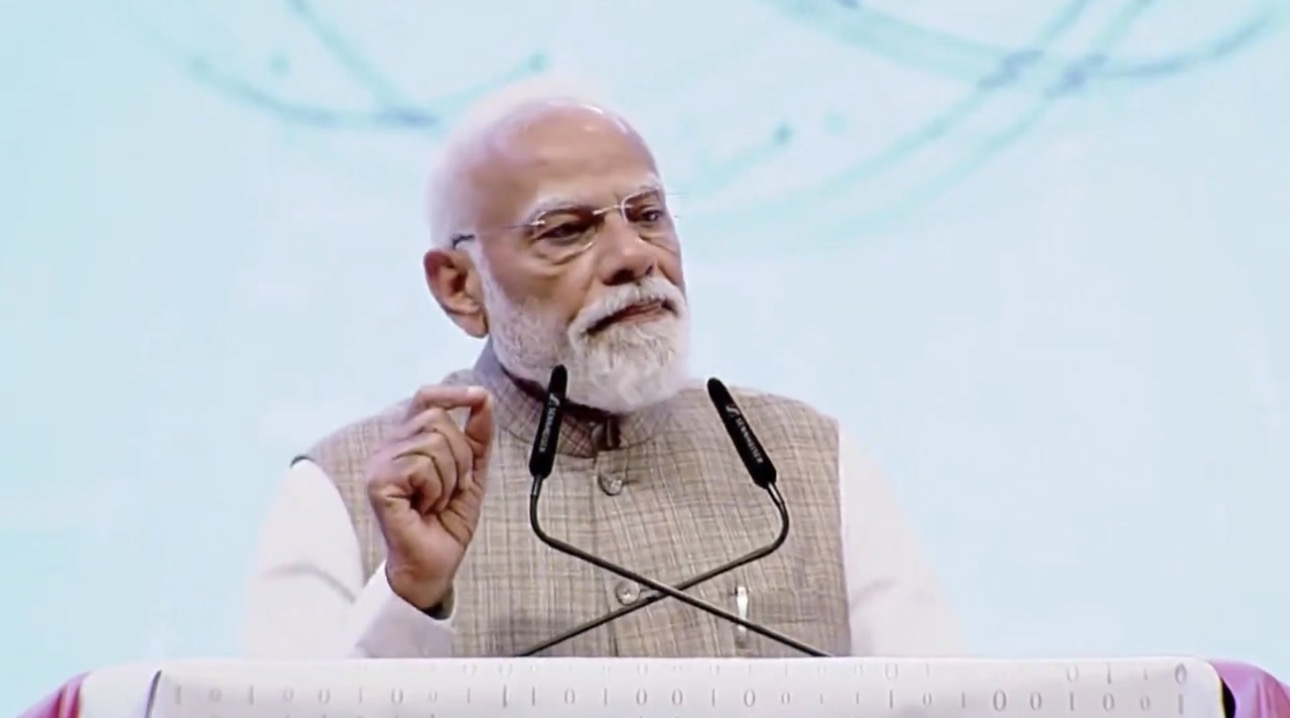
TFP Bureau, New Delhi, March 12, 2026: Prime Minister Narendra Modi on Thursday said India is moving decisively towards becoming a developed nation and urged citizens to work collectively towards the common goal of building a “Viksit Bharat”.
Addressing the iTV Network’s NXT Summit in New Delhi, the Prime Minister said that despite multiple global crises, the world is looking at India with hope and confidence. He emphasised that if any country or organisation wants to be part of the future global growth story, it must be associated with India.
Drawing a parallel with the historic Dandi March led by Mahatma Gandhi in 1930, the Prime Minister said the spirit of unity that guided India’s struggle for independence now inspires the country’s journey towards development.
“Nearly a century after the historic Dandi March, 140 crore Indians have embarked on a new journey towards building a developed India,” he said, adding that the aspiration for progress has become a national movement.
India emerging as global growth engine
The Prime Minister said India’s rapid progress amid global instability has strengthened its position as a reliable and stable partner in the international arena. He noted that world leaders and experts increasingly view India as a major force shaping the future global order.
Referring to recent global interactions, Modi said leaders from different countries have acknowledged India’s rising importance. He mentioned that Finland’s President Alexander Stubb had recently noted that the direction of the world will increasingly be influenced by the Global South, while Canada’s Mark Carney described India as the centre towards which the global economic gravity is shifting over the coming decades.
French President Emmanuel Macron has also described India as an essential partner in addressing global challenges, the Prime Minister added.
“If you want to be part of the future, you have to be in India,” Modi said, highlighting the country’s growing role in global affairs.
India moving to the next level
The Prime Minister said India is no longer merely progressing but is moving to the “next level” through major reforms, technological advancements and infrastructure development.
He highlighted the transformation in digital payments, noting that India has become the world leader in real-time digital transactions through the Unified Payments Interface (UPI). According to him, the digital ecosystem has significantly improved transparency, financial inclusion and economic efficiency.
Modi also pointed to several major reforms undertaken in recent years, including the abrogation of Article 370, expansion of financial inclusion through Jan Dhan accounts and the law providing 33 per cent reservation for women in legislatures.
He said India is also pushing the boundaries of technological advancement through initiatives such as missions in space exploration, semiconductor manufacturing and quantum computing.
“India is not just progressing; India is moving to the next level,” the Prime Minister said.
Rising aspirations among citizens
The Prime Minister said the aspirations of the Indian people have risen significantly in recent years and are now driving the country’s growth story.
Comparing the public’s enthusiasm for economic progress to the passion for cricket, he said people now closely follow the country’s development indicators just as they follow scores during a major cricket tournament.
According to him, this heightened awareness and confidence among citizens have strengthened global trust in India’s future.
“When the world looks at India with such expectations, our responsibility increases significantly,” he said.
Focus on energy security and self-reliance
The Prime Minister said the government has adopted a comprehensive strategy to strengthen energy security and reduce dependence on imports.
He highlighted the expansion of LPG connections from about 14 crore in 2014 to nearly 33 crore today, ensuring access to clean cooking fuel for most households in the country.
Infrastructure related to the gas sector has also expanded rapidly, with LNG terminals doubling and the gas pipeline network increasing from around 3,500 kilometres to 10,000 kilometres.
Modi said the reach of piped natural gas has grown from around 25 lakh households before 2014 to more than 1.25 crore households today, while the number of CNG-powered vehicles has increased from fewer than 10 lakh to more than 70 lakh.
This progress, he said, has been made possible by the establishment of City Gas Distribution networks in more than 600 districts across the country.
Renewable energy and biofuel initiatives
The Prime Minister highlighted India’s rapid progress in renewable energy and biofuel initiatives.
He said the country’s renewable energy capacity has crossed 250 gigawatts, while solar capacity has increased dramatically from 2 gigawatts in 2014 to around 130 gigawatts today.
Under the PM Surya Ghar Muft Bijli Yojana, about 30 lakh households have adopted rooftop solar systems, enabling families to shift towards cleaner energy sources.
Modi also noted that ethanol blending in petrol has increased from around 1–1.5 per cent before 2014 to nearly 20 per cent today. This initiative, he said, has helped India avoid importing around 18 crore barrels of crude oil over the past 11 years and saved approximately ₹1.5 lakh crore.
Railway electrification has also significantly reduced fuel consumption, with nearly the entire broad-gauge railway network now electrified compared to only 20 per cent in 2014.
Managing global challenges
The Prime Minister said recent global crises, including the COVID-19 pandemic and ongoing international conflicts, have tested the resilience of nations worldwide.
He said the government is continuously engaging with global leaders and monitoring international developments to minimise the impact of these challenges on India.
Modi emphasised that the government will make every possible effort to ensure that global disruptions do not place an undue burden on Indian farmers and citizens.
He cited the example of subsidised fertiliser during the Russia–Ukraine crisis, noting that even when international prices rose sharply, farmers in India continued to receive urea at affordable rates.
The Prime Minister also called on state governments to remain vigilant against black marketing and misinformation during periods of global uncertainty.
Progress in governance and internal security
Modi said the past decade has seen a shift towards more sensitive and inclusive governance, with special focus on regions and communities that had previously been neglected.
Initiatives such as the Aspirational District Programme and PM JANMAN have helped expand access to infrastructure, healthcare, housing and education in remote areas, he said.
The Prime Minister also highlighted improvements in internal security, stating that the number of districts affected by Maoist violence has fallen dramatically from more than 180 in 2013 to single digits today.
He added that over 2,100 Naxals have surrendered in the past year, while more than 300 hardcore militants were neutralised.
Call for collective effort
Concluding his address, the Prime Minister expressed confidence in the collective strength of India’s 140 crore citizens to overcome global challenges and achieve the vision of a developed nation.
He said the aspirations and determination of the people are the country’s greatest strength.
“With the support and blessings of the people, India will become self-reliant in every sector and will emerge as a developed nation,” Modi said.