Speaker says Chair belongs to democratic traditions, not an individual; urges members to uphold parliamentary decorum
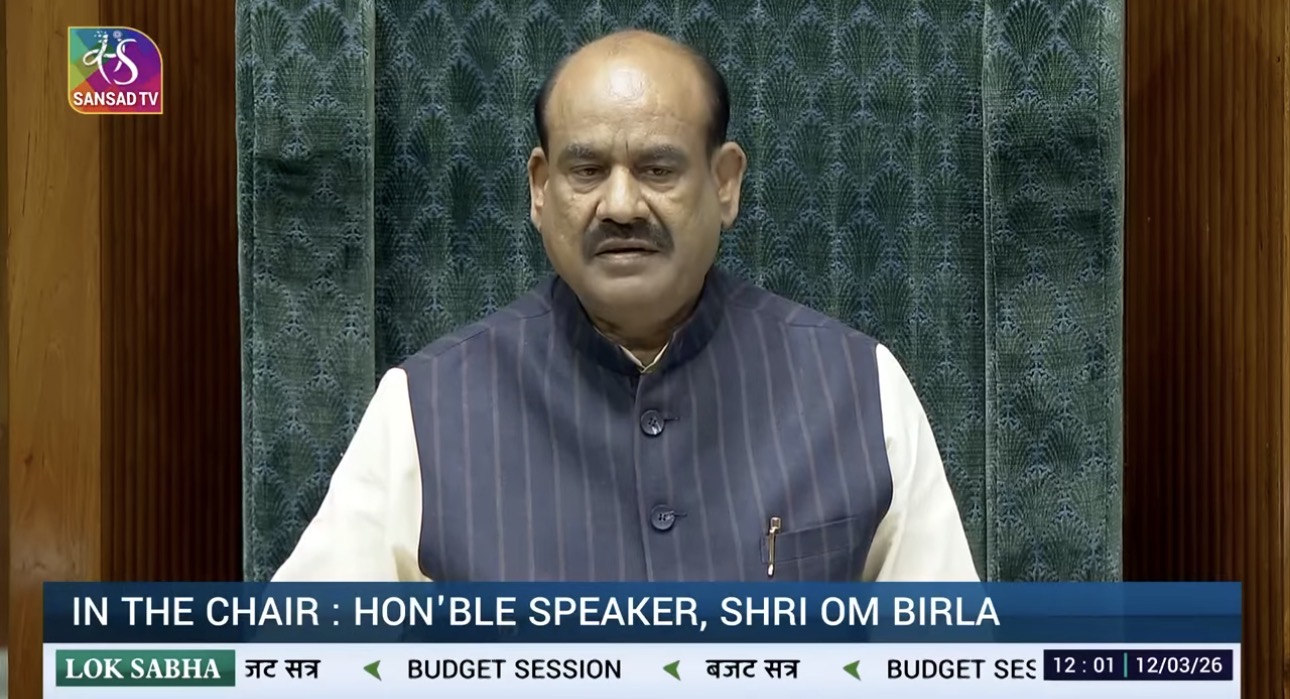
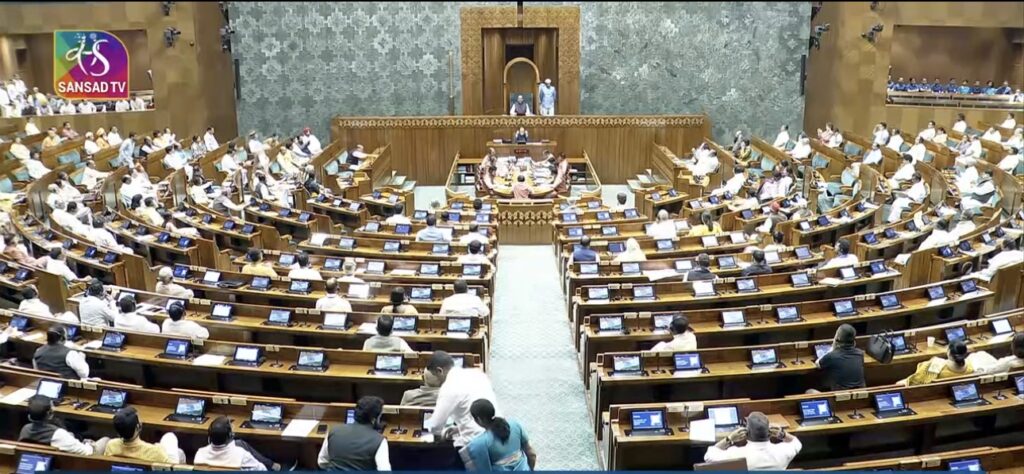
TFP Bureau, New Delhi, March 12, 2026: Lok Sabha Speaker Om Birla on Thursday reaffirmed his commitment to impartiality and adherence to parliamentary rules while addressing the House after a two-day discussion on a motion seeking his removal.
In a detailed statement delivered in the Lok Sabha, Birla said the debate on the motion marked an important parliamentary exercise in democracy. Over the past two days, members from various political parties participated in more than twelve hours of discussion, presenting their views, arguments and concerns regarding the functioning of the House and the role of the Chair.
The Speaker said members of the Opposition had raised issues relating to alleged suppression of their voices and concerns about impartiality, while other members spoke about the traditions, procedures and global achievements of India’s Parliament.
“Every member here represents the mandate of millions of citizens and carries their hopes and expectations,” Birla said, noting that Parliament represents the sovereign will of 1.4 billion people of India.
Commitment to impartial functioning
Birla stated that throughout his tenure he has tried to ensure that every member gets an opportunity to express their views within the framework of the rules and procedures of the House.
He said he has consistently encouraged first-time members and those hesitant to speak to actively participate in debates so that the democratic process becomes stronger and government accountability is maintained.
“Whenever members speak in the House, the resolve of democracy becomes stronger,” he said.
The Speaker added that disagreement and debate are natural in a parliamentary democracy, but these must remain within the framework of established rules and traditions.
Recusal during motion proceedings
Referring to the motion of no confidence against the Speaker submitted by some Opposition members on February 10, Birla said he had recused himself from the proceedings immediately after the motion was introduced in order to uphold the moral responsibility of the office.
He expressed gratitude to all members for participating in the discussion and said both support and criticism are integral to democratic functioning.
“The Chair does not belong to any individual. It represents the democratic traditions of India and the spirit of the Constitution,” he said.
Clarification on speaking procedures
Birla addressed concerns raised by some members that the Leader of the Opposition was not given adequate opportunities to speak in the House.
He clarified that every member — whether the Leader of the House, Leader of the Opposition, ministers or other MPs — can speak only by following the procedures laid down in the rules of the House.
He emphasised that these rules were framed by the House itself and apply equally to all members.
Citing Rule 372, Birla said even when the Prime Minister or a minister wishes to make a statement on a matter of public importance, prior permission from the Speaker is required and formal notice must be given.
“No member has any special privilege to speak outside the framework of these rules,” he said.
Historical precedents cited
The Speaker also referred to several instances from parliamentary history to underline the importance of respecting the authority of the Chair.
He mentioned that in 1957, former Prime Minister Atal Bihari Vajpayee, then a young parliamentarian, was required by the Chair to show certain documents before presenting them in the House. The ruling was accepted by him and the entire House.
Similarly, in 1958, rulings by the Chair disallowed members from quoting letters or placing documents on the table without prior approval.
“These traditions have always been respected in Parliament,” Birla said.
Freedom of speech subject to rules
Addressing references made by members to Article 105 of the Constitution, Birla clarified that freedom of speech in Parliament is subject to the provisions of the Constitution and the rules governing parliamentary procedure.
He noted that Rule 352 lays down detailed guidelines on how members should conduct themselves while speaking in the House and what types of remarks should be avoided.
Responding to allegations that microphones of Opposition members were switched off, Birla said the Chair does not have any mechanism to manually control microphones.
He explained that the system automatically activates the microphone only for the member who has been granted permission to speak.
Call for parliamentary decorum
Birla also spoke about incidents of disorder during House proceedings and said actions such as slogan shouting, displaying placards, tearing papers or entering the well of the House go against the traditions of Parliament.
He said resolutions adopted during conferences of presiding officers in 1997 and 2001 had unanimously emphasised that such behaviour undermines the functioning of legislative bodies.
“Democratic debate and disagreement are natural, but there is a clear line between discussion and disorder,” he said.
Birla added that disciplinary actions such as suspension of members are taken only when necessary to maintain order, and such decisions are never taken lightly.
Achievements of Parliament
During his statement, the Speaker also highlighted several initiatives aimed at strengthening parliamentary functioning, including translation services in 22 languages, increased use of digital technology and research support for members.
He said the successful organisation of international events such as P-20 and other parliamentary conferences has enhanced the global reputation of India’s democratic institutions.
“These achievements are not personal accomplishments but the collective achievements of the House,” he said.
Appeal for cooperation
Birla concluded by urging members from both the Treasury benches and the Opposition to work together to uphold the dignity and traditions of Parliament.
He stressed that democratic institutions are permanent and their prestige must be preserved by all members.
“If we weaken our institutions, the loss will not be of any individual or party but of the entire nation,” he said.
Calling for constructive cooperation, the Speaker appealed to members to maintain the trust and confidence of the people in Parliament and to move forward together in the spirit of national service and nation-building.