State to form high-level task force under Chief Minister to strengthen community governance of ‘commons’
TFP Bureau, Raipur, April 10,2026: Tribal Affairs Minister Ramvichar Netam on Friday underscored the deep-rooted spiritual bond between tribal communities and nature, stating that their unwavering faith in forests, water bodies and land has played a vital role in conserving and enriching natural resources for generations.
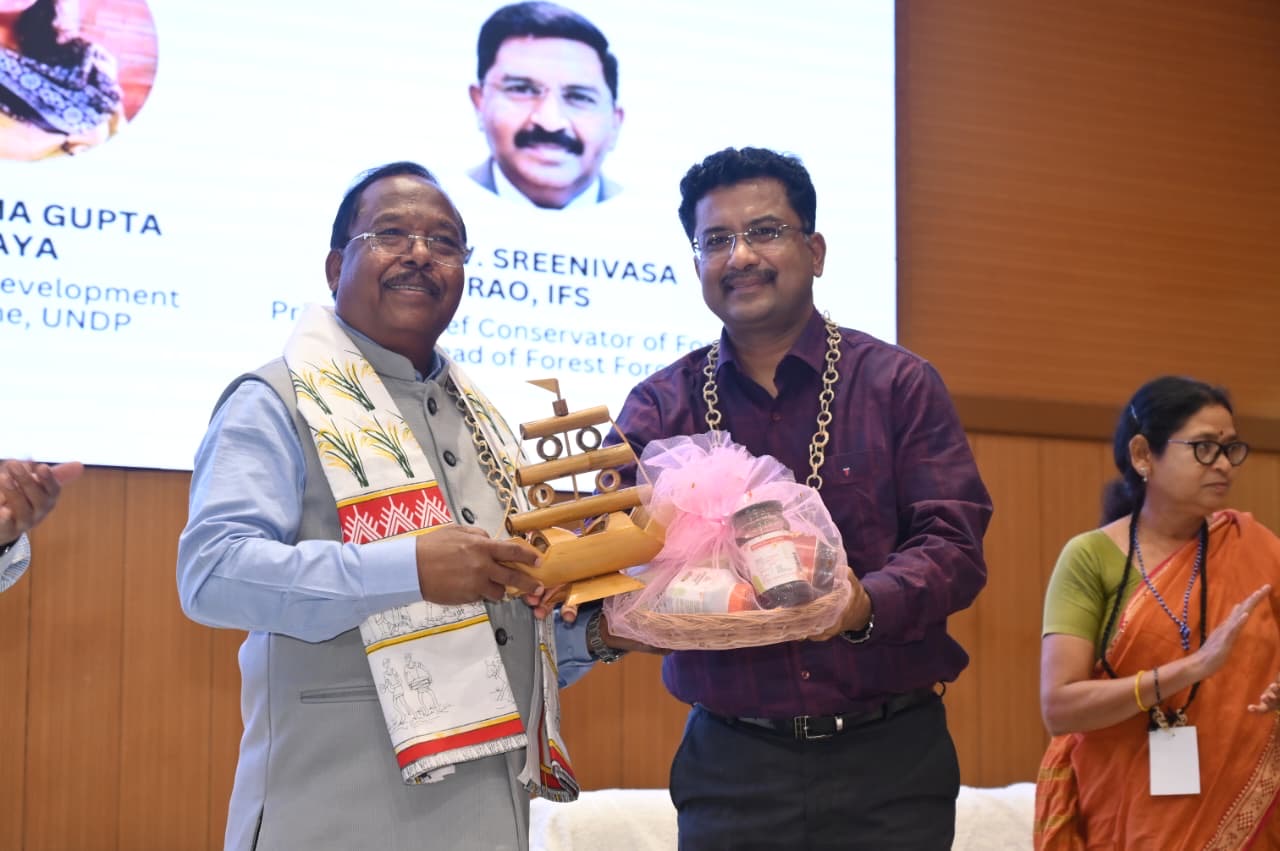
Addressing the closing ceremony of the two-day state-level dialogue conference titled “Chhattisgarh Commons Queening” at the Tribal Research and Training Institute (TRTI) in Nava Raipur, the minister said that tribal communities consider rivers, streams, trees, mountains and forests as divine abodes. “For tribals, nature is not merely a resource but a living entity worthy of reverence. It is this belief that has ensured the protection of forests and water sources over centuries,” he said.
Citing the 2011 Census, Netam noted that India is home to more than 100 million tribal citizens residing across nearly all states. He said their traditional ecological knowledge and cultural practices have positioned them at the forefront of environmental conservation.
High-Level Task Force to Oversee Natural Resource Governance
Announcing a major policy step, Netam said the state government would constitute a high-level task force to address issues related to tribal welfare and the management of community resources, commonly referred to as “commons.” The task force, he said, will be chaired by Chief Minister Vishnu Deo Sai, reflecting the government’s commitment at the highest level.
He added that a dedicated implementation committee comprising senior officials from various departments would also be formed to ensure effective coordination and time-bound execution of decisions at the grassroots level. “The objective is to remove bottlenecks in policy implementation and ensure that tribal communities receive their rightful entitlements without delay,” Netam said.
The minister stressed the need to address practical challenges in implementing the Panchayats Extension to Scheduled Areas Act (PESA) and the Forest Rights Act (FRA), particularly issues concerning boundary demarcation and community rights over forest land. “We are not just consumers of these shared resources; we are their custodians. Our use must be guided by genuine needs and collective responsibility,” he remarked.
Commons Central to Rural and Tribal Livelihoods
Sonmani Bora, Principal Secretary of the Tribal Development Department, said the conference focused extensively on strengthening coordination between PESA and FRA to enhance community governance. He highlighted that Chhattisgarh has nearly seven million acres of commons land, including forests, grazing lands and water bodies, which serve as lifelines for rural and tribal populations.
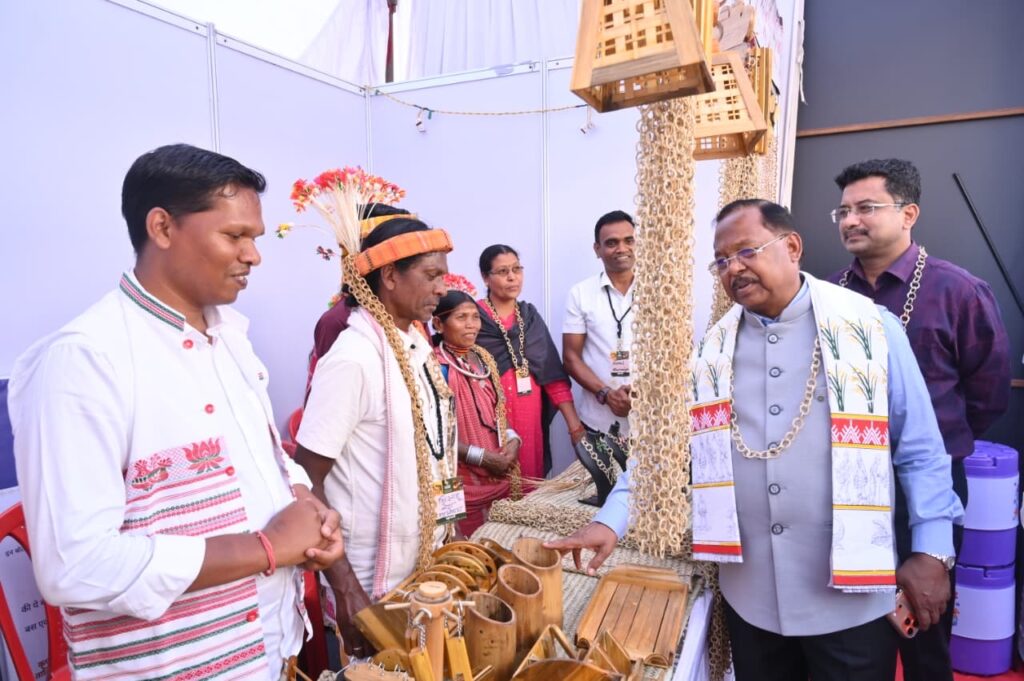 “Our tribal heritage is rich in languages, dialects and traditional leadership systems. Their daily practices—from agriculture to rituals—are deeply intertwined with conservation,” Bora said, adding that tribal communities revere nature as a mother figure and divine force.
He informed that over 300 participants—including policymakers, researchers, subject experts and village heads from within and outside the state—took part in the deliberations. The conclave examined ways to strengthen policy frameworks for commons governance while ensuring sustainable livelihoods.
Bora also mentioned that initiatives such as the PM-JANMAN scheme, Dharti Aaba Gram Utkarsh Abhiyan and Niyad Nella Nar are being implemented to promote holistic development in tribal areas while preserving ecological balance.
Community Participation Vital for Forest Protection
V. Srinivas Rao, Principal Chief Conservator of Forests, emphasised that protecting Chhattisgarh’s vast forests and biodiversity is impossible without active community participation. He clarified that the state’s forest policies are regulatory rather than restrictive, aiming to balance conservation with livelihood needs.
Taran Prakash Sinha, Commissioner of the Mahatma Gandhi National Rural Employment Guarantee Scheme (MGNREGA), said water conservation is deeply embedded in tribal culture. He stressed the need to integrate marginalised communities into water management initiatives under MGNREGA to ensure sustainable outcomes.
Raipur Collector Gaurav Singh observed that water conservation is based on practical wisdom developed over centuries. “It is not rocket science but community knowledge refined through generations,” he said.
Cultural Heritage and Documentation Efforts
The conference also highlighted that commons are not merely economic assets but cultural foundations that sustain traditional identities. Bora announced plans to establish a specialised studio for documenting and protecting tribal folk songs and traditional musical instruments through copyright mechanisms.
The event witnessed participation from Nelson Mandela Award laureate Sher Singh Anchala, Padma Shri awardees Pandi Ram Mandavi and Jageshwar Yadav, as well as Gaur Maria artists Lakshmi Sori and Indu Netam, who shared their experiences and appealed for collective responsibility in conserving natural resources.
The programme was jointly organised by the Tribal Development Department, TRTI and the Foundation for Ecological Security under the “Promise of Commons” initiative, with collaboration from United Nations Development Programme, Indian Institute of Technology Bhilai, Bharat Rural Livelihoods Foundation and Axis Bank Foundation, among others.
Officials said the deliberations and recommendations emerging from the conference would guide future policy decisions aimed at strengthening community-led conservation and ensuring sustainable development across tribal regions of Chhattisgarh.