
Housing and Environment Minister O.P. Choudhary unveils new environmental initiatives, launches digital monitoring systems, and announces a target of planting over 20,000 Peepal trees in Naya Raipur.
TFP Bureau, Raipur, June 5, 2026: Emphasising that environmental protection must evolve into a mass movement, Chhattisgarh Finance, Housing and Environment Minister O.P. Choudhary on Thursday said nature conservation lies at the heart of Indian culture and that sustainable development can only be achieved by restoring harmony between human progress and the environment.
Addressing a seminar and award distribution ceremony organised by the Chhattisgarh Environment Conservation Board (CECB) on the occasion of World Environment Day, the minister highlighted the growing challenges posed by climate change, rising temperatures, erratic rainfall and ecological imbalance. He said these issues stem from development models that prioritize exploitation of natural resources rather than coexistence with nature.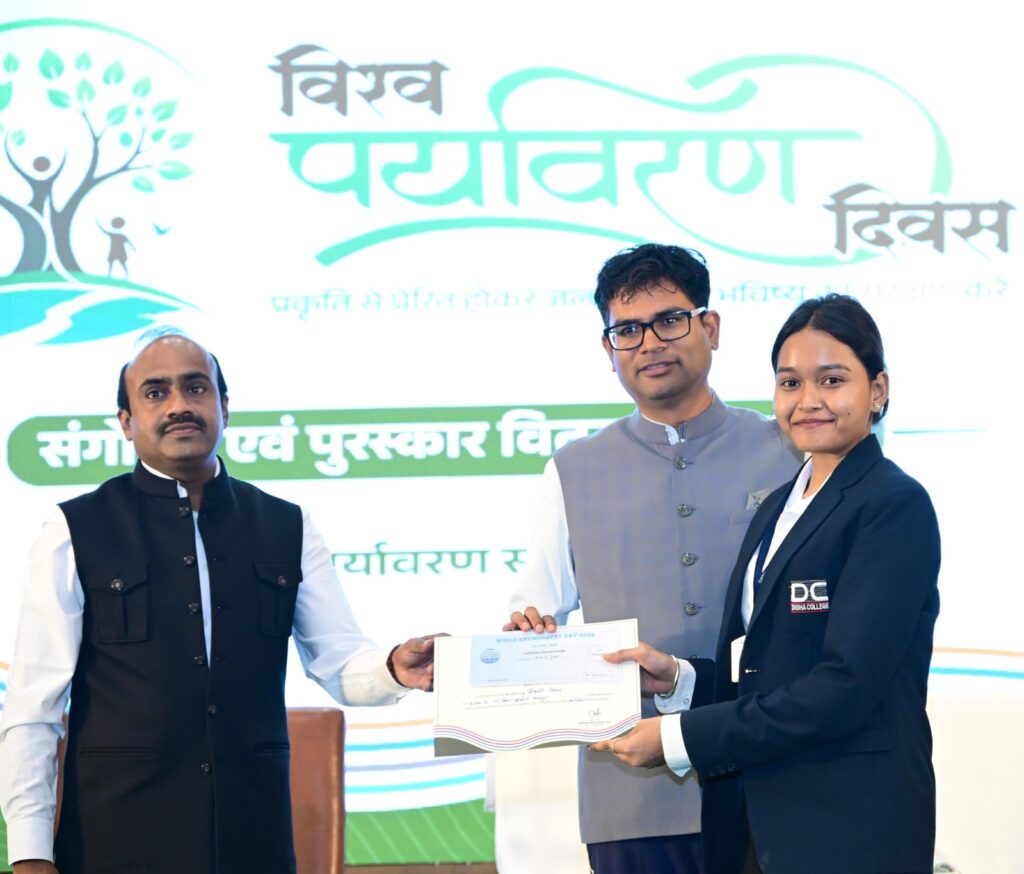
“Indian civilization has always revered rivers, forests, mountains, trees and all living beings. Our tradition teaches us to use nature responsibly, not exploit it. Environmental protection is not merely the responsibility of governments but a collective duty of every citizen,” Choudhary said.
The minister also inaugurated several new initiatives of the Board, including the CG Monitoring Portal, a new official website, a documentary on biomedical waste management, a film showcasing the Board’s 25-year journey, and a souvenir highlighting Eco-Club activities. Outstanding students, schools and Eco-Clubs were honoured for their contributions to environmental awareness and conservation.
Technology-Driven Pollution Control
Highlighting the state government’s efforts to strengthen environmental governance, Choudhary said advanced technology is being deployed for real-time pollution monitoring and compliance enforcement.
He noted that an online monitoring system has been installed to track emissions from industrial chimneys, enabling authorities to receive instant alerts whenever pollution levels exceed prescribed limits. A GPS-based tracking mechanism has also been introduced to ensure the safe transportation and disposal of fly ash.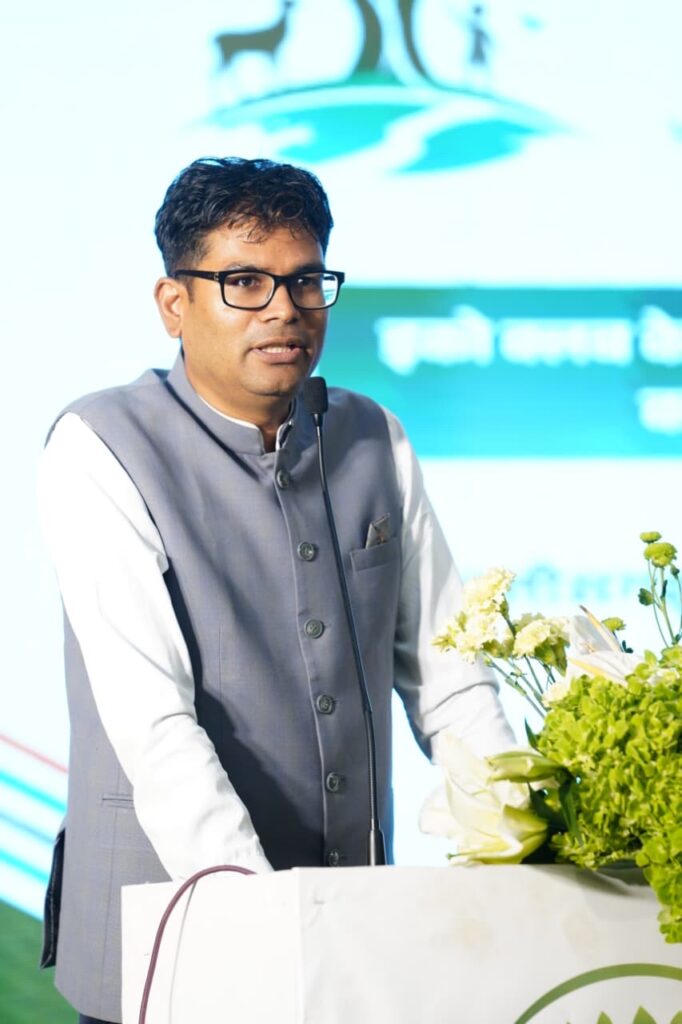
The minister said the government has taken firm measures to prevent the dumping of fly ash from other states into Chhattisgarh and has adopted strict protocols for the handling and disposal of hazardous waste to safeguard both the environment and public health.
Naya Raipur to Emerge as ‘Peepal City’
In one of the key announcements of the event, Choudhary unveiled an ambitious plan to plant more than 20,000 Peepal trees across Naya Raipur, transforming the modern capital city into a unique “Peepal City.”
Stressing the importance of native species in ecological restoration, he said plantation drives should focus on environmentally beneficial trees such as Peepal, Neem and Mango rather than being conducted merely as symbolic exercises.
Recalling the “Peepal for People” campaign launched during his tenure as Raipur Collector, Choudhary said the large-scale plantation programme would significantly enhance green cover and improve ecological balance in the region.
“In the coming years, Naya Raipur will be known as a Peepal City, where one can see Peepal trees in every direction,” he said.
Planting a Maulsari Sapling on World Environment Day
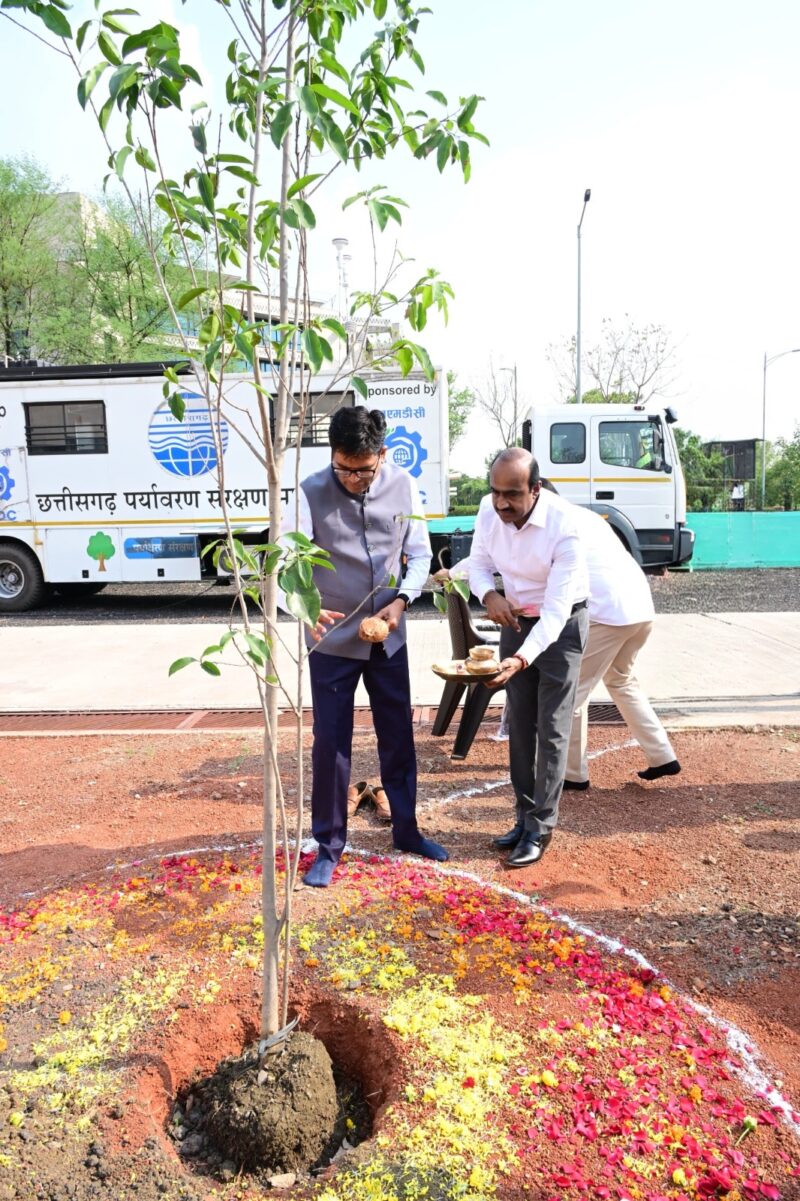
Earlier in the day, the minister planted a Maulsari sapling at the Central Laboratory Complex of the Chhattisgarh Environment Conservation Board in Sector-19, Naya Raipur. He called upon citizens to actively participate in tree plantation drives and contribute towards conserving natural resources.
“Environmental conservation is not just a government programme; it is a social responsibility that requires collective participation,” he said.
Building Environmental Awareness Among Youth
Choudhary underscored the importance of nurturing environmental consciousness among children and young people. He urged teachers and Eco-Club coordinators to encourage sustainable habits such as saving electricity, reducing plastic use, caring for plants and planting native tree species.
According to the minister, meaningful and lasting environmental change can only be achieved when future generations develop a deeper understanding of ecological responsibility.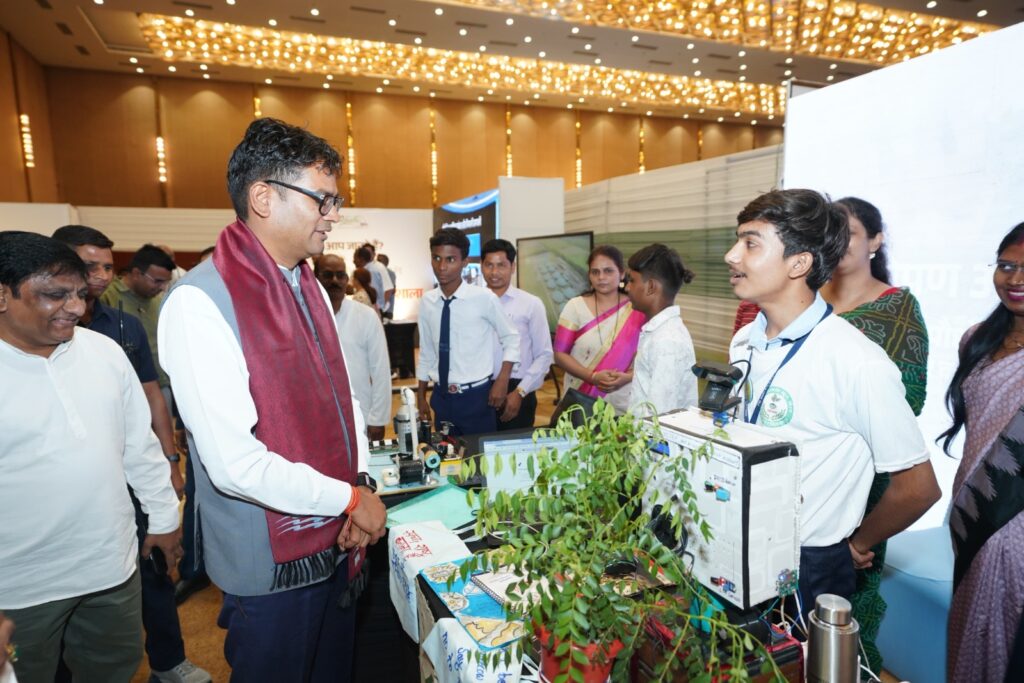
He also highlighted the growing economic opportunities emerging from sustainability-focused sectors such as circular economy solutions, waste management, plastic recycling, green technologies and environmental innovation.
“Environmental protection is no longer only a social obligation; it is also becoming a major avenue for entrepreneurship, employment and innovation,” he said, encouraging youth to explore careers aligned with sustainable development.
The event featured an environmental exhibition, the administration of the Mission LiFE pledge, and a street play titled Kissa Lakdi Ka, which conveyed messages on conservation and responsible resource use. Eco-Club coordinators and master trainers also received training on Mission LiFE, solid waste management, plastic waste management and environmental awareness activities.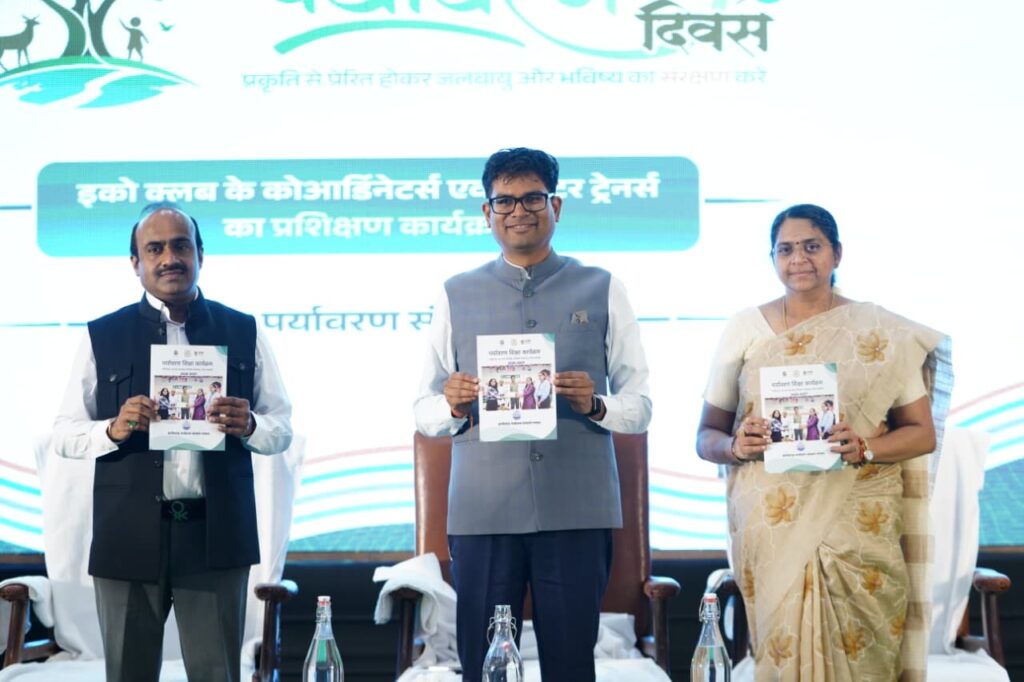
The programme was attended by R. Sangeetha, Secretary of the Urban Administration and Development Department; Raju Agasimani, Member Secretary of the Chhattisgarh Environment Conservation Board; along with teachers, students, Eco-Club coordinators, environmental experts and departmental officials.