Water Resources Department expands coverage from 4,458 hectares to 25,936 hectares since Chhattisgarh’s formation
TFP Bureau, Raipur, September 17, 2026: Irrigation capacity in Gaurela-Pendra-Marwahi (GPM) district has increased from 4,458 hectares at the time of Chhattisgarh’s formation to 25,936 hectares in 2026, marking an expansion of more than six times over the past 25 years.
The increase has been attributed to the expansion of water resource infrastructure, construction of new projects and measures aimed at improving water conservation and management in the predominantly rural district.
At the time of the formation of Chhattisgarh on November 1, 2000, the district had 28 water resource projects, comprising 17 reservoirs, four diversion schemes, two stop dams and five anicuts. Together, these projects provided irrigation to 4,458 hectares, leaving agricultural activities largely dependent on monsoon rainfall.
Over the following 25 years, the Water Resources Department completed 57 additional water resource projects in the district. With the earlier 28 projects, the district now has 85 water resource schemes.
The department has also undertaken renovation and expansion of existing canals to extend irrigation facilities to remote agricultural areas. Micro-irrigation and lift irrigation systems have been promoted to improve the efficiency of water use, while solar pumps and digital technology have been introduced for water management and monitoring.
The expansion has resulted in an additional irrigation potential of 21,478 hectares, taking the total coverage to 25,936 hectares in 2026. The increase has provided farmers with greater access to water and enabled agricultural activities beyond dependence on seasonal rainfall.
According to the department, improved irrigation has encouraged farmers to undertake multi-crop farming and has contributed to higher agricultural activity and economic opportunities in rural areas. Increased availability of water has also supported efforts towards conservation and groundwater augmentation.
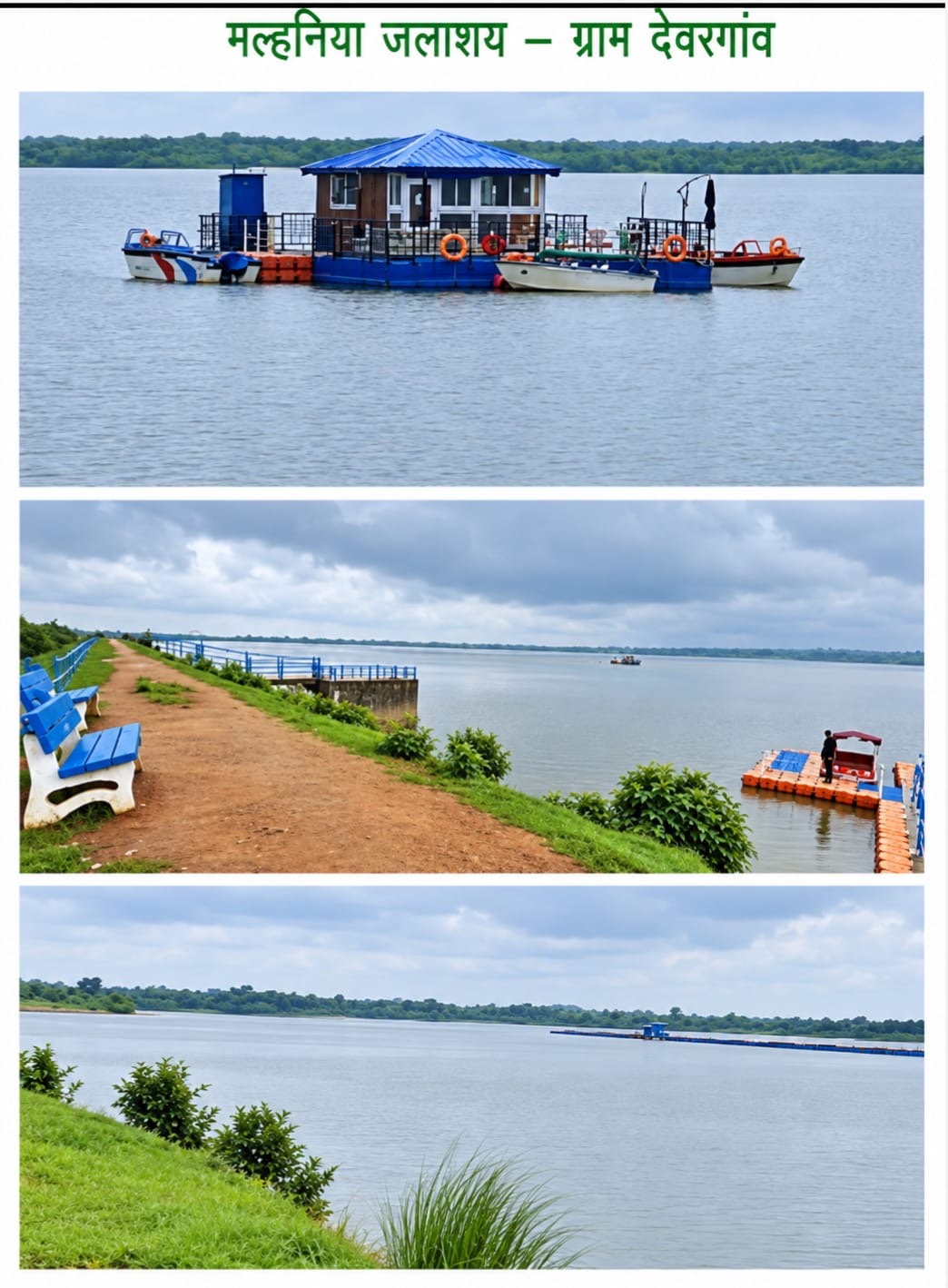
Among the key water infrastructure in the district are the Malaniya Reservoir in Devargaon, Jogidongri Reservoir in Andul and the anicut at Banjhorka. These projects form part of the district’s expanding network of water storage and irrigation structures.
Alongside infrastructure development, the department has focused on water conservation and efficient utilisation. River conservation, construction of anicuts, groundwater augmentation and the use of micro-irrigation and lift irrigation systems are among the measures being implemented to improve long-term water availability.
Several new irrigation schemes are also under construction in the district. Their completion is expected to further increase irrigation capacity and provide additional support to agriculture.
The department’s 25-year development in GPM has thus involved not only the construction of water structures but also the expansion of irrigation coverage and the adoption of newer approaches to water management. The increase in irrigation capacity is expected to strengthen agricultural activity and contribute to the rural economy as further projects are completed.