
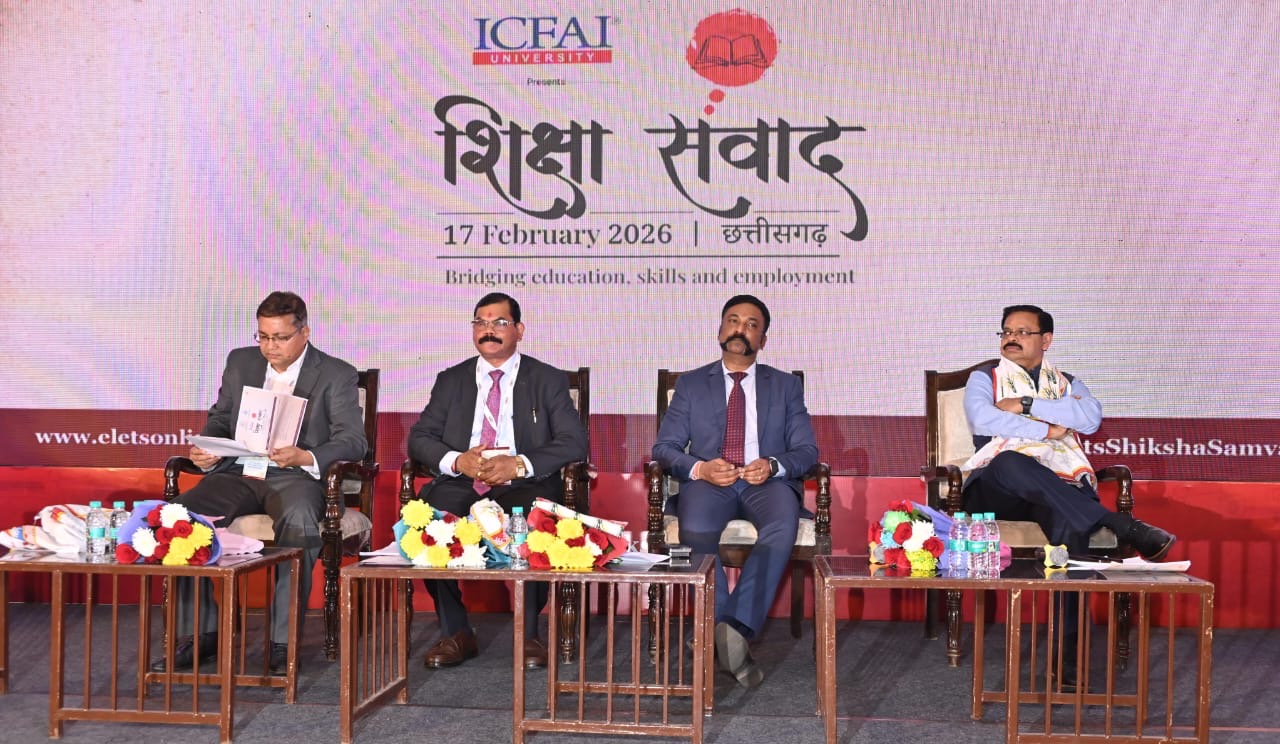
State hosts high-level dialogue on skills, jobs and digital learning; MoU with IIT Madras and Lincoln University signals new roadmap for future-ready higher education
TFP Bureau, Raipur, February 17, 2026: In a major initiative aimed at aligning education with employment and industrial growth, ‘Shiksha Samvad 2026’ was held in Raipur on Monday, bringing together leading academicians, policymakers and industry experts to chart a comprehensive roadmap for a future-ready higher education ecosystem in Chhattisgarh.
Organised with the objective of strengthening coordination between education, skill development and job creation, the event featured extensive deliberations on transforming higher education through innovation, technology and industry collaboration. A key highlight was the signing of a Memorandum of Understanding between the state’s Higher Education Department, IIT Madras and Lincoln University, aimed at enhancing academic cooperation, research and skill-based learning opportunities.
The inaugural session was attended by Higher Education Minister Tank Ram Varma as chief guest, along with Higher Education Secretary S Bharathidasan, Commissioner Santosh Kumar Dewangan, Elets CEO Ravi Gupta, ICFAI Director Sudhakar Rao, and Seychelles High Commissioner Harisoya Laltiana, along with vice chancellors, registrars and faculty members from universities across the state and beyond.
Focus on Jobs, Skills and Regional Growth
The central theme—“Education, Skills, and Employment for a Developed Chhattisgarh”—guided discussions on making higher education more job-oriented, aligning curricula with industry needs and ensuring regional development. Experts stressed that bridging the gap between academic learning and market requirements is crucial for generating sustainable employment opportunities for youth.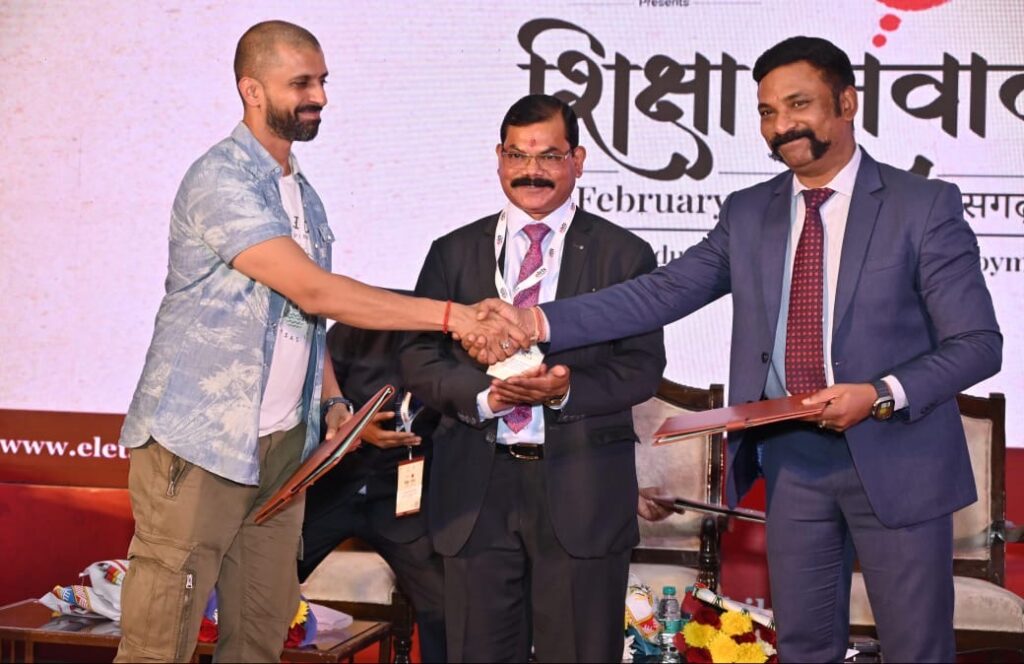
Panel sessions examined the implementation of the new education policy, skill development frameworks, startup ecosystems and emerging career sectors. Participants agreed that such structured dialogues could significantly enhance both the quality of education and employability outcomes across the state.
Digital Transformation of Higher Education
A dedicated session on digital innovation explored the future of technology-enabled campuses, learning management systems, blended learning models and artificial intelligence-based teaching and assessment tools. Experts highlighted that data-driven governance, cybersecurity frameworks and digital infrastructure could improve transparency, accessibility and academic standards.
Strengthening Industry–Academia Partnerships
Another key discussion focused on industry-specific curricula, internships, apprenticeships and outcome-based education models. Speakers emphasised that strong partnerships between universities and industries would enable students to acquire practical skills and real-world exposure, ultimately improving placement prospects and career readiness.
Research, Innovation and Startup Ecosystem
The concluding technical session centred on building a knowledge economy through research, innovation and entrepreneurship. Deliberations covered strengthening research ecosystems, establishing innovation centres, promoting startups, encouraging international collaboration and commercialising academic research. Experts stressed that cultivating a culture of innovation within educational institutions is essential for long-term economic growth and global competitiveness.
Policy Commitment for Future-Ready Education
In his concluding remarks, Secretary Dr. Bharathidasan reiterated the government’s commitment to implementing actionable reforms emerging from the dialogue. Commissioner Dr. Dewangan noted that the ideas generated during Shiksha Samvad would be translated into policy initiatives aimed at modernising higher education and aligning it with evolving industry demands.
Participants widely described Shiksha Samvad 2026 as a landmark platform that brought stakeholders from academia, government and industry onto a common stage. The event concluded with a collective resolve to take concrete steps toward building an innovation-driven, skill-oriented and employment-focused higher education system—seen as a crucial pillar in the state’s journey toward becoming a developed and economically vibrant region.